

Navigating the Ethical Challenges of AI: Exploring Its Impact on Society and the Future
Are you someone who uses AI for almost everything — your playlists, note-taking apps, fitness trackers, and even your shopping lists?
For many of us, AI has become such an integral part of daily life that we rarely stop to think about how much of our personal data we’re handing over in exchange for convenience. But here’s the uncomfortable truth: we’re giving up a lot more than we realize, and most of the time, it’s happening without our full understanding or consent.
This is your wake-up call! If you’ve ever wondered what all that convenience is really costing you — whether it’s your privacy, your human connections, or the way society operates — this article is for you. Let’s dive into the ethical concerns that AI brings to the table and why you should care.
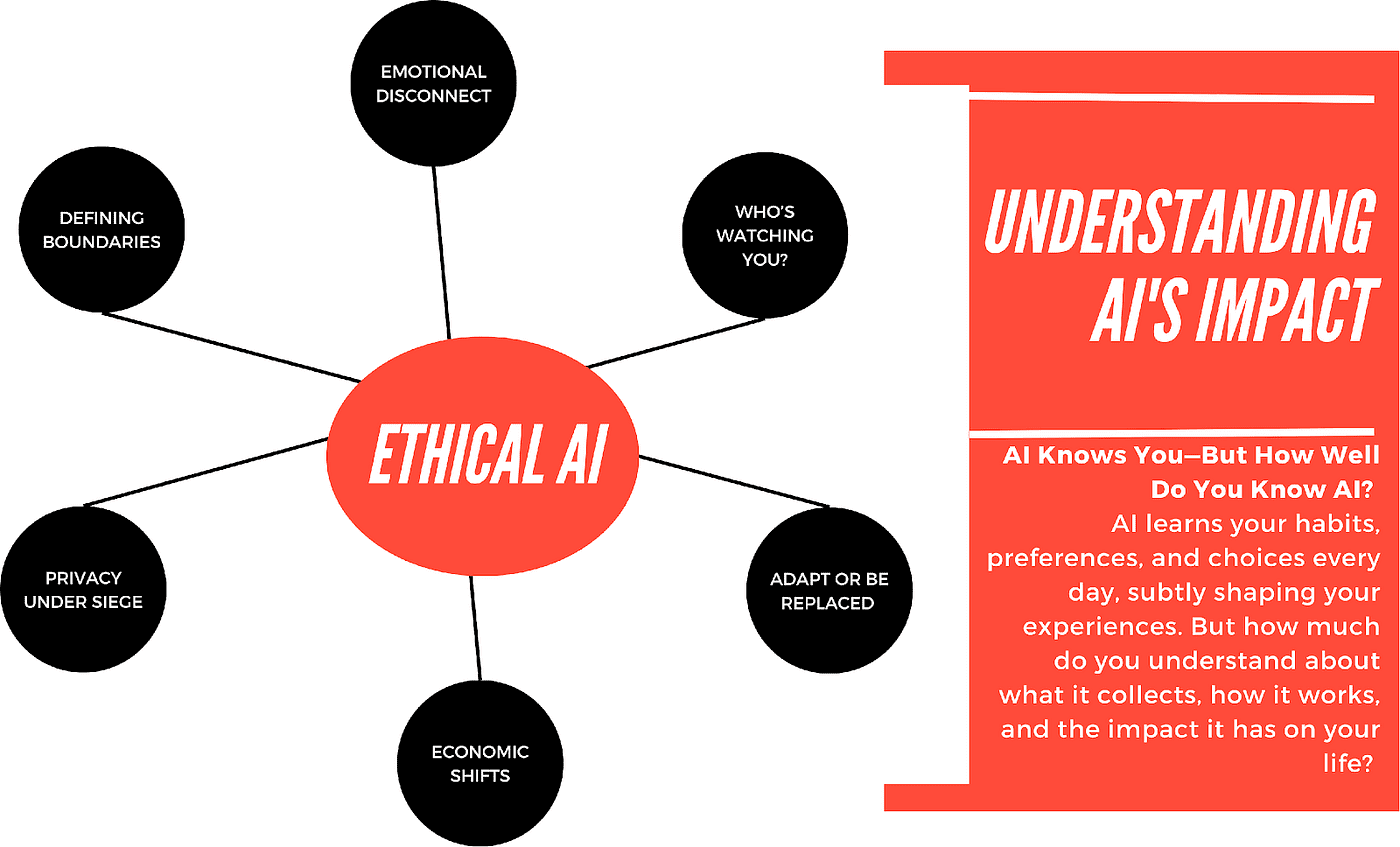
The Emotional Disconnect: Are We Losing Touch with People?
You know that feeling when you’ve been scrolling on your phone for hours — swiping through posts, liking photos, responding to messages — and somehow, after all that, you still feel… empty? You’re not alone.
AI’s ever-growing role in our lives has a profound impact on how we interact with each other. The technology that’s supposed to make us feel more connected is actually creating a gap. Think about it: how often do you find yourself more excited about the latest playlist recommendation than a conversation with a friend?
Here’s the kicker: AI is making us lonelier, even though it’s designed to make life easier.
- Increased reliance on AI for daily communication can make real conversations feel slow and frustrating by comparison. When you’re used to rapid, efficient responses from AI, human interactions — complete with pauses, nuances, and misunderstandings — can start to feel like a chore.
- AI-curated perfection on social media fuels constant comparisons, which can quickly spiral into feelings of inadequacy. When everything in our digital lives is algorithmically tailored to look flawless, it’s easy to feel like we’re not measuring up in real life.
So, while AI promises to enhance our lives, it’s quietly creating an emotional disconnect between us. We’re slowly but surely shifting our emotional needs away from humans and toward machines. And that’s a slippery slope.
Surveillance and Safety: Who’s Watching You?
Now, let’s talk about privacy. It’s a big one. And here’s the thing: with AI, privacy isn’t just a buzzword — it’s a battleground.
AI surveillance tools, like facial recognition and predictive policing, are creeping into more and more aspects of our daily lives. These technologies are sold to us as solutions to boost safety and security. But here’s the catch: Are we sacrificing too much privacy in the name of security?
- Facial recognition: It’s in airports, shopping malls, and even some offices. Yes, it can help authorities identify criminals and prevent threats, but it also brings us uncomfortably close to a world where every move we make is tracked. Do we really want to live in a society where every step we take is watched?
- Predictive policing: Sounds like something out of a sci-fi movie, but it’s real. AI is being used to predict where crimes might occur based on historical data. The problem? That data is often biased. AI could reinforce existing prejudices, disproportionately targeting certain communities and further widening societal divides.
Here’s the tough question: Where do we draw the line between keeping people safe and maintaining our privacy? If AI is predicting crimes based on biased data, how fair is that system?
It’s time for a serious conversation about where we set boundaries. If we’re not careful, the lines between safety and privacy could blur beyond recognition.
To explore the ideas discussed here in more detail, head over to my full blog on Medium. Don’t forget to follow for more insights!


Leave a Reply