

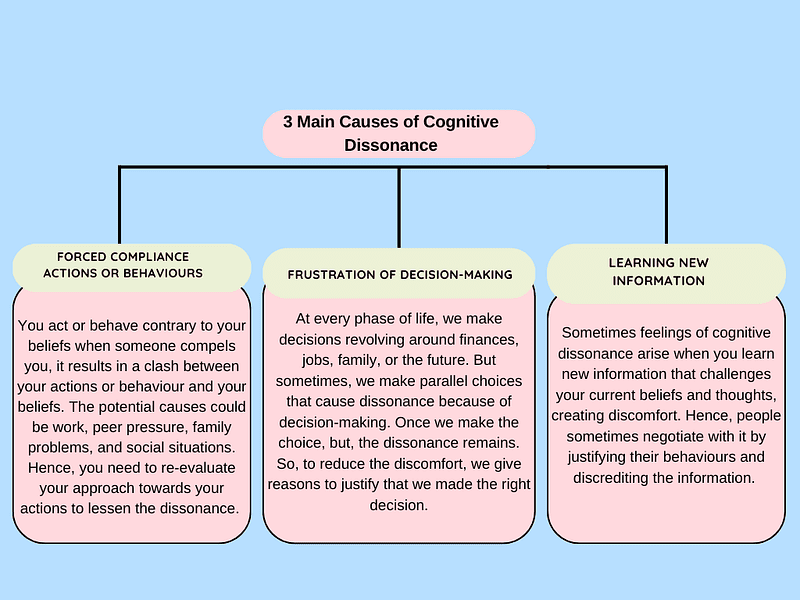
Cognitive dissonance emerges when our beliefs, behaviors, or attitudes come into contradiction with each other. The inconsistency between our behaviors and beliefs affects our emotions as well as creates mental discomfort.
Hence, the discomfort motivates us to reshape our behavior, thoughts, or perspectives to prevent mental distress. The strength of dissonance is vast when you have various clashing thoughts. The beliefs we rank and value more hold greater significance, which can cause prominent dissonance.
Understanding The Phenomena
Leon Festinger an American social psychologist presented the concept of cognitive dissonance, that when a person comes through the information and actions that refute their beliefs uneasiness and inconsistency occur.
Therefore, the individual feels motivated to explore ways to make their actions and beliefs more consistent by mentally altering their perceptions around their beliefs to achieve the change.
For example, you believe in eating healthy but just ate a large bucket of fried chicken. Your actions have created a mental conflict because they do not match your beliefs. Therefore, to resolve this conflict, you will convince yourself that it’s okay as you rarely eat junk food or you’ll work out later. This example shows cognitive dissonance in action.
To resolve Cognitive dissonance, a person can use these different approaches to ensure consistency between their actions and beliefs and vice versa.
Changing thoughts: A person might usually behave in contradicting their beliefs, questioning the importance of that belief or finding that they no longer believe it. They will add new beliefs alternatively to align their actions with their beliefs. Picture a person who sees the significance of keeping fit to maintain good health but hardly gets time to go to the gym. There is a way of getting out of cognitive dissonance. One could question the value of exercising. They might argue that eating healthy foods alone would suffice.
On the other hand, someone might adopt a fresh perspective that small everyday actions such as using stairs instead of elevators or increasing one’s walking pace serve as ways of keeping fit. This would result in actions consistent with the initial belief, thus reducing cognitive conflict.
Changing actions: This involves changing behaviours to align a person’s beliefs. People who think it is vital to reduce pollution production in this world must resolve their inner conflict by continuing to use their cars for work. For example, they sometimes arrange rides with colleagues or take buses on selected days. In addition, they could save energy at home to compensate for the fuel they use outside the residence.
Changing the perception of the action: A person might not want to change their existing behavior or beliefs, which causes dissonance. Instead, they may view the behaviour differently.
Despite feeling wrong about animals ‘ well-being, an individual who derives pleasure from consuming meat may avoid dissonance by reinterpreting their actions. They might tell themselves that they need to eat meat because of its nutritional value or that the meat they eat is produced in ways that are kind to both humans and the environment, without necessarily checking facts.
Cognitive Dissonance in Economic Decision-Making
Cognitive dissonance is integral to economics, helping to understand why people make irrational decisions. The purchasing decisions of consumers, money management of investors, and policymaking by policymakers suggest how cognitive dissonance affects various aspects of life.
Hence, comprehending cognitive dissonance can predict and influence economic behavior, contributing to more responsive marketing, savvier investing, and sound policymaking. Cognitive conflict can affect consumer purchasing behavior. Let’s shed light on post-purchasing behavior to understand the causes and effects of cognitive dissonance in consumer purchasing behavior. Decisions and actions after a person has made a purchase refer to post-purchase behavior that are important indicators of what consumer demands. Also, by understanding post-purchasing behavior, marketers can get to know what influences consumers’ decisions to purchase, and they can utilize it to their advantage. Several factors cause post-purchase cognitive dissonance, emotional value, price, and lack of information.
For example, picture acquiring an expensive smartphone, only to see a similar one on sale for a price that is way less than what you had bought yours at. You begin to feel uneasy, having regrets as to whether that was the right choice to make or not. This feeling of uncertainty and regret is known as post-purchase dissonance. You can focus on some features of your phone you like most to feel better or convince yourself that the sale phone may have needed to be better perceived.

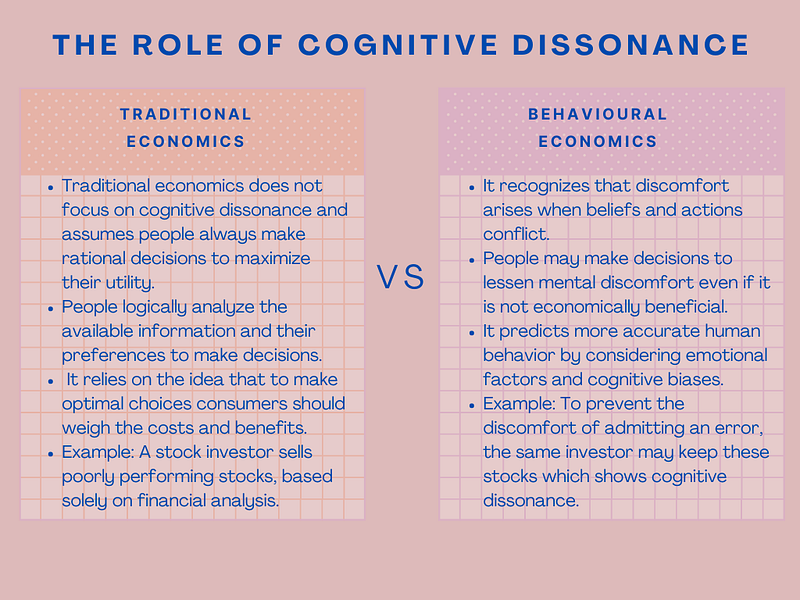
Cognitive dissonance impacts investors’ behavior when they realize that their chosen investment might go into loss.
For example, You might invest a lot of money in a new tech startup, expecting it to do well. Instead, the company might perform poorly and cost you money. To justify this poor investment decision and reduce your regret, you may remember that you are investing for the long term. You may also believe that the enterprise will one day bounce back. Alternatively, you might convince yourself that you have acquired significant insights that would significantly improve your future investment decisions. Policymakers experience cognitive conflict when new evidence challenges their existing policies. This makes them resist admitting that their current policies are inefficient.
A hypothetical situation in which a levy strategy was enforced to stimulate the economy comes to the fore. The findings in recent studies indicate otherwise that this move has negative consequences on our economy. Those who endorsed it might be unwilling to understand the warning signs because they initially supported it. They might dismiss this new evidence to protect their public image. They convince themselves that either those researchers were at fault or it was just a short-lived drawback.
The Effect of Cognitive Dissonance on Economic Theories
Cognitive dissonance challenges the assumption of rational decision-making influencing traditional economic theories. Behavioral economics incorporates cognitive dissonance. It suggests how conflicting beliefs and actions lead people to make irrational choices. These choices are not always financially suitable.
Techniques to Minimize the Effect of Cognitive Dissonance in Economic Contexts
For Consumers: Be self-aware enough to recognize if you feel discomfort when purchasing, for example, buying from a different brand. A person should gather the necessary information before purchasing to reduce the chances of post-purchase regret. Remember why you made the purchase and how it aligns with your needs and values.
For investors: Planning strategies and defining goals help determine how to stick to the plan and avoid emotional influences. To protect the overall portfolio, spread investments across several assets to reduce the stake of any wrong decision. Review your investment portfolio objectively occasionally and be willing to make adjustments based on changing market circumstances and new information.
For policymakers: Encouraging open dialogue allows for the discussion of differing points of view. It also promotes the sharing of new data without biases. Policies should be based on data-driven decisions rather than outdated beliefs or practices. Transparency and authenticity in communication provide evidence supporting policy changes. They help build trust. This approach decreases the chances of resistance to change.
At last, we can now see how cognitive dissonance provides fascinating insights into our behavior and decision-making processes. Therefore, understanding cognitive dissonance is crucial to making more rational choices in various aspects of life such as personal choices, marketing strategies, and economic behavior.


Leave a Reply