

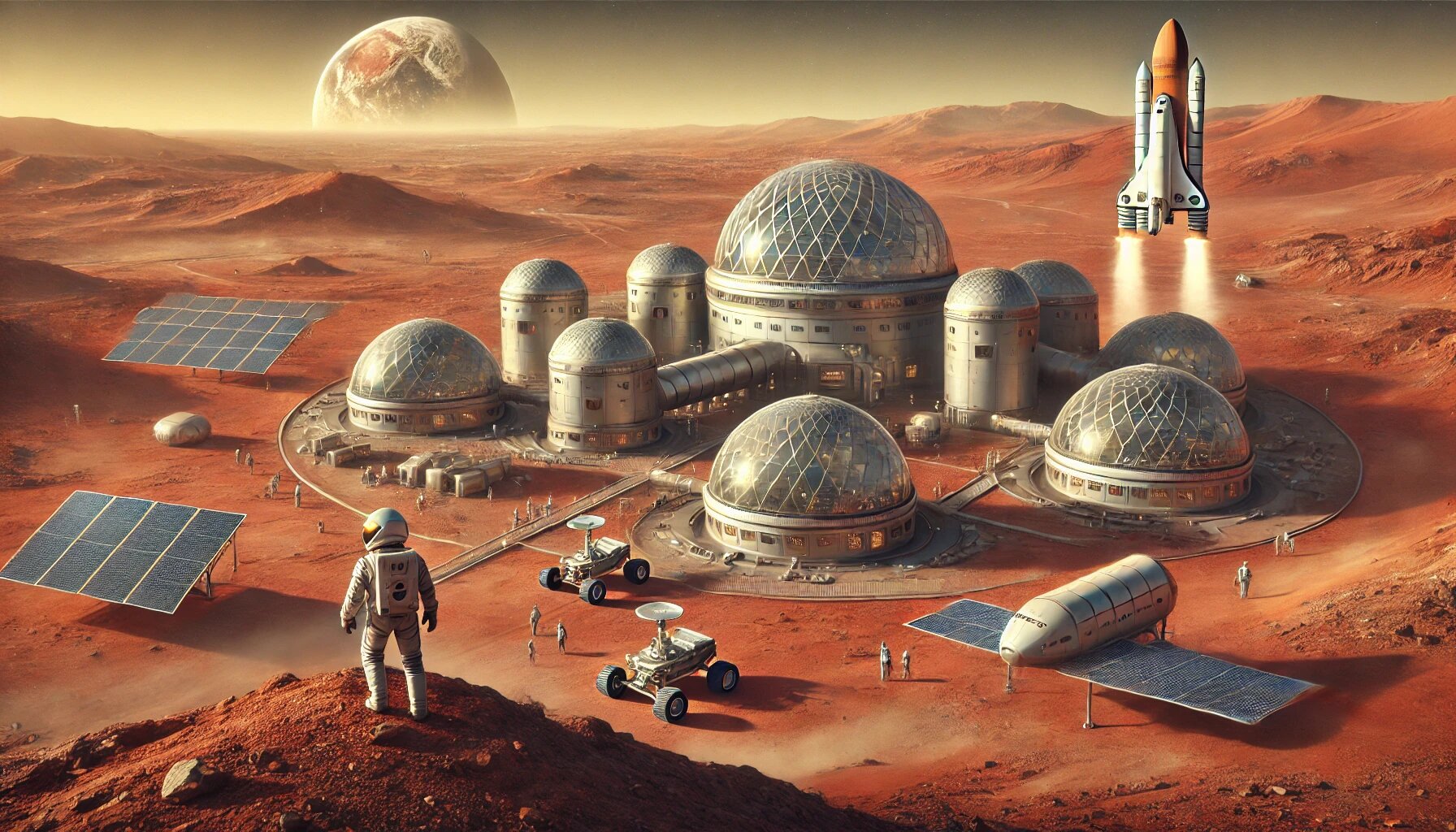
Imagine waking up on Mars, stepping outside in your space suit, and seeing the red, dusty landscape stretch for miles. Pretty cool, right? Sounds like something straight out of a sci-fi movie. But hey, Elon Musk is all about making this dream come true. He thinks humans should live on Mars, and he’s got a bold plan to make it happen. But can it really be done by 2030? Let’s take a look!
1. Who is Elon Musk?
Elon Musk is a billionaire entrepreneur and the mastermind behind companies like Tesla, SpaceX, and Neuralink. His dream? To make humans a multiplanetary species. In 2002, he started SpaceX with one big goal in mind: colonizing Mars.
But Musk isn’t just a businessman; he’s also a futurist with a crazy amount of ambition. Whether it’s electric cars or space exploration, he’s always looking to the future and thinking big. He wants to make life on Earth better, but also wants to make sure humanity has a backup plan in case things go wrong here. And that backup plan? It’s Mars.
Musk has also been open about his desire to reduce the cost of space travel. He believes that if space is cheap enough, we can send huge numbers of people to Mars. It’s all about building a self-sustaining colony where people can live for generations. Musk’s thinking is that humanity’s survival depends on making sure we have a way to leave Earth if needed.
2. Why Mars?
2.1. Is Mars the Best Option?
Out of all the planets in our solar system, Mars is the most Earth-like. It has seasons, polar ice caps, and a day that’s just about 24.6 hours long. That means you’d still have day and night just like on Earth, which is pretty cool, right? Scientists believe that Mars once had rivers and lakes, so it would have supported life long ago. These findings make scientists think that, with the right technology and resources, Mars could be home to humans one day.
And there’s another interesting thing about Mars: its gravity is about 38% of Earth’s. While that might sound scary at first, it could actually help astronauts stay fit and healthy. Some experts believe that the lower gravity could allow for easier bone and muscle recovery in the long run, though more research is still needed.
2.2. Mars vs. the Moon
Some people ask, “Why not the Moon?” Well, the Moon is closer, sure, but it doesn’t have an atmosphere, water, or resources to support long-term human life. It’s more like a giant rock in space than a place for a thriving colony. Mars, on the other hand, might have underground water and natural resources that could be used to build homes and grow food.
Plus, Mars is bigger and has a more stable atmosphere, even though it’s still thin. This means it’s more likely to be able to support things like farming or even larger cities in the future. The Moon might be a good starting point for a lunar base, but Mars is the long-term goal if we want to make humanity a multi-planetary species.
3. SpaceX and the Race to Mars
3.1. What is SpaceX?
SpaceX is a private space company founded by Elon Musk. Its goal is to make space travel affordable and efficient. SpaceX isn’t just launching rockets for the fun of it—they’re actually working toward building a future where we can travel to Mars. They’ve already launched reusable rockets, which is a game-changer for space exploration. Most rockets are used only once, but SpaceX has made it possible to reuse them, saving millions of dollars on each mission.
SpaceX also built the Dragon capsule, which is used to send cargo and astronauts to the International Space Station (ISS). And they’re not stopping there. Their ultimate goal is to build a city on Mars, and every step they take gets them closer to that dream.
3.2. Starship: The Mars Rocket
The Starship is a fully reusable spacecraft that SpaceX is building for deep space travel. This isn’t your average rocket; it’s designed to carry more than 100 people, land on Mars, and return to Earth. With the Starship, Musk and SpaceX hope to cut down on the cost of sending people to Mars, making it possible for more people to live there.
Starship is still in the testing phase, but it has already completed several successful test flights. Once fully operational, it could become the primary vehicle for transporting humans to Mars. It’s like the bus to Mars, only much cooler (and it can go to space!).
🚀 Want to grow your own YouTube presence as fast as SpaceX’s Mars mission?🚀
YouTuber Pro is the ultimate course designed to help you grow your YouTube subscriber count in record time! Learn directly from industry experts who have helped creators reach 100K+ subscribers and beyond. With step-by-step strategies, you’ll be able to maximize your potential on YouTube just like Musk has in space exploration.
Why Join YouTuber Pro?
✔ Master the YouTube Algorithm – Learn how to make the algorithm work for you so your videos get discovered faster.
✔ Proven Content Strategies – Get step-by-step guidance on creating viral content.
✔ Monetization Hacks – Start earning from day one with expert monetization techniques.
✔ Private Creator Community – Connect with like-minded YouTubers for support and collaboration.
✔ Guaranteed Growth Plan – Follow a proven roadmap to increase views and subscribers.
📢 Join YouTuber Pro today and turbocharge your YouTube success!
4. Challenges of Living on Mars
4.1. How Will Humans Get There?
Mars is about 140 million miles away from Earth, which means it’s going to take a while to get there. A trip to Mars will take around 6-9 months, depending on where the planets are in their orbits. That’s almost a year stuck in a spaceship with the same group of people, so you’d better get along with your crew!
SpaceX plans to send humans to Mars using the Starship. Even though the rocket is still in development, the idea is that Starship will be able to make the trip in a comfortable way that doesn’t feel like an endless journey. They plan to send robots and cargo first, to test the conditions and get everything set up before humans arrive.
4.2. Can Humans Survive on Mars?
Mars is not exactly a hospitable place. It has extreme temperatures that can drop as low as -195°F (-125°C). The atmosphere is thin, so there’s not enough oxygen for humans to breathe. Plus, the air is made mostly of carbon dioxide, not what you want for breathing! So, astronauts would need spacesuits, oxygen generators, and underground shelters to survive.
One of the biggest challenges will be creating a safe, sustainable way to live on Mars. Scientists are already working on ways to build shelters that can protect against radiation and extreme temperatures. These structures could be built using materials like Martian soil, metal, and even ice.
4.3. Food, Water, and Oxygen

Made by using AI.
Mars has frozen water under its surface. Scientists think this water could be melted and used for drinking and producing oxygen. They also believe that farming on Mars might be possible, but it’s not going to be easy. Martian soil is not great for growing crops, so researchers are testing ways to grow food using hydroponics and aeroponics—methods of growing plants without soil.
SpaceX and other space agencies are also experimenting with creating self-sustaining systems where astronauts could recycle water and oxygen. These systems would need to be reliable to keep astronauts alive during the long journey and while they’re on Mars.
4.4. Radiation and Extreme Weather
Mars doesn’t have a magnetic field like Earth, which means there’s nothing protecting its surface from the harsh radiation of space. This makes it dangerous for humans to be outside for extended periods of time. To protect themselves, astronauts would need to stay in shelters with thick walls that can block out the radiation.
Mars also has extreme weather. Dust storms can cover the entire planet, and they can last for days or even weeks. These storms can make it difficult to see and can also pose a threat to the equipment and habitats. So, building durable shelters and systems to protect against these storms will be essential for survival.
5. SpaceX’s Mars Mission Timeline
5.1. Unmanned Missions First
Before humans can set foot on Mars, SpaceX plans to send unmanned missions to test the technology. These missions will include robots, cargo ships, and drones to gather information, test the environment, and prepare the planet for human settlers. These initial missions are crucial for ensuring the safety and success of future human missions.
5.2. The First Humans on Mars
SpaceX is aiming to send the first astronauts to Mars by 2029 or 2030. These pioneers will be the first to set up habitats, test life support systems, and conduct long-term experiments. They will likely be part of a small team at first, but the goal is to establish a permanent human presence on Mars.
5.3. A Growing Martian City
By 2050, Musk hopes to see a city on Mars. It may start as a small research base, but over time, it could grow into a self-sustaining colony with homes, schools, and industries. The first few years will be about survival and learning how to live on the Red Planet, but eventually, Musk envisions a thriving city where thousands of people could live.
🚀 Join YouTuber Pro membership today and turbocharge your YouTube success! 🚀
6. How Will We Build a Colony?
6.1. Building Habitats
Building homes on Mars won’t be easy. The habitats need to be strong enough to withstand radiation, extreme temperatures, and dust storms. Scientists are experimenting with materials like ice, metal, and Martian soil to create structures that will protect settlers and allow them to grow food and live comfortably.
6.2. Making Mars Like Earth
One of the biggest ideas is terraforming Mars. Terraforming means changing the environment to make it more like Earth. This could involve releasing greenhouse gases into the atmosphere to warm the planet and create an environment where humans can live without spacesuits. It’s a long-term goal, but some scientists believe it’s possible.
6.3. Farming on Mars
Since it’s unlikely that we’ll be able to import enough food to sustain a Mars colony, astronauts will need to grow their own food. Scientists are working on ways to grow crops in Martian-like conditions using hydroponics and aeroponics. These methods don’t require soil, which is great because Martian soil isn’t suitable for growing Earth crops.
7. The Cost of Colonizing Mars
Building a Mars colony won’t be cheap. Elon Musk estimates that a single ticket to Mars could cost around $100,000, but the total cost of colonizing Mars could run into the hundreds of billions of dollars. But Musk believes that with the right technology, the cost of travel will drop significantly over time.
8. Will Other Countries Join the Mission?
NASA, China, and the European Space Agency also have plans for Mars missions. Some experts think that international collaboration could help make colonization more affordable and efficient. Sharing resources and knowledge could make it easier to build a Martian city and ensure humanity’s future on Mars.
9. Is 2030 Realistic?
Many scientists believe that 2030 is too soon for humans to land on Mars. There are still many challenges to overcome, such as life support, radiation shielding, and ensuring the safety of astronauts. However, SpaceX is making huge strides, and the dream of a human colony on Mars is closer than ever.
10. The Future of Mars Colonization
Whether it happens in 2030, 2040, or beyond, humans are likely to reach Mars in our lifetime. SpaceX has already revolutionized space travel, and with their continued innovation, the dream of a Martian city may one day become a reality.
11. Conclusion
So, will humans really live on Mars by 2030? Maybe. Maybe not. But one thing is certain: we’re closer than ever to becoming a spacefaring civilization. And when that first person sets foot on the Red Planet, it will be a moment that changes history forever.
Drop a comment below and let me know your favorite part!⬇️
Want to read more Blogs/Articles like this? Visit my Medium account to read them-
Subscribe to My Newsletter
Get early access to my latest blog posts and exclusive content on technology, AI, and photography. Join Dual-Perspective and stay ahead with insightful, easy-to-understand articles! Be part of a community that breaks down complex topics for everyone.
Disclaimer: This article contains affiliate links to YouTuber Pro. If you make a purchase through these links, I may earn a small commission at no extra cost to you. Thank you for your support.


Leave a Reply