

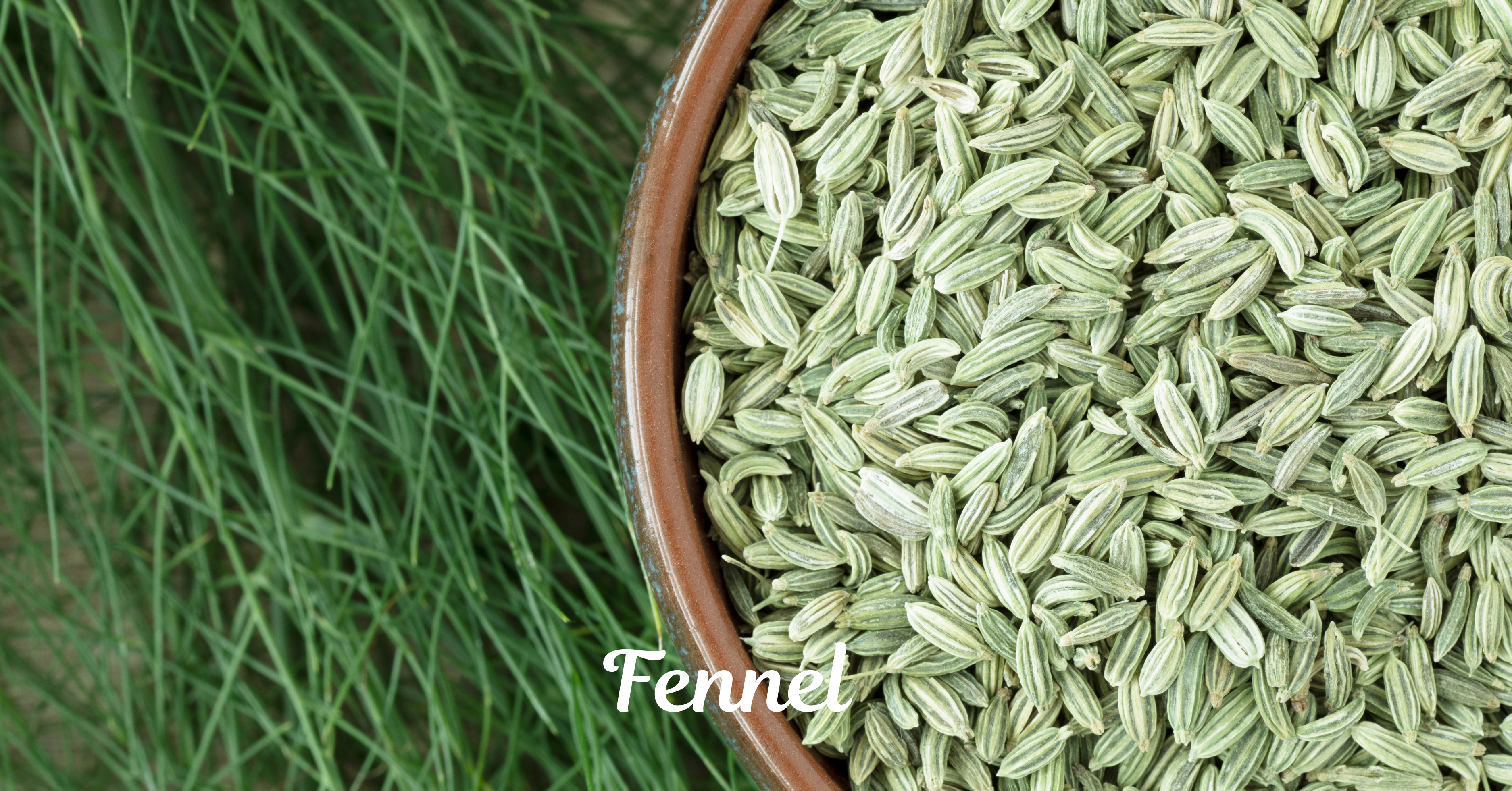
Fennel (Foeniculum vulgare) probably originated in the Mediterranean region. Its use in Chinese cuisine and medicine started only during the Tang Dynasty (c. 618-907 AD). The herb is mentioned in the Tang Dynasty Materia Media. It is an ingredient in the five-spice powder used extensively to flavor Chinese cuisine. It could be that the spice was being imported into China via the Silk Route.
The Greek name for fennel is marathon, and in 490 BC, a battle was fought between the Persians and the Greeks in a field of fennel. According to Greek mythology, knowledge came to man from Mount Olympus as a fiery coal contained in a fennel stalk (Encyclopedia Britannica), a source of strength and courage. Both the Ancient Greeks and Romans used fennel in their cuisine and medicine.
Foeniculum vulgare is the botanical name of fennel. It belongs to the carrot family (Umbelliferae syn Apiaceae). Some other popular species from this family include anise seed, carrot, coriander, dill, and parsley. The plant is grown extensively in the dry ecosystems of the Mediterranean shoreline. Today, the herb is cultivated throughout Southern Europe, Southern China, the US, France, India, and Russia.
Food
Fennel is a familiar cooking herb in the Mediterranean and is popular in the whole belt from Greece to Egypt. Ancient Romans cultivated the plant for its aromatic seeds and edible shoots. Ancient Egyptians, too, used the herb both in food and as medicine. There are references to the plant in Anglo-Saxon cuisine. Charlemagne’s (8th century AD) imperial farms had fennel crops, too.
Fennel seed is sweet and is eaten as a mouth freshener. It is a popular after-meal digestive in India. The Chinese use the leaves and stems in their cooking, with the seeds added as a spice. The young, tender leaves are used to garnish food, as a salad, to flavor soups, sauces, and desserts. Herbal tea can be infused with the herb. It is used as a flavor in natural toothpaste. The bulb and shoots have a mild crunchy texture and sweet flavor.
All plant parts, from the bulb to the seed, are edible. When grown as a vegetable, the stalks are sniped off to prevent nutrients from diverting to flowering and seeding. The vegetable is eaten both cooked and raw. The leaves and seed of fennel taste like aniseed because of the anethole. In the USA, it is sometimes mislabeled as anise.
Fennel Oil
The seed can yield up to 5% of a clear-colored essential oil. The oil’s flavor is due to fenchone and anethole. Fenchone is bitter-tasting, and anethole has a sweet anise-like flavor. The proportion of the two molecules determines the taste and flavor of a variety.
Plants growing in the Mediterranean region generally have sweeter oil, while those in Northern and Central Europe are bitter. A well-dried and fully-ripened seed yields much sweeter and more fragrant oil.
Several scientific studies support the consumption of fennel and its essential oils for their digestive benefits. Here is a summary of scientific evidence in support of the digestive properties of this herb. The essential oil helped reduce the microbial activity of disease-causing microorganisms like Staphylococcus aureus, Candida albicans, Bacillus aureus, and Aspergillus flavus (Roby et al., 2013). Numerous other studies have validated the anti-bacterial properties of fennel (Kaur et al., 2009; Manonmani et al., 2011; and Kazem et al., 2012).
A coumarin molecule responsible for the anti-mycobacterial property has been isolated (Esquivel-Ferrino et al., 2012). The anti-fungal properties of fennel essential oils have also been validated (Park et al., 2010; Thakur et al., 2013).
Medicinal properties of fennel
In Chinese medicine, the herb is believed to strengthen eyesight, relieve cough, assist digestion, and treat stomach ailments and menstrual and respiratory disorders. A poultice made from fennel was externally applied to remedy snake and scorpion bites. The Chinese believe that fennel brings balance to qi. The herb was used in traditional Chinese medicine as a laxative to treat cold, liver, kidney, and spleen ailments.
The Chinese herbal practitioners use fennel with cinnamon and other herbs to enhance lactation. According to them, fennel increases strength and helps reduce weight. Fennel bulbs are a rich source of energy.
In Ayurveda, the seeds are considered good for digestive disorders and as a general tonic. Many treatments with fennel in Ayurveda are like those recommended in traditional Chinese medicine.
Scientists have widely studied the traditional medicinal benefits of the herb in ancient medicine systems like Ayurveda and Chinese Medicine. For decades, fennel has been used to manufacture gripe water with properties like anise and dill. Fennel is mixed with sodium bicarbonate and sugar syrup to make gripe water. Gripe water is prepared to relieve flatulence in infants. Both the seeds and leaves are used as medicine. Fennel is said to stimulate appetite.
Fennel is good for the liver. The hepatoprotective effect of fennel extracts and their antioxidant properties were studied on Wistar rats, and results indicate that the herb is a rich source of antioxidants (Ghanem et al., 2012). The hypolipidemic and anti-atherogenic property of fennel extracts was validated in experiments (Oulmouden et al., 2011). Most scientific studies on fennel and other herbs’ digestive health properties have rarely gone beyond animal trials. This is why most regulators permit herbal products to be consumed as nutraceuticals or in food. Consumption of these products as medicine will require scientific studies to extend to human clinical trials.
Flavonoids, glycosides, and other phytoconstituents found in fennel are remedies for many illnesses. The herb contains phenolic chemicals that are beneficial to human health. Bioactive substances like trans-anethole, estragole, fenchone, and quercetin have been identified. The commercial significance and pharmaceutical industry use of fennel is extensive. It is one of the world’s important medicinal plants.
Planting and gardening of fennel
The plant is an easy-to-grow, hardy, drought-resistant herb that grows around 2 meters tall. It requires little maintenance and likes well-drained soil and full sun. When exposed to severe winter, the plant dies down to re-sprout from the base in spring. If the seeds are allowed to pop up, the plant will self-seed and produce new plants around the garden.
The plant does not like root disturbance and is best directly sown on-site. The herb grows fast and can grow to make a big, tall plant if given space. Space the plants at least a foot apart. The best time to sow is early spring. Keep the watering regular, but do not over-water.
Check out my books on Amazon on herbs, herbal medicine, and food.
I thank Dr Mehmet for inviting me to write this guest post. Sudhir Ahluwalia


Leave a Reply