

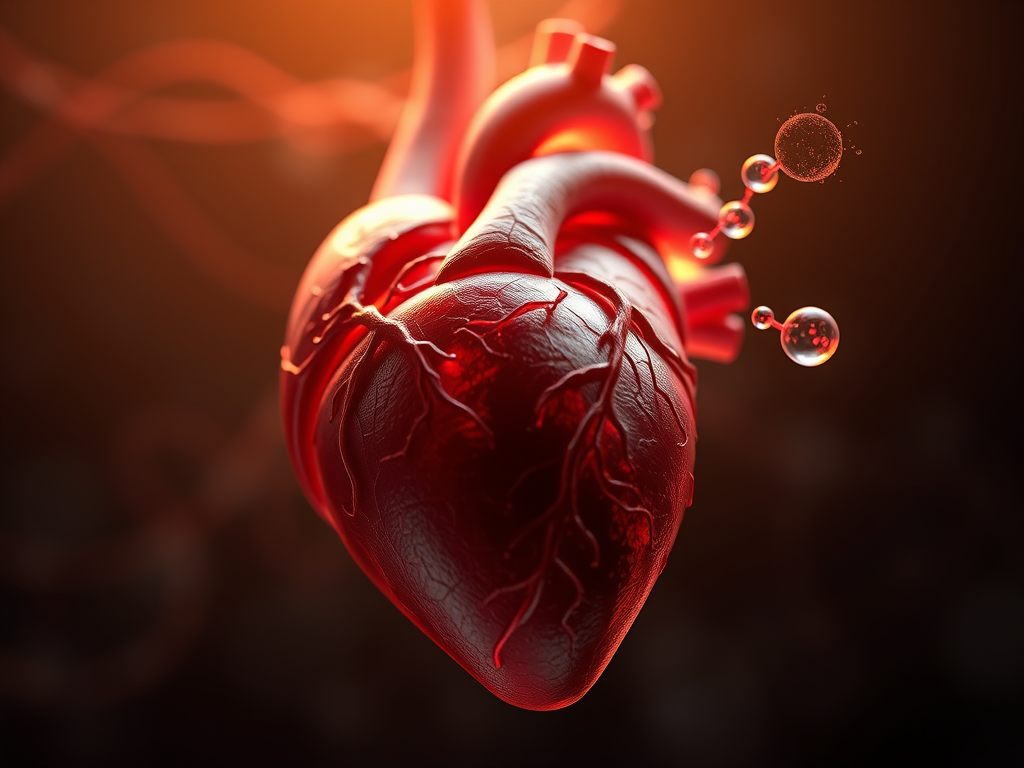
A Silent Threat to Heart Health
Natural therapies offer new hope with promising outcomes against diabetes complications, challenging heart health
As you gear up to unbox diabetic cardiomyopathy, watch this insightful podcast to know the theme of this evidence-based story.
Understanding diabetic cardiomyopathy
Diabetic cardiomyopathy is a serious complication caused by diabetes whose prime target is the muscles of the heart. In individuals who do not have arterial blockage and even those who do not experience blood pressure elevation or hypertension, diabetic cardiomyopathy can still take charge.
Research says that heart problems are responsible for around 80% deaths in those with a diagnosis of diabetes. This is why understanding this issue is so vital for all those impacted by or at high risk of diabetes.
Dangers associated with diabetic cardiomyopathy

Diabetic cardiomyopathy renders the patient unaware of the gradual deterioration of their bodily functions. It gradually weakens the heart’s structure and function, reducing its blood-pumping capacity. The critical thing to note is that the early progression of the disease is without noticeable symptoms.
In individuals with a diagnosis of diabetes, there is a 30% risk of diabetic cardiomyopathy. This risk is even higher in those with a long duration of diabetes and high severity of symptoms. For example, patients who are on treatment and have slightly high blood sugar levels have a significant chance of developing cardiomyopathy.
When diabetic cardiomyopathy is in its early phase, the patient may not experience any complications or triggers that necessitate a heart assessment. However, by the time fatigue or shortness of breath sets in, the heart complication may have escalated out of control.
This is how diabetes threatens heart function.
The consistent elevation in blood sugar levels facilitates collagen accumulation, which can lead to fibrosis or scarring in the heart muscles.
The deposition of unnecessary fat in the heart in diabetes occurs because diabetes makes it increasingly challenging for the heart to utilize glucose for meeting its energy requirements. As a consequence, the heart has no other option than to burn fat for this purpose, which results in the abnormal accumulation of fat.
To understand this better, let’s consider that for ATP production, the heart becomes increasingly dependent on fatty acid metabolism. This consequently triggers oxidation and elevates the uptake of fatty acids. But the heart fails to use that increased fatty acid. As a result, the heart muscles are overloaded with ceramides and triglycerides, leading to cardiac lipotoxicity.
Diabetes also fuels harmful free radicals that increase the risk of chronic inflammation, thereby increasing the scope of heart muscle dysfunction.
The long-term presence of diabetes in the human body leads to several changes in microRNAs, non-coding RNAs, and even the DNA. And you will be surprised to know that, with diabetes inside the body, gut bacteria can determine the fate of this health condition, particularly in terms of its severity and long-term health complications.
The real impact of diabetic cardiomyopathy on the human body
Due to the increased deposition of collagen in the heart tissue, it becomes increasingly stiff and loses its flexibility. Eventually, the heart develops rhythm issues and weakness. In this challenging situation, the heart cells become enlarged and subsequently lose their efficiency, ultimately dying due to oxidative stress and inflammation.
The energy deficit increases with mitochondrial dysfunction, and this is the moment when heartbeats struggle to keep up their pace due to a lack of energy.
How is diabetic cardiomyopathy diagnosed?
Since the early progression of diabetic cardiomyopathy, the symptoms lack clarity; the appropriate diagnosis depends on advanced heart imaging and echocardiograms. These diagnostic procedures can precisely determine the pace of the heart’s contraction and its rhythm.
This is why in high-risk patients with diabetes, sole reliance on electrocardiogram findings may not suffice, and regular screening with more advanced procedures is so important to save heart function.
It is also essential to opt for blood tests to track the markers of inflammation and biochemical factors that overload the heart muscles with unwanted stress. At times, assessing tissue samples from the heart is also required to understand more complex and challenging issues.
The standard treatments for cardiomyopathy
Drugs acting on cardiomyopathy aim at controlling blood pressure and optimizing blood sugar levels to reduce the risk of heart failure. Some of these medications include beta blockers, ACE inhibitors, GLP-1 agonists, and SGLT2 inhibitors.
The next significant step is to manage cardiomyopathy with lifestyle changes. A modified lifestyle, such as adopting a balanced diet and engaging in regular physical activity, helps control bad cholesterol and improve blood sugar control. Several research studies advocate for lifestyle enhancements in blood pressure management.
Although the currently practiced modern medicine remedies can efficiently manage cardiomyopathy or delay its progression, their most significant drawback is the associated side effects. This is why researchers continue to seek better and safer treatments for cardiomyopathy.
Think about natural remedies.
The natural approaches to prevent, treat, or manage cardiomyopathy rely on the power of plant products. With this routine in place, the risk of inflammation and oxidative stress is significantly reduced, which ultimately lowers the likelihood of scarring and cell damage in the heart muscles.
Not only this, but these compounds also help improve fat metabolism and blood sugar balance. By this achievement, the heart has a better scope of utilizing energy to maintain its complex processes. The preservation of heart function through these natural remedies is also based on their potential to reduce cell death and improve mitochondrial function. So, when they boost the cellular powerhouse, half of the problem is already sorted.
Last but not least, natural remedies have the power to enhance the heart’s adaptability and promote its repair processes by strengthening key cellular pathways and genetic mechanisms.
Here are our heroes!
Teas, vegetables, and fruits we often consume contain flavonoids that significantly improve heart health.
The cinnamon derivatives can empower our body in its fight against inflammation and high cholesterol. They can also effectively boost insulin sensitivity, allowing our body to have better control over blood sugar levels.
The extract from Boswellia improves mitochondrial function and reduces the production of cytokines, thereby controlling inflammation.
Aloe compounds and magnolia are our best allies, powerfully combating cell death and protecting the heart muscles against scarring.
The compounds in pomegranate, clove, and centella control inflammation, enhance heart tissue repair, and increase the production of antioxidants.
Research indicates that more than 80 natural substances, including quercetin, naringenin, rutin, and berberine, can protect heart function in various ways. Several research studies are underway to reconfirm their effectiveness in improving heart health.
Let’s talk about the future of heart health.
More personalized and integrative approaches are definitely needed to facilitate heart function, specifically in those with diabetes, and reduce the risk of diabetic cardiomyopathy and associated complications.
Personalized medicine is a robust approach that can help optimize treatments and formulate targeted therapies in accordance with an individual’s microbiome, metabolic, and genetic profile.
Combination treatments that utilize the simultaneous use of natural and pharmaceutical products can help mitigate side effects and accelerate the healing process.
Of course, improvements in diagnostic techniques based on biomarkers, digital technology, and imaging interventions can help physicians select more precise treatments in response to evolving healthcare demands.
This is not the end of the story. Several more clinical studies are needed to confirm and reconfirm the best dosage and safety profiles of the natural remedies in the pipeline.
Take-home message!
Diabetic cardiomyopathy is a much overlooked condition that has a massive impact on heart function and can reduce the quality-adjusted life years and challenge the lifespan of the affected individuals. This is why it’s crucial to target the root cause of this condition at multiple levels.
To achieve this goal meaningfully, the conflict between the natural system of medicine and allopathic approaches must cease; healthcare professionals should establish a global collaboration to foster integrative medicine and attack the disease from multiple fronts.
What appears to be an undertrial intervention today may prove to be a promising treatment against cardiomyopathy by the next decade.
References
Abdullah AR, Seliem MA, Khidr EG, Sobhy AM, El-Shiekh RA, Hafeez MSAE, El-Husseiny AA. A comprehensive review on diabetic cardiomyopathy (DCM): histological spectrum, diagnosis, pathogenesis, and management with conventional treatments and natural compounds. Naunyn Schmiedebergs Arch Pharmacol. 2025 Aug;398(8):9929-9969. doi: 10.1007/s00210-025-03980-9. Epub 2025 Mar 18. PMID: 40100371; PMCID: PMC12350544.
————————————————————————–
To stay active and empowered with research-backed, evidence-based health and wellness content daily and learn its practical application in routine, don’t forget to follow my BioTuberOnline, Substack, Medium, LinkedIn, and Blogger platforms.
Have a wonderful day!
Truly yours,
Dr. Khalid Rahman
(A health scientist, scholarly communicator, and licensed practitioner of integrative medicine) – PhD Clinical Research, MSc Bioinformatics, MSc Clinical Research & Regulatory Affairs, P.G.D.C.A, Bachelor of Unani Medicine & Surgery)


Leave a Reply