

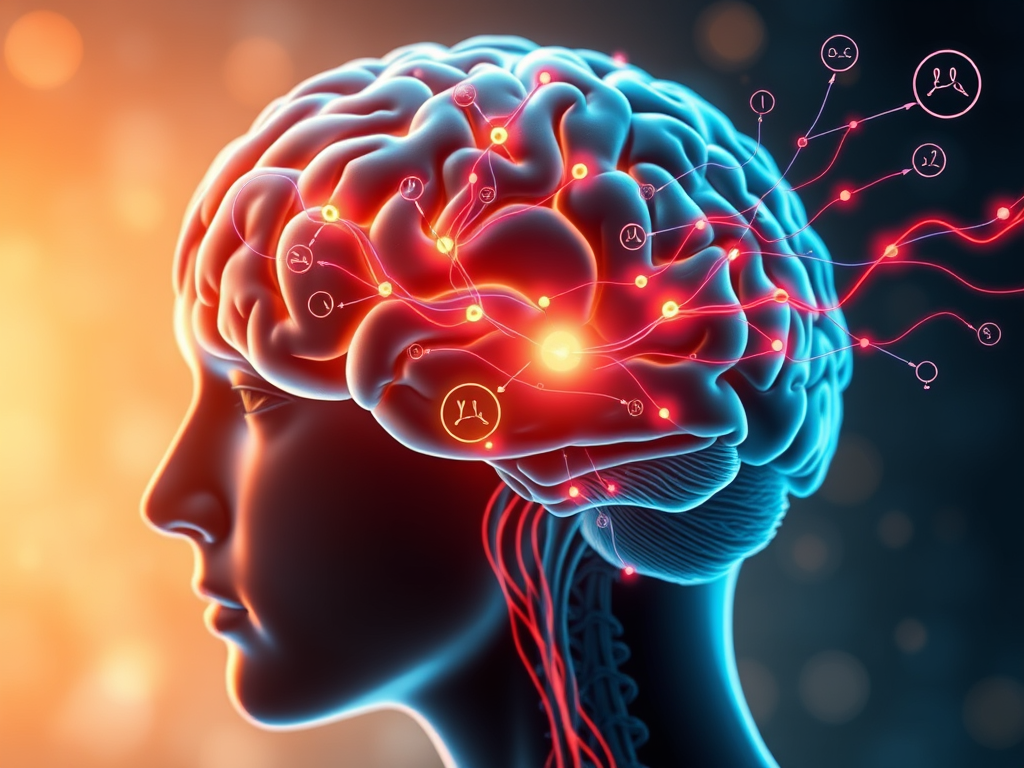
Findings From a Recent Groundbreaking Study
View this insightful podcast for a glimpse into this landmark analysis of chronic pain control mechanisms.
A recent study has shown that Y1 receptor neurons (in the parabrachial nucleus of the human brain) can modulate chronic pain in individuals experiencing fear, thirst, or hunger. This groundbreaking outcome has instilled hope in millions of individuals who have struggled with pain for decades.
In the United States, nearly 60 million individuals aged 18 years or older are impacted by chronic pain patterns. This means that greater than 24% of the population has ongoing pain, which is the highest recorded finding to date.
In 2019, nearly 20% of US adults, or 50 million individuals, were affected by chronic pain. As the pandemic progressed, these numbers continued to increase over time. Now, when the pain relief appeared as an invisible destination, this new research is no less than a testimony of hope for so many hearts.
When we touch a burning candle or a hot stove, a sudden surge of pain waves leaves us confused and shocked, at least for a few moments. However, this pain subsides with time as the injury heals. This is what we call the acute pain. But the chronic pain is a silent enemy that does not produce any alarm. It keeps hurting slowly and gradually over the years, giving no chance for any respite despite all the required measures.
Hats off to the researchers at the University of Pennsylvania; their relentless efforts helped them explore and discover a built-in override system inside the brain that has the capacity to defeat chronic pain, but only when the individual strives for survival.
What does science say about this pain switch?
The lateral parabrachial nucleus in the brainstem contains a bunch of neurons. This is regarded as a relay station where the survival and emotional circuitry in the brain integrates with the sensory information from the spinal cord. The researchers of the latest study utilized advanced calcium imaging and spatial transcriptomics to investigate 32,169 cells with neural markers. The eye-opening results of this analysis revealed that in a state of chronic pain, the Y1 receptor neurons continue to maintain their tonic intervention. This means they consistently fire, similar to the running engine of a parked car, which, despite being at rest, continues to generate the action triggers.
These findings clearly explain the phenomenon responsible for chronic pain triggers, even when the immune system does its best to heal the tissues. The researchers of this robust study utilized state-of-the-art techniques, including monosynaptic rabies tracing, optogenetics, chemogenetics, and Q-learning, to elucidate the critical circuits that take charge and override chronic pain signals in response to survival triggers, such as fear, threat, or hunger.
Research findings said that it’s not appropriate to recognize the parabrachial nucleus exclusively as a pain relay center. They concluded that several survival waves, based on triggers such as fear, thrust, and hunger, converge primarily at this vital junction. Their results advocated that the parabrachial neurons, including their molecular and functional subclasses, have 20% occupancy by the Y1 receptor neurons. This indicates their ample influence on a multitude of pain mechanisms.
The Pain Override Mechanisms and the Role of Neuropeptide Y
The neuropeptide Y does not interfere abruptly with the direct connections between the synapses (of the neurons) but adopts a unique mechanism for its release. The neurons of the lateral parabrachial nucleus release neuropeptide Y in substantial amounts beyond the synaptic contact, which is why its impact extends to numerous circuits and neurons in the brain.
And when this happens, a suppression of persistent brain signals occurs during high survival states. When a person feels thirst, fear, or hunger, the lateral parabrachial nucleus receives activation signals. It releases neuropeptide Y, which then integrates with Y1 receptors. And the job is done, the chronic pain subsides to a significant level.
One of the students involved in this study referred to this brain mechanism as a built-in override switch. This means if I have chronic pain, as soon as I am attacked by a predator or when I don’t get food for several days and am suffering from starvation, the lingering pain will no longer be a trouble for me. In other words, when I am threatened, my neuropeptide Y responds to a threat signal, allowing my brain to focus on more urgent survival priorities.
Honestly, this research tells us that chronic pain is just a mind game.
We never knew that we possess such a significant evolutionary adaptation that can override the chronic discomfort to cater to the more important priorities. So it doesn’t matter what type of injury triggered the chronic pain, or how long the chronic pain continues to trouble; a single strike from fear, thirst, or hunger can be a game-changer. However, this study did not claim to assess the impact of these triggers on acute pain responses.
Why does this study need utmost attention?
Indeed, the recent study did not provide any sure-shot remedy for chronic pain. Neither did it claim any definitive treatment. So why should we take this seriously?
To my understanding and assessment, this groundbreaking study has thoroughly transformed our perception of chronic pain. With these findings in hand, we can say with some confidence that chronic pain may not be a peripheral nerve issue at its core. It’s instead related to the dysfunction of the brain circuit.
This means that the issue is not related to the location of the injury or the associated nerve damage, but rather the outcome of a possible defect in the brain’s circuitry. The new treatment pathway unveiled in this study targets the neurons of this brain circuitry.
The analysis of the specific neurons in this study revealed the pain-coping behaviors in nearly 40% of Y1 receptor neurons. And tonic activity was demonstrated in 16% of these neurons during pain. Now the researchers have to put in more effort to understand the potential causes of chronic pain triggers, and maybe, this can give chronic pain a unique neurophysiological signature for targeted therapy.
The story doesn’t end here. With this new study in place, there is a high possibility of utilizing neuropeptide Y as a biomarker to understand the mechanism of chronic pain, as well as a patient’s coping ability. Specifically, when pain progresses in the absence of physical trauma, medical decision-making becomes increasingly challenging for physicians. The outcomes of this study can inform such treatment decisions and facilitate the rapid reduction of pain.
The path ahead
The parabrachial nucleus and its silent pain switch are about to transform our fundamental understanding of chronic pain. But this is the beginning of a more challenging journey. To develop targeted treatments, several human studies are necessary to further understand the mechanisms of chronic pain in relation to the neural circuits.
This latest study, which sheds light on the brain’s natural override system, holds promise for a new era of hope and may pave the way for the development of targeted strategies for managing chronic pain.
References
Goldstein, N., Maes, A., Allen, H.N. et al. A parabrachial hub for need-state control of enduring pain. Nature (2025). https://doi.org/10.1038/s41586-025-09602-x
ScienceDaily. Scientists discover brain circuit that can switch off chronic pain. ScienceDaily (2025).
—————————————————————————————————————-
To stay active and empowered with research-backed, evidence-based health and wellness content daily and learn its practical application in routine, don’t forget to follow my BioTuberOnline, Substack, Medium, LinkedIn, and Blogger platforms.
Have a wonderful day!
Truly yours,
Dr. Khalid Rahman
(A health scientist, scholarly communicator, and licensed practitioner of integrative medicine) – PhD Clinical Research, MSc Bioinformatics, MSc Clinical Research & Regulatory Affairs, P.G.D.C.A, Bachelor of Unani Medicine & Surgery)


Leave a Reply