

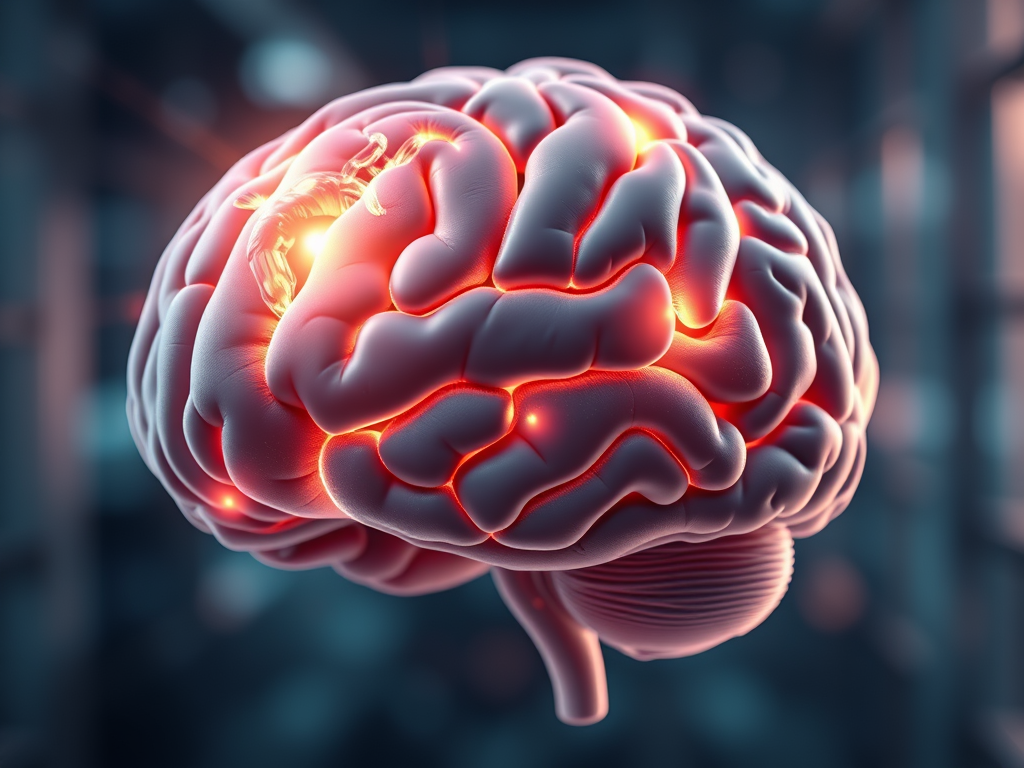
Can the CAQK peptide transform recovery from brain trauma?
Abstract: CAQK, a peptide composed of four amino acids, has the potential to transform recovery from traumatic brain injury (TBI) by promoting healing without invasive procedures. Research indicates that CAQK can effectively reduce tissue damage, enhance memory, and minimize inflammation post-injury. Administered intravenously, it binds to damaged tissues, stimulating protective mechanisms and accelerating recovery. Current brain injury treatments lack effective therapies to halt tissue deterioration. However, CAQK’s innovative approach targets brain injuries more safely and efficiently. Future human trials could clarify its therapeutic potential, representing a significant advancement in neuroprotective strategies for traumatic brain injury and central nervous system disorders.
Written by Dr Khalid Rahman
Just imagine, four amino acids in a drug, with the power to heal the brain and safeguard it from debilitating injuries. This is what scientists from the Spanish National Research Council (CSIC) have recently claimed for CAQK.
Despite being a tiny entity, CAQK can revolutionize the management of traumatic brain injury (TBI). This game-changing molecule may transform and revolutionize perspectives on trauma and healing in neurology.
The powerful mission of a simple molecule
Imagine a person with a head injury doesn’t undergo brain surgery but is given a simple intravenous injection instilled with CAQK. With this injection, the damaged brain tissue directly receives CAQK. This integration soon triggers the healing switch without the need for any invasive intervention.
When a brain injury occurs, a unique protein is released, guiding the transport of CAQK to the injury site. Then, when it encounters injured tissues, it binds to them, begins reducing tissue damage, strengthens nerve cells, and minimizes inflammation. The amazing presumption is that this process will be devoid of toxicity.
The preclinical studies in mouse models showed that CAQK effectively enhanced memory and repair processes. The findings revealed high precision of the CAQK peptide and that it did not alter the function of otherwise healthy tissues.
The current challenges with brain injury treatment
In every 100,000 individuals around the globe, nearly 200 encounter TBI due to workplace events, falls, or other accidents.
The current approaches to brain injury management aim to improve blood flow and control intracranial pressure to keep patients alive. But currently, no approved therapy can claim to directly halt the tissue damage and reverse it with time after trauma.
Healing cannot be equated with clinically stabilizing the injured individuals. It’s all about challenging the cascade of tissue breakdown from all directions.
Even those studies that have investigated TBI management so far have experimented with complex and risky procedures, including brain injections. This is why the CAQK intervention looks particularly innovative and more practical. The routing of CAQK into the bloodstream and toward the damaged tissue appears highly appealing to scientists and researchers worldwide.
Unboxing CAQK biology
In 2016, scientists used phage display, a powerful technique, to screen millions of peptides and discovered CAQK. They called CAQK a transport vehicle to deliver drugs to the traumatized brain tissues.
Surprisingly, a recent study found therapeutic potential for CAQK in TBI.
Research says that CAQK administration immediately after injury kickstarts the cascade of events, including the binding of this tiny peptide with injury-triggered glycoproteins. This activity helps fill gaps in the brain’s supportive network, the extracellular matrix.
The CAQK activation then FasTracks the recovery and lowers the death rates among the injured cells.
A step forward toward clinical studies
Aivocode plans to obtain FDA authorization to initiate the first phase of a human study to further investigate CAQK outcomes in traumatic brain injury.
CAQK is a strong candidate for testing its fit within the latest drug development framework. The reason is its rapid production and possibly safe large-scale synthesis. CAQK’s promise to counter traumatic brain injury is based on its avoidance of immunogenic reactions and potential to surpass deteriorated brain barriers.
Currently, it’s difficult to imagine how a tiny molecule can powerfully rebalance the tissues of the traumatized brain. Human trials, if they materialize, will unbox the mechanics of this peptide and define its future use as a potential remedy for acute brain injury.
Does it matter?
The CAQK discovery can open the door to novel treatments for other central nervous system injuries. When disability due to cell death, scarring, or inflammation becomes nearly impossible to reverse, such new approaches may prove to be a role model for the next generation of neuroprotective treatments.
As of now, science has once again invited curiosity and is humbled by the introduction of CAQK, which may revolutionize how we understand, perceive, manage, and treat traumatic brain injury.
This is so true and so inspiring that, at times, the tiniest entities can become beacons of hope the moment their healing potential is uncovered through rigorous scientific studies.
References
Mann, A. P., Hussain, S., Scodeller, P., Moore, H. N. B., Sherazee, E., Russo, R. M., & Ruoslahti, E. (2025). A neuroprotective tetrapeptide for treatment of acute traumatic brain injury. EMBO Molecular Medicine.
Spanish National Research Council. (2025, October 7). Peptide shows neuroprotective effects in traumatic brain injury (G. Clark, Ed.; R. Egan, Rev). Medical Xpress.
To stay active and empowered with research-backed, evidence-based health and wellness content daily and learn its practical application in routine, don’t forget to follow my BioTuberOnline, Substack, Medium, LinkedIn, Patreon, and Blogger platforms.
Have a wonderful day!
Truly yours,
Dr. Khalid Rahman
(A health scientist, scholarly communicator, and licensed practitioner of integrative medicine; PhD in Clinical Research, MSc in Bioinformatics, MSc in Clinical Research & Regulatory Affairs, P.G.D.C.A., Bachelor of Unani Medicine & Surgery)


Leave a Reply