

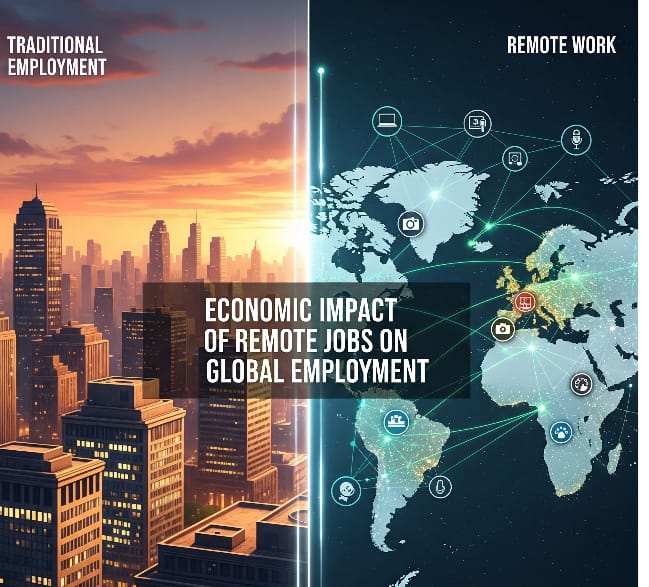
The economic impact of remote jobs is transforming employment patterns across the world. Remote work is not just about convenience—it’s creating new job opportunities, improving incomes, and allowing people to work from anywhere. Businesses are tapping into global talent pools, while employees gain flexibility and access to higher-paying roles.
This shift is influencing both local and global economies, redefining how companies operate and how workers plan their careers. As the economic impact of remote jobs continues to grow, it’s reshaping the way we work and live in an increasingly connected world.
The rise of remote jobs is reshaping global employment patterns, influencing job creation, talent distribution, and regional economies. From startups to multinational corporations, businesses are recognizing cost savings and productivity gains, while workers benefit from broader opportunities and geographical flexibility.
This change is not without its challenges, but the overall economic impact is profound, influencing wages, job access, and market growth.
In this article, we explore how remote jobs are transforming global employment and what this means for the future of work.
You can read more blogs here.


Leave a Reply