

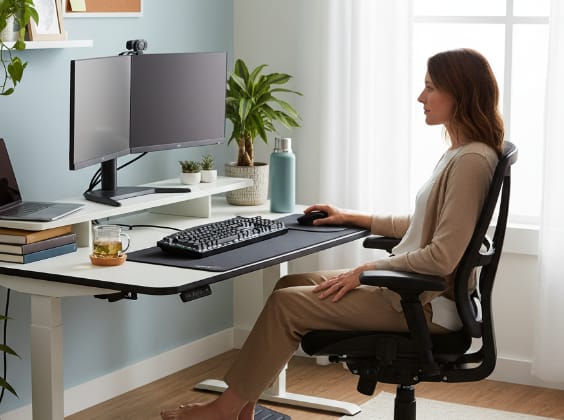
Working from home has shifted from being a temporary solution to becoming a long-term reality for millions of professionals. While remote work offers flexibility, it also brings new challenges for health and productivity. Many people sit for long hours at makeshift setups kitchen tables, couches, or even beds, without realizing the strain it puts on their bodies. Over time, poor posture, awkward desk arrangements, and inadequate lighting can lead to back pain, eye strain, and reduced focus.
This is where work-from-home ergonomics comes in. Ergonomics is all about designing your workspace to fit your body, not the other way around. A healthy setup not only reduces the risk of physical discomfort but also boosts energy levels and work performance. In today’s digital-first world, investing in ergonomic practices is no longer a luxury; it’s a necessity for anyone who wants to thrive in remote work.
Working from home has become the new normal for millions of professionals worldwide. But as remote work grows, so does the need to pay attention to work from home ergonomics. Sitting for hours at makeshift setups like kitchen tables or couches can harm posture, strain muscles, and reduce focus. Poor ergonomics often leads to long-term issues such as back pain, neck stiffness, and eye strain—problems that can silently erode productivity.
By prioritizing ergonomic practices at home, you create a workspace that supports both your health and efficiency. The right chair, desk height, screen position, and lighting can transform your daily workflow into something sustainable and comfortable. In this guide, we’ll explore the essentials of work from home ergonomics so you can build a healthier, more productive environment right where you are.
Read the complete article here.


Leave a Reply