

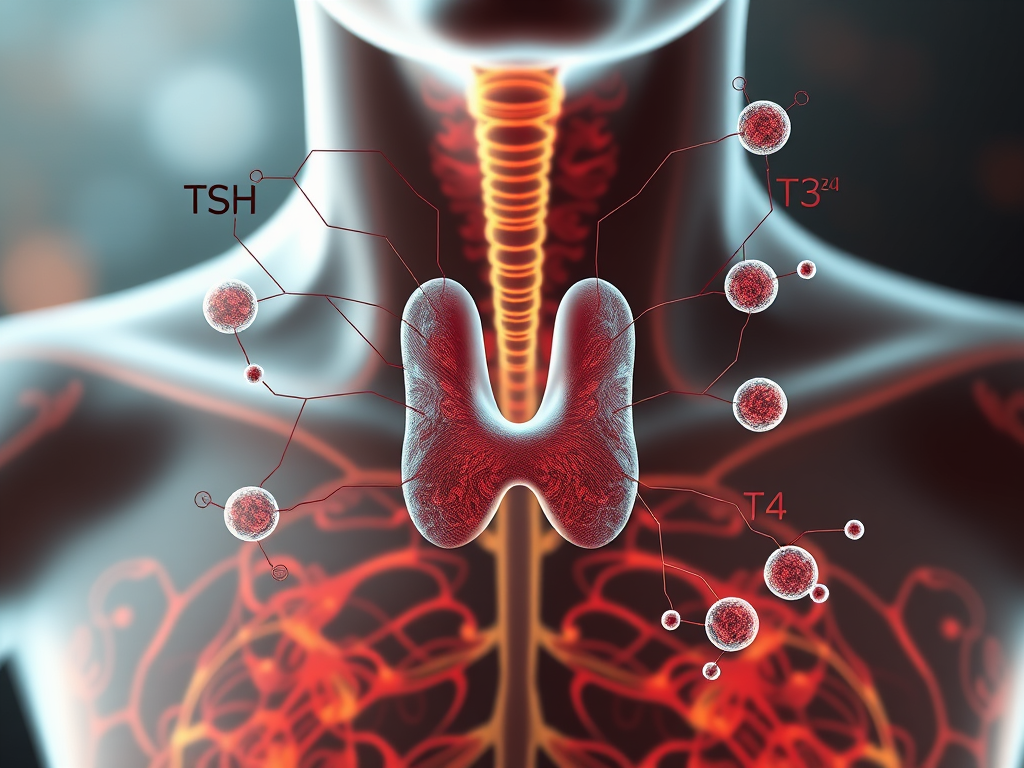
Here’s how TSH, T3, T4, brown fat, and your daily habits can affect your health over time.
Curator’s Note: The post discusses the complexities of thyroid health, emphasizing that TSH levels alone do not determine metabolic function. Key hormones, T3 and T4, play critical roles, with T3 being active and primarily sourced from extrathyroidal tissues. The liver manages metabolism through thyroid hormone receptors, affecting cholesterol and fat storage. Mitochondria work with T3 for energy production, influencing conditions like diabetes. Lifestyle choices, stress, and environmental factors like endocrine disruptors also impact thyroid function. A comprehensive evaluation of T4, T3, and lifestyle is essential for understanding thyroid health and metabolism.
Written by Dr Khalid Rahman
Is TSH the only thing that matters?
Many people mistakenly believe that normal thyroid-stimulating hormone (TSH) levels always mean their metabolism is working correctly.
TSH is one of several markers doctors consider when assessing your metabolic health.
Relying only on TSH to check metabolism can be a grave mistake for doctors.
T3, T4, and thyroid receptors
The key components of the metabolic system include T4 (thyroxine) and T3 (triiodothyronine).
Your thyroid gland produces about 90% of its hormone as T4, which is inactive and serves mainly as a storage form. The other 10% is T3, the active hormone that works with your cells and affects many body functions.
Only about 20% of your daily T3 is produced by the thyroid gland.
In comparison, the remaining 80% is contributed by extrathyroidal tissues, mainly the liver. Compared with T4, T3 binds receptors more effectively.
There are two main types of thyroid hormone-related receptors. One is THRα, which is found in the heart and bones, and another is THRβ, which is found in the liver, brain, kidneys, and eyes.
Both THRα and THRβ affect metabolism, but in different ways.
THRβ in liver metabolism
The liver is a central hub for metabolism controlled by thyroid hormones. THRβ helps manage cholesterol production and how the body stores or burns fat.
As a result, THRβ affects levels of LDL (bad cholesterol), apolipoprotein B, and lipoprotein(a).
T3 also affects essential proteins such as SREBP1C and ChREBP, which help regulate how your body handles carbs and fats.
THRα effects and receptor variation
Research on changes in THRα shows subtle differences in how fat enzymes work compared to how the body manages fat.
Studies have shown that receptor alternation can impair THRα function even in the absence of hormone binding, leading to localized cellular resistance.
This means thyroid hormones can affect people differently.
People have different types and amounts of hormone receptors. So, even if two people have the same TSH and T4 results, their bodies might respond differently to these hormones.
Mitochondria and energy production
Mitochondria work closely with T3 to regulate genetic and nuclear processes that convert nutrients into ATP (adenosine triphosphate), the cell’s primary energy source.
Research shows that mitochondrial problems are linked to diseases like non-alcoholic steatohepatitis and type 2 diabetes. T3 helps create new mitochondria through proteins like PGC-1α, NRF1, and transcription factor A.
T3 also helps regulate fatty acid entry into mitochondria by modulating CPT1.
T3 helps keep mitochondria healthy by adjusting PINK1 and other systems that remove damaged mitochondria.
T3 initiates processes such as autophagy and lipophagy by activating MED1.
Activation of the brown adipose tissue
The brown adipose tissue (BAT) has a significant impact on energy metabolism and thyroid function. This type of fat is rich in mitochondria and helps burn energy.
Thyroid hormones help brown fat by turning on genes that boost energy production. When BAT works well, your body can maintain a steady temperature, burn extra calories, and better handle fat and sugar.
Exercise and cold weather can also activate brown fat.
Lifestyle and sleep
Your lifestyle choices significantly affect how your thyroid hormones function.
Your daily habits and sleep schedule affect when and how your thyroid hormones are released. If you often change your routine or don’t get enough sleep, you might have thyroid problems.
High stress can make it harder for your body to use thyroid hormones, which can hurt your metabolism.
Endocrine disruptors
Plastics and PFAS (Per- and Polyfluoroalkyl Substances) may compete with thyroid hormones or disrupt their function. They can alter thyroid structure and deteriorate the processing ability of thyroid hormones in the human body.
Being exposed to these chemicals for a long time can make thyroid and metabolism problems worse. The risks go up if you eat a lot of processed food, are often stressed, or don’t sleep well.
The best solution to avoid these problems is to minimize plastic use, consume more fresh food, and live in a well-ventilated home. Additionally, checking labels on packaged food helps avoid products that contain toxic chemicals.
It’s essential to take a complete look at your thyroid health.
Scientific evidence demonstrates that relying solely on TSH for thyroid function evaluation and metabolic health is not the right approach. The physician must also evaluate T4 and T3 levels to have good insight into the overall function of receptors, enzymes, brown fat, and mitochondria.
It’s also important to look at your environment, sleep, and eating habits to see how they affect your thyroid. Checking both hormone levels and lifestyle factors, along with your day-to-day perceptions, can help clarify confusion about thyroid and metabolism.
Content source
Watch the insightful thyroid and metabolism masterclass here:
To stay active and empowered with research-backed, evidence-based health and wellness content daily and learn its practical application in routine, don’t forget to follow my BioTuberOnline, Substack, Medium, LinkedIn, Patreon, and Blogger platforms.
As a health scientist, I would love to learn about your health and wellness experiences and insights into your encounters with ongoing or prior treatments/health support measures.
As we collaborate on this fascinating yet adventurous health and wellness journey, please share the next health topics/clinical research breakthroughs you would like me to bring to your desk.
Subscribe to my educational channel BioTuberOnline for more health and wellness updates, all backed by rigorous scientific evidence.
Stay tuned & have a wonderful day!
Truly yours,
Dr. Khalid Rahman Health Scientist | Scholarly Communicator | Licensed Integrative Medicine Practitioner PhD (Clinical Research) | MSc (Bioinformatics) | MSc (Clinical Research & Regulatory Affairs) | Post Graduate Diploma in Computer Application | Bachelor of Unani Medicine & Surgery


Leave a Reply