

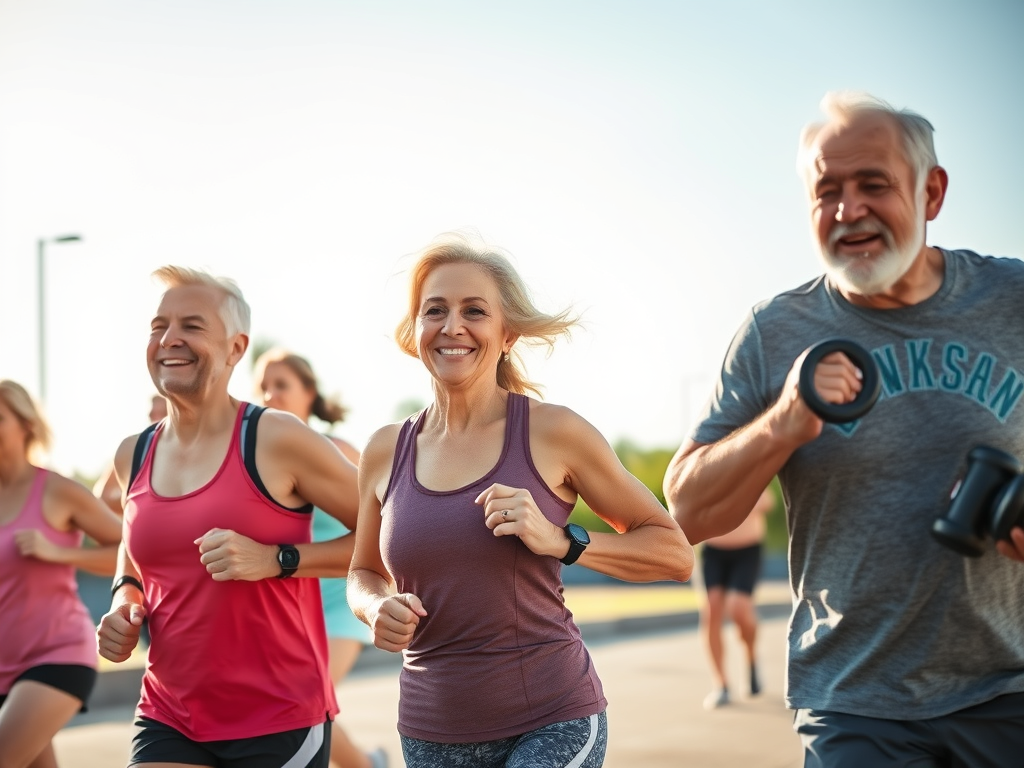
Looking at why fitness peaks drop earlier than we think, and how staying active at any age can make a big difference
Curator’s Note: The study reveals that physical fitness peaks earlier than commonly believed, often starting to decline in individuals during their mid-30s rather than their 60s. Following 427 participants over 47 years, researchers found that strength, endurance, and muscle power reached their highest levels in late teens to mid-30s, with declines occurring predictably thereafter. Notably, both men and women experienced similar rates of decline post-peak. Engaging in physical activity early and often, even into older age, significantly impacts long-term physical capacity. The findings emphasize the importance of maintaining an active lifestyle to mitigate age-related declines in physical fitness. This story was written by Dr Khalid Rahman.
Many people think aging doesn’t really start until their 60s, but in reality, it can begin to affect your physical abilities as early as your mid-30s.
A major study looked at the physical activity patterns of people aged 16 to 63. The researchers found that strength, endurance, and muscle power all increase, reach a peak, and then decline in a predictable way.
In most cases, people started to lose physical strength much earlier than age 60, which is earlier than many expect.
When do we really reach our physical peak?
The 427 study participants, including men and women born in 1958 and followed for 47 years, reported peak physical activity in late teenage years or by mid-30s. And this variation depended on the level of individual fitness, as determined by the following parameters.
- Aerobic capacity, which shows how well the heart and lungs work, was highest for both men and women in their mid-30s.
- Muscular endurance, like how many bench press reps someone can do, was also at its best in the mid-30s and was a bit higher in women than in men.
- Muscle power, measured by how high someone can jump, peaked for women in their late teens and for men in their late 20s.
You can find a YouTube podcast that explains these findings in simple, easy-to-understand terms.
You might feel fit and healthy in your late 40s, but scientific evidence shows that most people reach their maximum physical capacity much earlier than they realize.
This silent yet alarming drop in physical activity peak
It’s well known that physical fitness declines with age. This study showed that, when following the same people over time, there was a steep drop in physical capacity earlier in life than many expect.
- After reaching its peak in youth, physical capacity declined slowly each year until midlife, at a rate of 0.3% to 0.6% per year.
- Each year, aerobic capacity and muscular endurance dropped by about 2.0 to 2.5 percent until people reached their 60s. Muscle capacity fell by about 2.2% by the same age.
- From peak levels to age 63, people lost about 30% to 48% of their physical capacity. The amount of loss varied by sex and by measures like aerobic capacity, muscular endurance, and muscle power.
This means that by their early 60s, a healthy person could lose almost two-thirds of their earlier physical capacity and still not feel weak.
Does physical activity really decline faster in women?
Many people think women are less physically capable than men or lose fitness faster. However, this study shows that idea is not true.
The study found that men had higher oxygen use, could jump higher, and do more bench press reps than women at almost every age. But once both reached their peak, men and women lost muscle power, endurance, and aerobic ability at nearly the same rate.
So, while men may start out stronger, their peak physical capacity is similar to women’s in relative terms, and both follow the same pattern of change over time.
Why your choices in your teens and adulthood matter
The study found that leisure activities and education were two important lifestyle factors over the 47 years.
People who were more active at age 16 were more likely to have better aerobic capacity, muscular endurance, and muscle power in their 60s.
Alternatively, those who had lower physical activity levels and later adopted an active routine had 6-7% greater aerobic capacity, 11% greater bench-press endurance, and 4% better jumping ability than those with a sedentary lifestyle over the long term.
Participants with a university degree had higher aerobic capacity and muscular endurance than those without a degree. The study also showed that physical ability varied widely among people, depending on their behavior and socioeconomic background.
Takehome messages
The predominant result of this study was that the earlier individuals began engaging in physical activity, the greater the scope for improving their health and wellness. And even though the physical capacity curve slopes downward with age, they had the opportunity to stretch it upward by adopting an active lifestyle.
This study reveals that age is a potential factor associated with high diversity in physical activity trajectories among individuals. For example, in several participants, the relative aerobic capacity at 63 years was 25 times higher than at 16 years. Similarly, the variance in jumping height and muscular endurance was approximately 5 and 3 times greater at a higher age in the same individuals than in their younger selves.
One clear point from this study is that there isn’t just one way that physical activity changes with age. Some people keep much more of their physical ability than others, even at the same age. There is no single formula to prevent age-related declines.
Looking at the 47 years of the study, there are three main things you can control.
- How quickly can you improve your physical ability before your peak?
- How long can you keep that peak?
- What do you do to slow down the decline as you age?
To get the best results in all three areas, stay physically active throughout your life. It doesn’t matter if you start in middle age or even in your 60s.
These findings offer hope to anyone who feels overwhelmed by the idea of starting or keeping up with physical activity, like brisk walking or regular exercise.
Improving your physical activity can help you feel better and slow down the effects of aging.
Why not start planning your next workout today?
Reference
Westerståhl M, Jörnåker G, Jansson E, Aasa U, Ingre M, Pourhamidi K, Ulfhake B, Gustafsson T. Rise and Fall of Physical Capacity in a General Population: A 47-Year Longitudinal Study. J Cachexia Sarcopenia Muscle. 2025 Dec;16(6):e70134. DOI: 10.1002/jcsm.70134. PMID: 41243424; PMCID: PMC12620399.
To stay active and empowered with research-backed, evidence-based health and wellness content daily and learn its practical application in routine, don’t forget to follow my BioTuberOnline, Substack, Medium, LinkedIn, Patreon, and Blogger platforms.
As a health scientist, I would love to learn about your health and wellness experiences and insights into your encounters with ongoing or prior treatments/health support measures.
As we collaborate on this fascinating yet adventurous health and wellness journey, please share the next health topics/clinical research breakthroughs you would like me to bring to your desk.
Subscribe to my educational channel BioTuberOnline for more health and wellness updates, all backed by rigorous scientific evidence.
Stay tuned & have a wonderful day!
Truly yours,
Dr. Khalid Rahman Health Scientist | Scholarly Communicator | Licensed Integrative Medicine Practitioner PhD (Clinical Research) | MSc (Bioinformatics) | MSc (Clinical Research & Regulatory Affairs) | Post Graduate Diploma in Computer Application | Bachelor of Unani Medicine & Surgery


Leave a Reply