

The Intelligence Within Our Cells
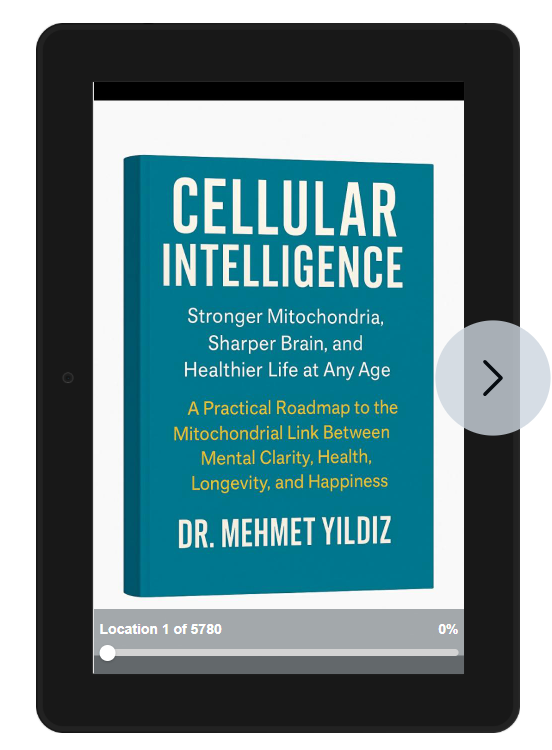
My editorial perspectives on the book “Cellular Intelligence: Stronger Mitochondria, Sharper Brain, and Healthier Life at Any Age” by Dr. Mehmet Yildiz
Curator’s Note: In his editorial review of “Cellular Intelligence” by Dr. Mehmet Yildiz, Dr Albert Jones highlights the book’s unique approach to mental health, emphasizing the biological underpinnings related to mitochondrial function. Drawing from his extensive experience in psychiatry, Dr. Jones, a retired psychiatrist, appreciates how the book reframes mental health, linking emotional regulation, cognitive flexibility, and stress tolerance to cellular energy management. This perspective moves beyond traditional psychiatric frameworks, integrating biological, psychological, and social factors. He underscores the importance of practical interventions, like nutrition and sleep, for mental health stability. Overall, he considers the book a significant resource for understanding the biological foundations of mental resilience and recovery.
Dear Reader,
I couldn’t post to this site for a while, so this weekend I want to share a review I wrote about a book I reviewed, edited, and enjoyed immensely.
One of my hobbies in my retirement years is to support authors and offer editing services to them. I particularly enjoy reading and editing books in health and wellness topics. Mental health is my primary interest.
I’ve been on Medium for over one year now but hardly find any time to write due to my hectic life despite my retirement from the workforce. However I allocate some time daily to read stories and edit books close to my heart.
In this post, I will share with you my editorial review of a recent book titled Cellular Intelligence written by Dr Mehmet Yildiz, who is an expert in the field with research and lived experiences. This book gave me new perspectives on our cells and especially on our mitochondria.
I found this platform thanks to Dr. Yildiz, who eased my digital frustration and helped me feel more confident in finding my way in the complex cyberspace.
Editorial Review of the Book “Cellular Intelligence: Stronger Mitochondria, Sharper Brain, and Healthier Life at Any Age”
After five decades in psychiatry until the early 2020s, I learned an uncomfortable truth: our diagnostic language often outpaces our biological understanding.
We have become adept at naming syndromes, categorizing symptoms, and refining criteria. Yet many of the patients I saw over the years left my office with accurate diagnoses and incomplete explanations.
They understood what they were experiencing, but rarely why their minds felt depleted, unstable, or trapped in cycles of anxiety, depression, or emotional volatility. Cellular Intelligence addresses that gap with unusual clarity and courage.
From the first chapters, it becomes evident that this book does not treat mental health as an abstract psychological phenomenon, nor does it reduce it to neurotransmitters alone. Instead, it reframes mental health through a deeper biological lens: the capacity of brain cells to generate, distribute, and regulate energy.
As a psychiatrist, this framing resonated immediately.
Across anxiety disorders, major depression, bipolar conditions, trauma-related syndromes, and cognitive decline, one pattern appeared repeatedly in my clinical work. Patients described mental fatigue that preceded mood symptoms. They reported reduced emotional range before despair. They experienced brain fog before diagnosable impairment. These experiences were often dismissed as subjective or secondary.
This book treats them as primary signals.
The central insight of Cellular Intelligence — that mitochondrial function shapes emotional regulation, cognitive flexibility, stress tolerance, and recovery — aligns with a growing body of psychiatric and neurological evidence. Brain cells are among the most energy-demanding cells in the human body. When energy regulation falters, emotional balance becomes fragile, attention narrows, and resilience declines. This is not a metaphor. It is physiology.
What impressed me most is the author’s restraint.
He does not claim that mitochondrial dysfunction explains every psychiatric condition. He does not replace psychology with biology or dismiss the importance of trauma, relationships, or meaning. Instead, he integrates them. Stress, emotional overload, and psychological injury are shown to exert their effects through biological pathways that include mitochondrial signaling, inflammation, and hormonal regulation.
This integration reflects how mental illness actually unfolds in real lives, not how it appears in diagnostic manuals.
The chapters addressing stress physiology, survival mode, and emotional dysregulation are particularly strong. The description of how prolonged threat signaling suppresses neural growth, narrows cognitive range, and locks the brain into vigilance mirrors what clinicians observe daily but often struggle to articulate biologically.
Equally important is the book’s dignified treatment of psychiatric symptoms.
Depression is not portrayed as weakness. Anxiety is not framed as faulty thinking. Emotional volatility is not reduced to personality. Instead, these experiences are understood as adaptive responses under energetic constraint. This perspective alone has the potential to reduce stigma and self-blame, both of which remain significant barriers to recovery.
From a therapeutic standpoint, the practical implications are substantial.
By linking mental health to cellular energy regulation, the book expands the range of meaningful interventions. Nutrition, sleep, movement, metabolic flexibility, and nervous system regulation are not presented as lifestyle add-ons. They are presented as foundational supports for psychiatric stability. This approach does not replace psychotherapy or medication when they are needed. It complements them with biological coherence.
The personal narrative included in the book strengthens rather than weakens its credibility. The author’s lived experience with brain fog, emotional strain, and recovery through cellular-level changes mirrors the trajectories of many patients I treated, even when they lacked the language to describe it. Importantly, the narrative is not offered as proof, but as confirmation of mechanisms already supported by research.
What also distinguishes this work is its forward-looking orientation.
The discussion of mitochondrial medicine, healthspan, and integrative psychiatric care reflects where the field is quietly moving, even if institutional structures have not yet caught up. Psychiatry cannot remain isolated from metabolism, immunology, and cellular biology if it hopes to address the rising burden of mental illness.
In my professional judgment, Cellular Intelligence offers one of the most coherent and humane frameworks I have seen for understanding mental health in the context of whole-body biology. It speaks to clinicians, researchers, and patients without condescension or simplification.
This is not a book that replaces existing psychiatric knowledge. It deepens it.
For anyone serious about understanding the biological foundations of mental clarity, emotional resilience, and psychological recovery, this work deserves careful attention.
The book is now available in multiple bookstores in digital, print, hardcover, and audio formats.

The author also made it available at his discount bookstore.
I also enjoy the reviews of the Cellular Intelligence by Dr. Khalid Rahman and Dr Thomas Jones. I link them below as a reference.
A deep-dive review of Dr Mehmet Yildiz’s “Cellular Intelligence.”
Connecting the Dots Between Mitochondrial Health, Energy, Metabolism, Mood, Brain Clarity, and Healthy Agingmedium.com
Wonders of Creatine: Why I Added a Chapter About It in the Cellular Intelligence Book
Insights into the Energy Buffer That Serves Muscles, Boosts the Brain, Nourishes Cells, and Empowers Mitochondriamedium.com
The author of the book Dr Mehmet Yildiz also introduced the book last year and shared several chapters on this platform. Here is his intro:
Introduction to Cellular Intelligence
Stronger Mitochondria, Sharper Brain, and Healthier Life at Any Agemedium.com
I found his lucid dream which was the source of inspiration for this book. I link it here for your enjoyment:
How an Inventive Lucid Dream Inspired Me to Write a New Book About Mitochondria
Welcome to Cellular Intelligence, which will be a gift to society on 1 January 2026medium.com
Thanks for reading my review.
Cheers,
Albert
P.S. I am now reading and editing the new book of Dr Mehmet Yildiz titled The Science and Wisdom of Graceful Aging: Distilled Lessons from Centenarians Through the Lens of Cognitive Science.
He introduced the book and his fascinating framework titled The GRACEFUL MIND™ Map. I link his stories from Medium.com for interested readers


Leave a Reply