

Navigating the Ego Transition in Your Second Act
Curator’s Note: The article discusses the challenges faced during the transition into retirement, particularly the shift from perceived authority to a more profound sense of personal power. Retirees often grapple with the loss of their “invisible badge” of status that afforded them respect and recognition, leading to feelings of diminished self-worth. The author distinguishes between institutional power, which is temporary, and personal power, grounded in character and wisdom. To cope effectively, retirees are encouraged to embrace curiosity instead of command, transforming their role from a director to a mentor. This shift fosters genuine connections and emphasizes the importance of valuing others over seeking status. This article was written by Gary Fretwell, an author of multiple bestselling books, especially about retirement guidance.
For thirty years, you wore an invisible badge of authority. You were used to the subtle deference of the boardroom—the nod of recognition, the expedited service, the way a room went quiet when you spoke. It wasn’t just a job; it was a biochemical feedback loop. Every time someone sought your approval, your brain received a hit of serotonin and dopamine that whispered: You matter. You are safe.
But then, you retire.
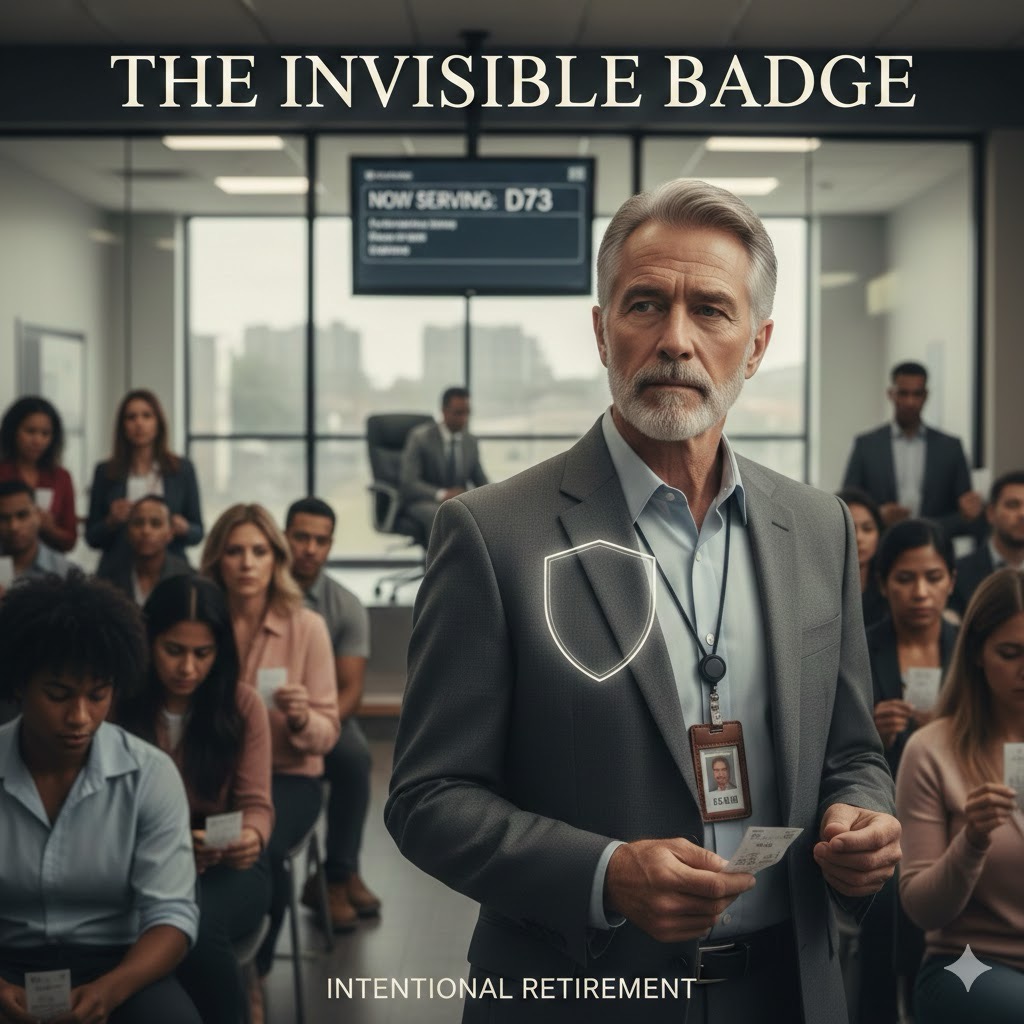
Three months later, you’re standing in line at the DMV or trying to get a table at a busy restaurant. You step forward, subconsciously expecting that same deference, only to be told to take a number and wait like everyone else.
In that instant, you experience the Ego Transition. It’s the sudden, silent realization that the “invisible badge” has been turned in. For a leader used to making things happen with a single phone call, this can feel like a profound loss of self. You aren’t just asking, “What do I do now?”—you are wrestling with a much darker question: “Do I still have any weight in this world?”.
The Trap of the “Rented Chair”
In my upcoming book, Intentional Retirement, I explore why this transition stings so acutely. We often mistake the deference we received for personal respect, when much of it was merely a reaction to our position. To navigate this without falling into bitterness, you must distinguish between two very different types of authority:
- Institutional Power (The Rented Chair): This is the authority granted by your title. It’s the ability to approve budgets and hire staff. The reality? This power is “rented”. It belongs to the chair, not the person in it. When you retire, you return the keys, and that power evaporates instantly.
- Personal Power (The Owned Self): This is the influence you possess regardless of your surroundings. It is the cumulative result of your character, your hard-won wisdom, and your ability to inspire through presence rather than pressure. This is “owned” power. It travels with you into the coffee shop, the volunteer board, and the family dinner.
From “Sage on the Stage” to “Guide on the Side”
The opportunity of your Second Act is to finally shed the “rented” authority and cultivate your Personal Power. This requires a deliberate, often humble shift in stance—moving from the Director to the Mentor.
- The Director gives orders and provides the “right” answers.
- The Mentor (the “Guide on the Side”) asks the kind of powerful, open-ended questions that spark insight in others.
If you attempt to maintain the “Director” dynamic in retirement, you risk becoming what family and neighbors quietly dread: the overbearing retiree who treats an HOA meeting like a corporate board review.
The Discipline of Curiosity
To move from authority to influence, you must intentionally replace Command with Curiosity. Instead of the declarative, “Here is how you should do it,” try the language of inquiry:
- “I’m curious, what led you to that specific decision?”
- “How can I best support what you are currently building?”
Leading with questions signals to your own ego that you have moved past the desperate need to prove your competence to the world. You no longer have anything to prove—and that is the ultimate form of power.
Architecting Significance
Navigating the ego transition is perhaps the most difficult psychological hurdle of the retirement process. But once you release the need for institutional status, a heavyweight lifts. You stop scanning every room for deference and start scanning for vitality.
You are no longer “managing” others; you are valuing them. That is the hallmark of true significance.
About the Author
Gary Fretwell is a #1 international best-selling author and a student of the “Second Mile.” By blending the rigors of neuroscience with the timeless wisdom of Stoic philosophy, Gary helps creators and leaders build a cognitive architecture of true significance.
As the author of The Magic of a Moment, Unlocking the Magic Daily Journal, and Embracing Retirement, Gary doesn’t just write about purpose — he maps the biology of it. Whether he’s serving as a Board President or mentoring the next generation of MBA thinkers, his mission is to help readers to live a more meaningful life.
Step into the Second Mile at garyfretwell.com.
For weekly deep dives into intentional living and cognitive clarity, subscribe to my Substack, The Wise Effort.
Follow Gary L. Fretwell on Medium


Leave a Reply