

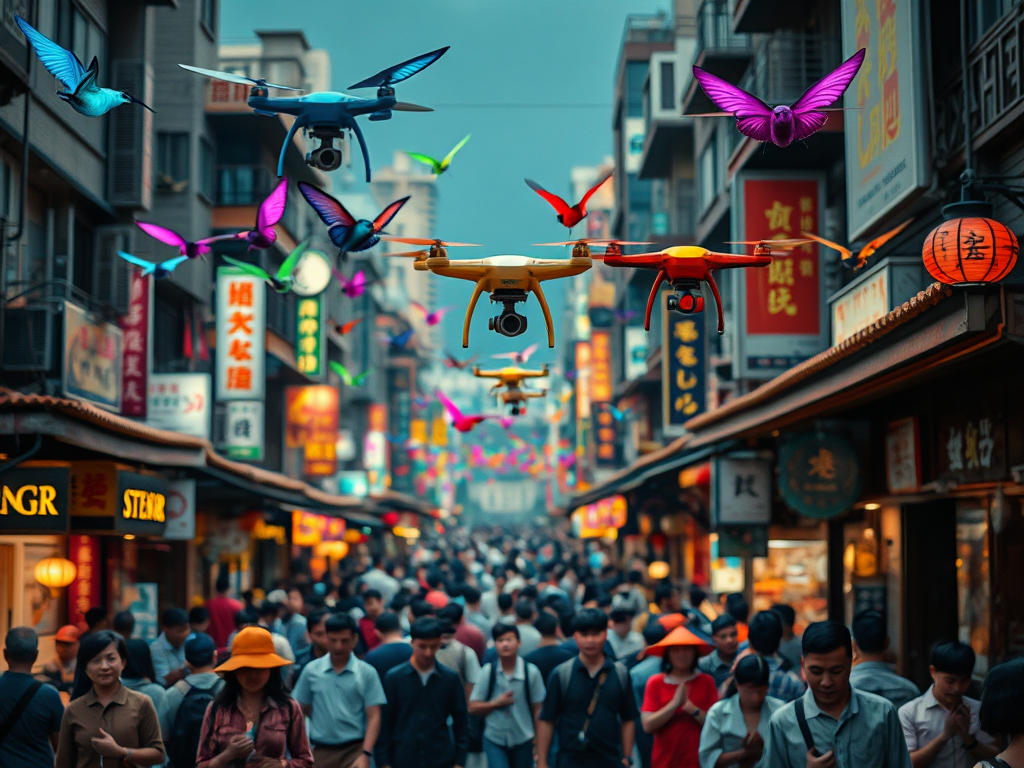
This story explores the intersection of technology and geopolitics. It covers the cyberattacks targeting Taiwan’s drone manufacturers and what they reveal about global power struggles and technological vulnerabilities.
Taiwan drone manufacturers under siege: Technology meets geopolitics
In the world of technology and defense, Taiwan has become a central player, particularly in the field of drone manufacturing. However, with innovation comes risk, as demonstrated by the recent Operation WordDrone cyberattacks.
Based on a recent paper written by several thought leaders, as a technology and science consultant, I want to explore why Taiwan’s drone manufacturers have become prime targets for cyber espionage and what this means for the future of global security.
The paper starts with a dramatic and captivating opening, saying:
When Microsoft shipped Office 2010 around the summer of the same year, drones were not a thing, at least until Parrot changed gear and introduced models with built-in cameras. Fast forward more than a decade, and everything is vastly different, except that Microsoft Office 2010 is still rarely used.
Taiwan’s strategic location and advanced technological capabilities make it a key player in developing “unmanned aerial vehicles” (UAVs), particularly military-grade drones.
Since 2022, the Taiwanese government has invested heavily in drone technology, and these manufacturers now play a crucial role in national defense and intelligence-gathering operations. This increased focus has made Taiwan’s drone sector an attractive target for adversaries, especially in an era of heightened geopolitical tensions between Taiwan and China.
From a defense perspective, drones are not just surveillance or military engagement tools. They represent a rapidly evolving aspect of modern warfare.
From a defense perspective, drones are not just surveillance or military engagement tools. They represent a rapidly evolving aspect of modern warfare. You may check out the perspectives from Australia, where I live.
How are Drones Changing Modern Warfare?
UAVs can act as autonomous agents, capable of real-time data gathering, reconnaissance, and even offensive operations. Therefore, gaining access to Taiwan’s drone designs, development processes, and intelligence would offer significant advantages to rival nations seeking to undermine Taiwan’s military capabilities.
Cyberattacks: The New Frontier of Warfare
As we transition into the age of digital warfare, physical attacks on infrastructure are no longer the only concern.
The attacks on Taiwan’s drone manufacturers illustrate how cyber threats are becoming a critical component of modern conflict.
In Operation WordDrone, attackers exploited outdated Microsoft Word vulnerabilities to gain a foothold in Taiwan’s UAV sector.
This tactic, known as DLL side-loading, allowed hackers to remain undetected while installing backdoors, moving laterally across networks, and extracting sensitive data.
Why does it matter, you may ask?
It matters because gaining access to this information could destabilize Taiwan’s defense operations.
By stealing intellectual property and classified intelligence, these attackers can learn how to neutralize Taiwan’s drone capabilities, weakening its ability to respond to external threats.
It’s a direct attempt to erode Taiwan’s technological edge.
The Role of Industrial Espionage in Geopolitics
The broader picture is that this attack is not isolated. It’s part of a larger trend of industrial and cyber espionage aimed at nations with critical technologies.
China, with its known interest in Taiwan and its military technologies, likely views UAV systems as valuable assets for future defense operations.
In a cyberwarfare context, information is more valuable than weaponry.
Infiltrating Taiwan’s drone manufacturers could allow China or other adversaries to reverse-engineer UAV designs or sabotage future developments, directly impacting Taiwan’s defense infrastructure.
As a technologist, this scenario underscores the urgency of strengthening cybersecurity in critical industries. No longer is it enough to innovate technologically — companies must also innovate defensively.
Advanced encryption, real-time threat detection, and collaboration with global cybersecurity experts are essential if Taiwan’s drone manufacturers are to survive in this hostile digital environment.
Cybersecurity and cybercrime prevention are not exclusive to defense. These measures apply to all industries.
Cybersecurity and cybercrime prevention are not exclusive to defense. These measures apply to all industries. Our digital intelligence plays a critical role in dealing with growing cybersecurity issues. Learning and applying the principles can guide us. We need more ethical hackers.
Lessons for Global Cybersecurity
Looking beyond Taiwan, these attacks highlight a critical lesson for all nations engaged in advanced technology development: cybersecurity is now a central pillar of national defense.
Whether you are building drones, artificial intelligence systems, or other sensitive technologies, you are a target. Modern warfare is increasingly shifting from physical battlefields to digital networks, where the theft of critical data can be as damaging as a missile strike.
Taiwan’s resilience depends on its ability to defend against such incursions. Attackers exploiting outdated software like Microsoft Word 2010 highlights how even the smallest vulnerabilities can have catastrophic consequences.
For governments and industries worldwide, this means investing in both cutting-edge technology and cybersecurity solutions must go hand in hand.
Conclusions and Key Takeaways for Cyber-Targeting
To highlight the intersection of technology and national defense, as someone with a background in both technology and the science of defense strategy, I view this cyberattack as a warning of things to come.
The future of warfare will not be defined solely by the size of one’s army but by the sophistication of one’s digital infrastructure.
Taiwan’s drone manufacturers are only the latest in a long line of targets in the ongoing cyber cold war.
For readers invested in technological innovation, security, or geopolitical stability, the Operation WordDrone attack serves as a critical reminder: protecting innovation is as important as creating it.
We must advocate for more robust cyber defenses, tighter international collaborations, and stronger vigilance in industries that form the backbone of national security. Only then can nations like Taiwan secure their place in the future of global technological leadership.
The Prominent Reference of the Article
You can read the technical details and findings of the investigation in this paper titled Operation WordDrone — Drone manufacturers are being targeted in Taiwan, published by Acronis Threat Research Unit.
Homepage | Parrot
Parrot imagines, designs and builds more innovative drones every day to offer you the best flying experience.www.parrot.com
Credit to the Authors of this Outstanding Paper
Robert Neumann, Head of Acronis Cyber Protection Operations Center
Alexander Ivanyuk, Senior Director
Ilia Dafchev, Security Researcher
Irina Artioli, Cyber Protection Evangelist
About Acronis
Acronis is a global cyber protection company that provides natively integrated cybersecurity, data protection, and endpoint management for managed service providers (MSPs), small and medium businesses (SMBs), and enterprise IT departments.
Acronis solutions are highly efficient and designed to identify, prevent, detect, respond, remediate, and recover from modern cyberthreats with minimal downtime, ensuring data integrity and business continuity. Acronis offers the most comprehensive security solution on the market for MSPs with its unique ability to meet the needs of diverse and distributed IT environments.
A Swiss company founded in Singapore in 2003, Acronis has 15 offices worldwide and employees in 50+ countries. Acronis Cyber Protect is available in 26 languages in 150 countries and is used by over 20,000 service providers to protect over 750,000 businesses. Learn more at www.acronis.com.Key Points of the Story
- “Cyberattacks on Taiwan’s drone industry: A global technology warning”
- “Geopolitical tensions fueling cyber threats to Taiwan’s drone technology”
- “Why Taiwan’s drone manufacturers are prime targets in the cyberwar”
- “Cybersecurity challenges for drone manufacturers in Taiwan’s tech sector”
- “Impact of cyberattacks on Taiwan’s defense and drone innovation”
- “How cyber threats on drone manufacturers affect global tech competition”
- “Taiwan drone manufacturers under siege: Technology meets geopolitics”
- “Tech vulnerabilities exposed: Cyber-targeting of Taiwan’s drone industry”
- “Why geopolitical conflicts drive cyberattacks on drone tech in Taiwan”
- “Drone manufacturers in Taiwan face rising cyber threats: A tech perspective”
Link to Medium Version of the Story


Leave a Reply