

Vic Shayne
Author of the book The Self is a Belief: the idea that causes suffering
Memory is absolutely important if we want to make our way through this world, do anything constructive or creative, and even to find our way home on a dark and rainy night. Also, it helps if your father remembers your name.
When we speak of memory in relation to the self we may begin to think about memory in a new light.
The self is an image, an illusory sense of what we are that is built out of thoughts, beliefs, and memories. It’s something that neuroscience, philosophy, psychology, and other disciplines have concluded, but this fact has been recognized for thousands of years by ancient Eastern teachings. The self is a belief of what you are, but not actually what you are; and one of the cornerstones holding the self in inertia are memories.
If memory serves me
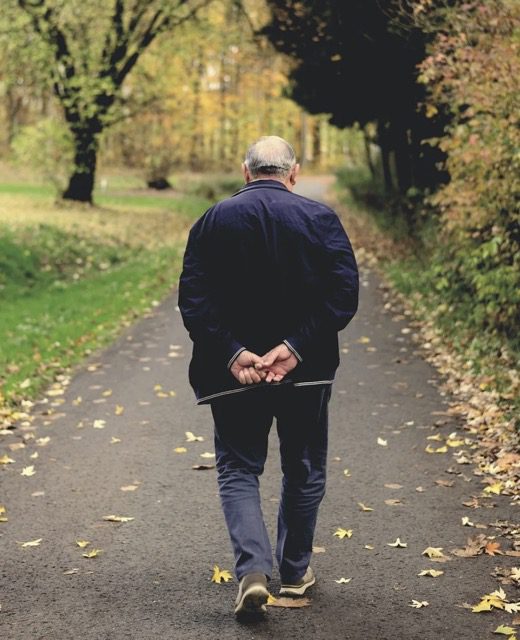
My father is 94-years-old and lives with my brother’s family thousands of miles away from me. From time to time I speak with him on the phone, and though he sounds lucid it is obvious even to himself that his memory is faulty and no longer at his command. He hardly remembers the conversations we have from one week to the next, as well as important parts of his life. And this has made me reflect on the role of memory in reinforcing the self.
When I find that my father does not remember, I wonder whether this may be some sort of blessing in disguise. After all, if he cannot recall the worst of them then isn’t he better off, because he is less bothered by unpleasant and troubling past events? And, because the self is predicated upon memories, does a loss of memory mean that the self is slipping away back into consciousness?
If you couldn’t remember events that troubled you when you were young, or when people gave you all sorts of problems, or when certain instances made you anxious, depressed, or full of rage, then is this a bad thing or a blessing? On the surface it may seem good, but memory doesn’t exist or work on the surface.
Science and not-science…
Much research has shed a lot of light on subconscious memories and the way they continue to influence our thoughts, feelings, behavior, and even physical well being. These memories often have created neural pathways (or have neural pathways created memories?) so that the brain may even cause physical pain or dysfunction to distract from emotional trauma and thinking habits of which we are not even consciously aware.
Talks with my father have given me better insight into the meaning of karma as taught by the ancient Hindus, Buddhists, and Taoists. Karma by definition means action; it is only the self and other selfs that confer a label of good or bad upon it. In any case, karma creates a bond between a person and the object of his attention. Without memory, however, teachings of reincarnation, working off karma, and past life recall would be meaningless.
It is memory that keeps the bonds of karma — as well as the influences and effects of trauma — strong, whether the memory is conscious or subconscious. And this brings us to a crucial point of understanding: The self does not wane or disappear when memories cannot be recalled, because the memories do not actually disappear.
Do memories survive physical death?
Since materialist science generally insists that memories are stored in the brain we may be led to believe that memories disappear when the body dies. But this is not how Eastern philosophy — or anyone who recalls a past life — sees things.
According to Hindu and Buddhist traditions, memory is stored in consciousness beyond, or independent of, the physical body. Consciousness is not limited to the brain, but is a broader metaphysical structure that encompasses multiple lives and experiences. The physical brain may access memories in this life, but the true repository of memory lies in the subtle realms — either in the subtle body, causal body (Hinduism), or the alaya-vijnana (Buddhism, referring to “storehouse consciousness”).

When I speak with my father he cannot recollect most of the major instances of his life that I remember him having told me about over nearly seven decades of my life. In a way, I have become his surrogate memory, reminding him of his childhood accidents, relatives he loved, funny incidences, and even the details of the death of my mother, his wife of more than 50 years. Neuroscientists, hypnotherapists, psychologists, and even Eastern traditions agree that his memories are not actually gone, but the problem lies in his ability to recall them.
Finding memories…
Hindu philosophy holds that memories are not stored in the brain. Many psychologists have insisted that memories are stored in the subconscious, which is quite the vague idea when you think about it. Where exactly is the subconscious?
Science cannot see, quantify, or measure memories; it can at best only detect changes in the brain and body as an effect of memory. Neuroscientist Candace Pert wrote in her landmark book Molecules of Emotion that memories are stored in all the cells of the body as well as the brain. Somatic therapists such as Peter Levine seem to agree. Regardless, just like thoughts and emotions, memories cannot actually be measured, seen, or experienced by anyone but the rememberer.
Karma burning party
If the brain or body alone store memories, then what is this saying about ancient Eastern teachings about remembering past lives so that reincarnation takes place and people continue to work on burning off their karma? Is it just a bunch of nonsense and superstition? How can memories, or even some form of survival succeed a body is that dead and buried, or cremated?
Buddhist, Hindu, Taoist, and Kabbalist philosophy holds that consciousness is not produced by the brain. A growing number of neuroscientists and physicists tend to agree that consciousness is universal (non-local) and not confined to a physical body. Perhaps, then, consciousness (rather than the brain) is where memories are stored. Where, then, is consciousness? To begin, we would need to entertain a certain definition of consciousness that is not restricted to the medical idea of being aware of one’s environment. The definition apropos to this discussion is that consciousness is a non-local fabric, field, or network of information and energy that is universal and works through the brain and body of every living being.
Past life remembrances
Regardless of death, according Eastern teachings, consciousness lives on and the self assumes a subtler form with memories intact. All the lives that have been lived in the physical world have left impressions on or in consciousness so that the self is led to reincarnate until it has released or dissolved its karmic bonds.
The doctor-researchers at University of Virginia’s Division of Perceptual Studies seem to reveal, according to their thousands of investigations into children who have experienced past life trauma, that each rebirth into a physical body is predicated on past karma that they often remember with astonishing detail. How can they remember another life and show evidence of this memory if memories are only stored in the brain?
Bad memory, bad memories
Some of my father’s strongest memories are those of negative events in his life. A great deal of his life cannot be recalled at all, but do those gaps in memory benefit him because they can no longer elicit anger, sorrow, anxiety, or depression? Not really, because like everyone else, subconscious memories continue to agitate us and manifest in our habits, word choice, emotional outbursts, mood, mental tendencies, dreams, dispositions, and so forth.
Whether a person remembers or not, memories have made indelible impressions, and the self, along with its suffering, is a reflection of these.


Leave a Reply