

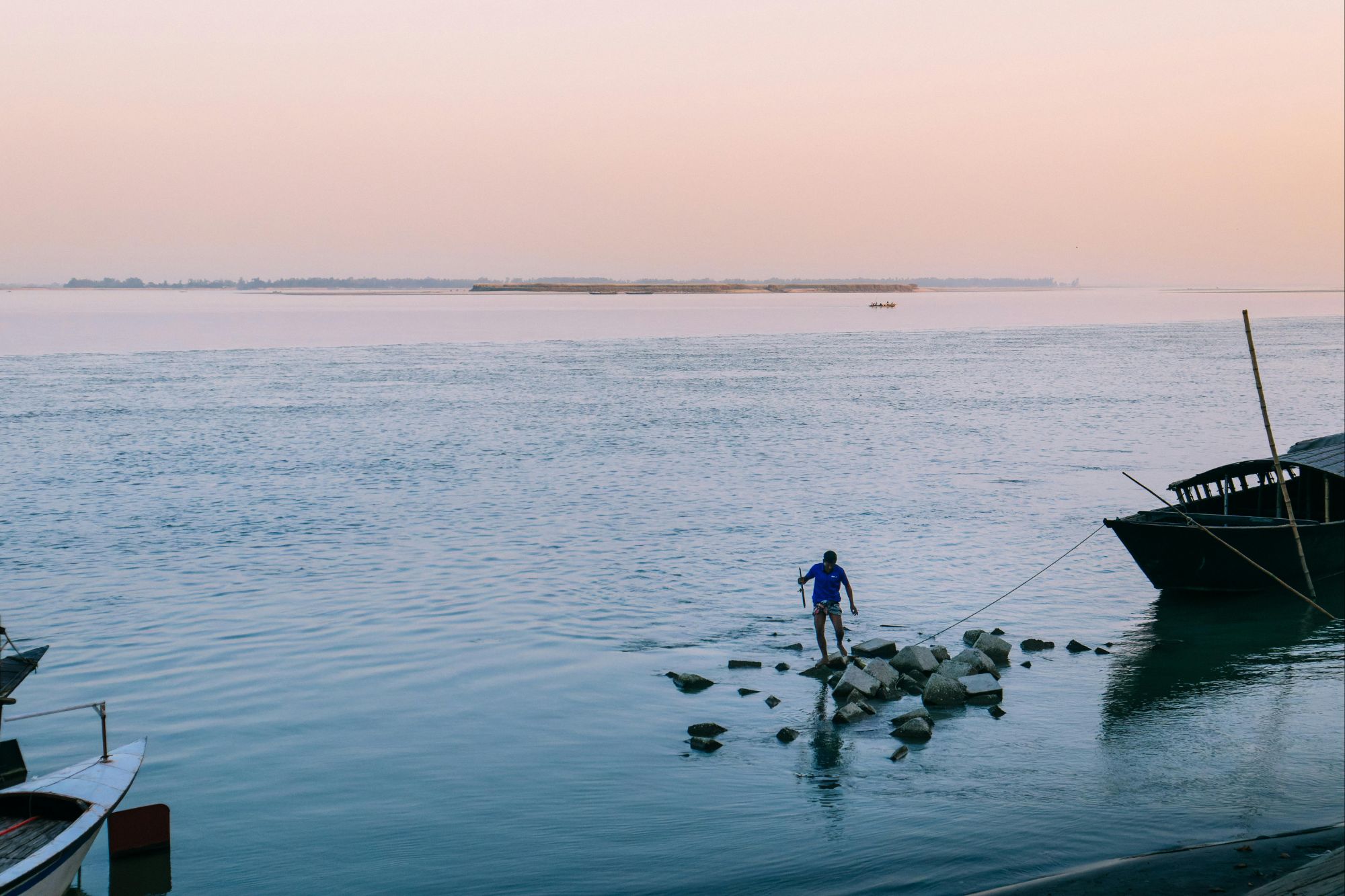

I had often thought of the Brahmaputra, which stretches across an impressive width and looks like a thing of beauty, as something that had no concrete existence in the world—a river mentioned just once in my geography classes. Yet my first coming together with such a river with a poetic history turned it into an informed and vivid account that has been stuck in my mind as a standout experience.
The period was autumn when I hit the road to Assam, a place famous for its green tea plantations and its rich culture but, most of all, for the Brahmaputra. The journey’s climax was Guwahati, perched on the river’s gaily tinted hills. It was from the air that I spotted the Brahmaputra: a wide, luminous, curved strip of water passing through the emerald landscape, and it seemed to me that Mother Nature was telling me only a part of the display that, besides which, lay ahead of me was more than wonderful.
The following day, I was on the spot at Umananda Ghat, with my wildest dream coming true, viewing the majestic river. The sun was still rising, and the gentle morning sunbeams rippled across the water. The width of the river was mind-blowing, and the waves displayed the colors of dawn as if they were a portrait of life that was drawn through painting. Not a mere river, this was a giant natural force, an eloquent spectator of a long saga of the past and present.
My expedition down the Brahmaputra initially got underway after I took a weak, rickety wooden boat to Umananda Island. The Umananda Temple, a very small inhabited river island in the world, is located on this very small island. As the boat floated on the smooth surface of the water, the apparently mechanical and regular noise of the oar blades scraping the water caused an atmosphere of peace and tranquility. The wind brought water and incense from the temple, mixed into a smooth fragrance. The island received me with its overhanging trees and a feeling of utmost lull, which were an absolute antithesis to the overstretched urban fabric of Guwahati.
Eager to explore more, I ventured to Majuli, the world’s largest river island. For me to reach Majuli, I experienced a ferry ride, which gave me a clear view of the Brahmaputra River and the place where the horizon was boundless, the sun rising in it. Majuli was connected to the other world for me, where time and rest were interwoven, and everything was quiet and peaceful. The island’s cultural identity was visible in its satras, which are religious institutions that are dedicated to art, music, and spirituality. As I walked about the villages, I saw with amazement how the people there were used to the moods of the river and could protect themselves by making their houses of bamboo and leaves, which could withstand the changing weather. The growth in the wetlands attracted a variety of colorful birds, and the fields of rice, stretched out in a sunny green blaze, gave off the tranquility of a peaceful scene that could hardly be experienced in other places.
The whole time that I spent by the banks of the more holy than the other Brahmaputra River made me realize it was the actual blood of the people who lived there to take all the good and bad from the river. The fishermen threw their nets as if a director was controlling them, forming a graceful image in the brilliant light of day. As the women did their laundry at the ghats, their laughter, mixing with the low voices of the river, was carried to the village. The children played in the shallow water. The joy of them was resounded through the water, informing that nothing could be better than being here. It was not just a watercourse; it was a hard-working, healthy universe, and what is more, it was the shelter and the miracle of human beings.
Nevertheless, what appears to be a gentle expanse of the Brahmaputra speaking in Assamese disguises an erratic life. Talks with locals, however, reveal the extent of the river’s devastating role during the monsoon season, when it floods the communities. Such a calamity did not make the residents feel upset—there was only respect. The people of the place felt that the river’s strength was merely a customary fact of life and had tied their deference back to nature via a mental note.
Looking back on my trip, I have come to the realization that the Brahmaputra had given me something more than the wonderful landscapes that I had seen. It was a source of such life lessons as the importance of being humble, adaptable, and the necessity for coexisting with nature. The vision of the Brahmaputra, with its massive and brilliant waters, remained in my mind as a symbol of the transient nature of human existence and the potential for life to be beautiful.
For it is not just the river, which is an engaging storyteller, but the river becomes a metaphor through whose forming and demising tales are told. It is also a mentor who exhorts us to slow down, dwell, and intermingle with the natural world. I will remember the Brahmaputra not only for the wisdom I learned but also for the exciting adventures it provided, and thus, I will always treasure the river in my heart.


Leave a Reply