

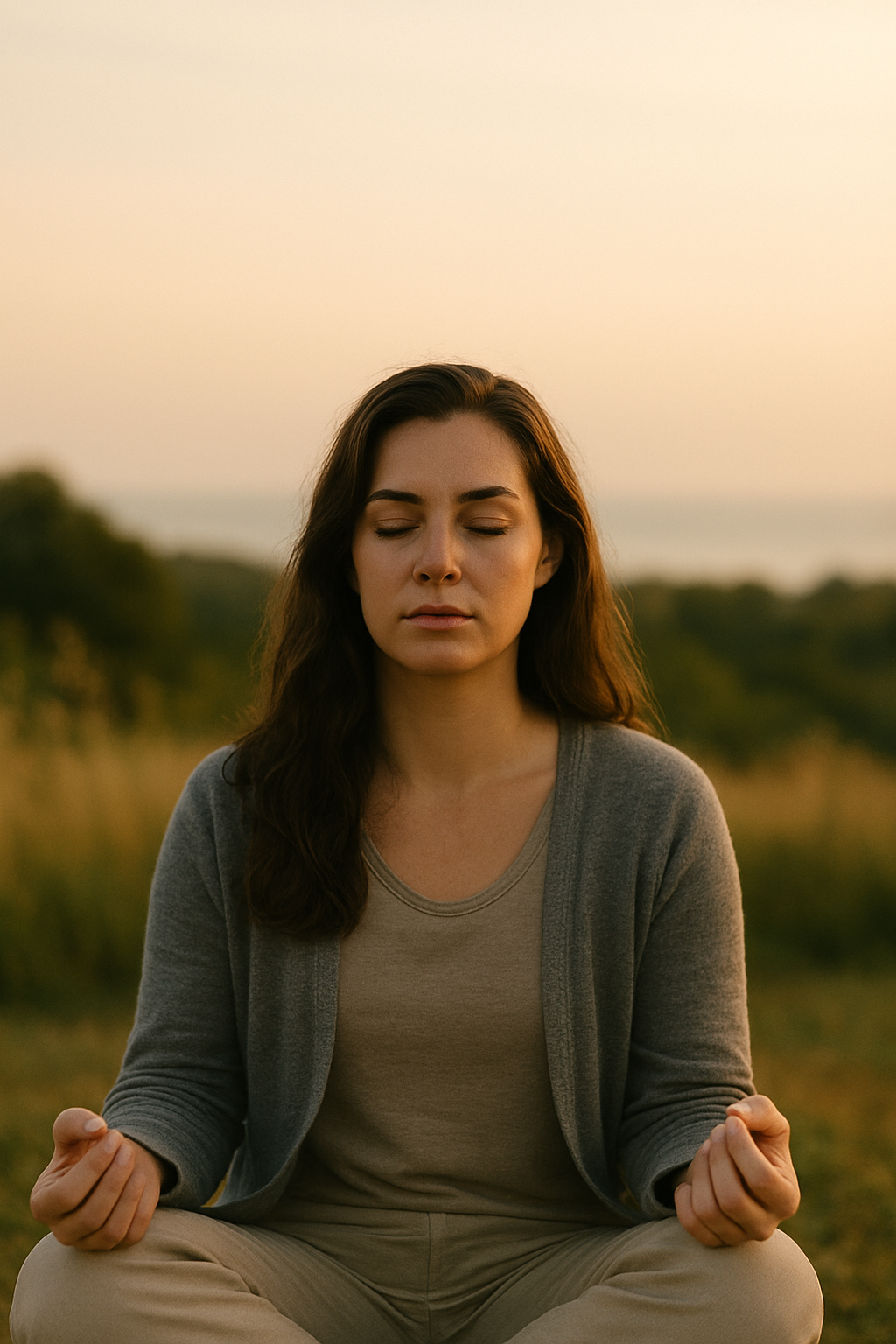
Most of us are, plain and simple, really very tired.
Tired, not just in a physical sense, but emotionally as well. There is this underlying anxiety serving as a low hum, like a fan that just won’t shut up. Stress? It literally comes to express itself through our shoulders, our bellies, and sleep, and sometimes, even the way we talk to those we hold dear.
This article was originally published on Medium.
I’ve been listening to people for whom the whisper arose, “I don’t think that I know how to slow down.” Talking about panic attacks in grocery store aisles or sleepless nights spent scrolling to seek some sense of connection, I heard quivering voices.
With struggle and patience, I have watched how mindfulness—so simple, so quiet, and so often misunderstood—has been the way for many back home to themselves.
What Mindfulness Really Is (And What It Is Not)
There are things that need clearing before we even start; your “clearing-your-mind” stuff isn’t the essence of mindfulness. Mindfulness is not for yogis, monks, or any of those people with aromas in their houses.
Mindfulness means focusing on this moment on purpose. It means noticing your breath when you’re panicking. It is listening to the thoughts that bother you instead of pushing them away. Feeling the shaking of your hands, the tightness of your chest, the tears in your eyes—and not running away from it.
It means being there for yourself when it’s tough. Especially when it is tough.
Leena’s Dilemma: Managing Anxiety in a Hyperactive World
Leena is a 34-year-old project manager working for one of the largest technology companies. She is confident on the outside. Always on delivery and juggling meetings while checking up on everyone.
But inside, it was just like a civil war.
“I’d wake up with my heart already racing,” Leena told me. “Emails would flood in before I even brushed my teeth. The worst part was that I couldn’t turn it off: not at night, not on weekends. It was just nonstop in my mind.”
Leena tried therapy that helped her realize her patterns. And when her therapist introduced mindfulness, she rolled her eyes at first. “Sit still and breathe. That’s your big solution?”
But she gave it a shot. Just five minutes a day.
At first, thoughts sounded loud. Impatient, fidgety, sometimes even angry. But she stayed with it. Not because it felt good, but because it felt honest.
Two months in, and something changed. One morning again that old tightness came up in her chest, and instead of unraveling, she just paused. Breathe. And she watched that wave but did not drown in it.
“I realized I’m not my anxiety. I’m the one who notices it. That changed everything.”
Amit’s Journey: Mourning with Mindfulness
Amit’s story still sends chills down my spine; it makes me cry.
He lost his wife after a long, painful battle with cancer. The grief didn’t just break his heart—it hijacked his mind. He was sleepless. He couldn’t concentrate, and everything in his mind was just replaying every conversation, every regret.
“I was drowning in my own thoughts,” he explained. “And I didn’t want to dull myself with pills.”
Someone suggested a mindfulness-based support group for grieving. He was skeptical, though desperate.
The first half dozen sessions are still, no “forced positivity.” Just folks breathing, noticing, allowing their grief to be.
One night, Amit tries out a “body scan”—a very slow practice of bringing attention to each area of the body—and notices how much tension he carries in his jaw, his chest, and his hands.
“I cried,” he admitted. “For the first time in weeks, I let myself feel it all. And strangely, that made it hurt less.”
Mindfulness didn’t take away the pain from him; rather, it made him carry it gently instead of fighting it.
Why Mindfulness Works (Even If You Think It Won’t)
The truth is that mindfulness will not make your problems vanish. It will, however, create space, and in that space, one can find something rare: clarity.
Stress can narrow your vision. Anxiety lies to you. Mindfulness allows you to pause, take a breath, and see what is real.
- It teaches you to observe your thoughts rather than obey them.
- It allows you to get a split second’s notice before anxiety begins to spiral.
- It reminds you that no feeling lasts forever—not even the painful ones.
Start Small. Start Real.
An application is not mandatory, and neither is a mountain retreat. The only requirement is sitting quietly for a few minutes.
Try this:
- Morning breath awareness: Before checking your phone, place your hand on your chest and feel it rise or fall. Enough said.
- Mindful walking: Feel the ground under your feet. Listen to the sounds. Pay attention to how the wind feels.
- Nail it: If you get overwhelmed, stop and ask yourself, “What am I feeling right now?” Call it out without shame. You are not weak; you are just aware.
- End the day with compassion: Take one deep breath. Think of one thing you’re grateful for—maybe just, “I made it through today.”
Final Words
I’ve seen people just on the brink of burnout find their way back to peace—not through grand life changes, but through quiet moments of mindfulness.
Leena is still working in tech. Amit still misses his wife. Life didn’t become perfect for them, but it became bearable—gentler—and spacious.
To those reading this, if you are feeling some tightness in your shoulders, a darting of thoughts in your mind, or a heaviness in your heart, please listen up:
You don’t need to fix everything.
Start with observation.
This might be the kindest thing you ever do for yourself.


Leave a Reply