

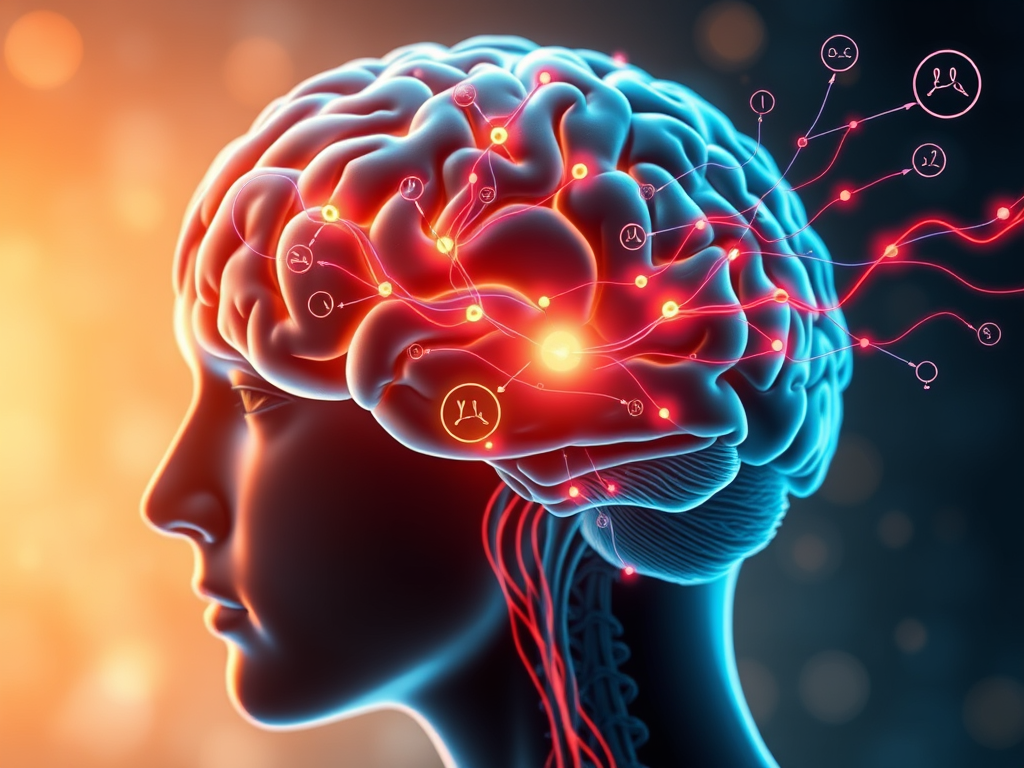
Here’s When Belonging Turns Dangerous for Humanity and How the Same Brain That Creates Love Can Also Justify Cruelty. I explain What Neuroscience Teaches Us About Protecting Our Humanity from the Dark Side of Tribalism
Purpose of this Important Story
Dear Subscribers,
This is one of the most comprehensive and complex chapters of my recent book. If there is one chapter you should take away from my superlearning book, it is this one. It is closest to my heart as it goes back to my childhood inner dialogue. When I read stories of war and genocide in my father’s and grandparents’ history books, I used to cry and share my feelings with my friends and pets.
As an innocent child, many times I asked my grandparents why people hurt and kill others, and why some even seem to find pleasure in it, making ra-ra speeches under the name of nationalism. They could not explain it, though they used words like “some people are cruel by nature,” which made no sense to my little child brain.
I remember adamantly challenging them, “If God created everyone in His image, why do some people do such awful things?” They had no answer that made sense to me at that age.
Years later, when I was studying neuroscience and cognitive science, I found insights that gave me the aha moments I had been seeking since childhood. I finally understood that cruelty, violence, and moral blindness are not simply matters of being bad.
They stem from shortcomings and distortions in the neural system, deficiencies that disconnect the circuits for empathy, reasoning, and conscience due to a hunger for belonging and to propaganda conditioning.
In this chapter, I will explain these mechanisms and how understanding them can help us learn, heal, and contribute to peace for current and future generations. Awareness is the key to solving any problem.
Why I Wrote This Chapter
We usually celebrate the human drive to connect for survival and thriving. In the previous chapter, I explained how our subconscious mind is wired for social bonds and how these bonds strengthen learning, creativity, and emotional health.
However, there is another side to this story, a darker one that we must face if we want to understand how minds like ours can justify, carry out, or silently tolerate unthinkable acts such as killing or torturing innocent people.
This is not a theoretical concern. It is a recurring pattern in human history. It has happened many times, and it continues to occur worldwide today.
Scholars have written about it, and humanitarian organizations dedicate their lives to preventing it. Yet it persists, because it originates from a neurological short circuit in the human brain that can override empathy and conscience.
This chapter revolves around two critical questions:
What happens when our need for belonging outweighs our moral compass?
What if the same subconscious mechanisms that allow us to grow and learn through community can also be hijacked and redirected toward violence, hatred, or indifference?
These questions can be answered with a scientific term for this phenomenon. It is called Syndrome E.
In this chapter, I will explain it in simple language, distilling complex neuroscience into relatable insights that reveal how ordinary people can be drawn into extraordinary cruelty.
What Is Syndrome E and How Does It Explain Human Cruelty?

Syndrome E was first described by French neurologist and neurobiologist Dr Jean-Pierre Changeux, and later expanded upon by clinicians and neuropsychiatrists like Dr Yves Herszfeld and Dr Itzhak Fried.
This important neural concept refers to a specific and chilling pattern of behavior observed in otherwise “normal” individuals who become capable of committing or enabling mass atrocities such as genocides, ideological purges, or systematic killings.
I want to specifically highlight that Syndrome E does not mean these individuals were psychopathic or mentally ill. In fact, their reasoning, planning, and cognitive skills often remain fully intact.
Yes, it is ironic and paradoxical; therefore, I decided to write this chapter. What changes is how their subconscious mind, especially the moral and emotional systems, processes social input.
For example, affected individuals:
- become obsessively focused on ideology or group mission,
- detach emotionally from their victims,
- habitually repeat violent acts with growing ease,
- and show a rigid insensitivity to changing moral cues or human suffering.
These behavioral patterns unfold not as conscious decisions to become evil, but as subconscious adaptations to prolonged exposure to a particular environment that rewards obedience, desensitizes empathy, and normalizes cruelty.
How the Brain Short-Circuits Under Tribal Pressure
I want to briefly unpack what actually happens in the brain.
Under normal circumstances, moral decisions are supported by the prefrontal cortex, which evaluates consequences and suppresses impulses.
The amygdala and insula process emotional reactions such as empathy, guilt, disgust, or compassion, especially when we witness another human suffering.
But in Syndrome E, research shows a disturbing shift in a three-pronged process.
1 — Moral Override: The Prefrontal-Amygdala Disconnect
The orbitofrontal cortex becomes hyperactive, suppressing the emotional reactions from the amygdala.
This results in a chilling phenomenon: people can continue functioning cognitively while losing their emotional feedback loops. They can plan, decide, and execute harmful actions, but they stop feeling anything about them.
The brain’s moral pilot goes into autopilot, while the emotional co-pilot is muted.
2 — Repetition Turns into Routine
The dorsal striatum, a region tied to habit formation, reinforces repeated behavior, even when circumstances change. The subconscious mind begins to treat violent or harmful actions not as extraordinary, but as routine.
What once felt unthinkable becomes normalized, simply through repetition.
3 — Group Contagion Hijacks the Social Brain
The mirror neuron system and default mode network, normally used for empathy and social reasoning, begin to attune more strongly to group signals than to individual conscience.
The subconscious mind now asks, “What is the group doing?” rather than “What do I believe is right?”
A tribal signal replaces the inner compass.
As documented by The Lancet, “A pathophysiological model—’cognitive fracture’—is hypothesized, where hyperaroused orbitofrontal and medial prefrontal cortices tonically inhibit the amygdala and are no longer regulated by visceral and somatic homoeostatic controls ordinarily supplied by subcortical systems. It is proposed that the syndrome is a product of neocortical development rather than the manifestation of a disinhibited primitive brain.”
When Ordinary People Become Perpetrators
History carries unforgettable, unbearable, and horrific moments that are difficult to face, yet essential to understand for our current and future generations to build a peaceful world.
Syndrome E is not a theory confined to laboratories or psychology journals. It has played out repeatedly, turning ordinary individuals into instruments of extraordinary cruelty.
To make my points, I will give you a few examples, though you might have read them elsewhere many times.
In Nazi Germany, many of those who joined the SS or collaborated with the regime were not born as sadists or killers. They were teachers, shopkeepers, and factory workers, ordinary people who were gradually drawn into a system that redefined morality.
Violence became normal when the state taught them to see others as less than human. What began as fear or obedience slowly hardened into indifference and even pride in following orders.
The same haunting pattern appeared in Rwanda in 1994. Neighbors who once shared meals and celebrations turned against one another.
The propaganda machine did its work with chilling precision, convincing people that killing the Tutsi population was an act of duty.
In just a few weeks, nearly a million lives were taken, many by individuals who had never committed violence before. It was not born of sudden hatred but of systematic conditioning that silenced empathy.
A similar shadow fell across the Soviet Union during Stalin’s purges. Millions were denounced, imprisoned, or executed by their own colleagues and friends, all in the name of ideology. Obedience, fear, and repetition eroded the sense of moral responsibility.
And in the 1990s, the wars in the Balkans echoed the same neural pattern. In Bosnia and Serbia, once-peaceful communities fractured overnight.
Ordinary men who once worked side by side were convinced to commit atrocities in the name of ethnicity and revenge.
Again, propaganda and fear rewired perception, neighbors became enemies, and empathy faded behind slogans of collective identity.
Across these tragedies, a common thread emerges. The horror does not arise from individual madness, but from collective shifts in perception, ideology, and emotional numbness.
When social belonging, obedience, and fear override conscience, the neural circuits that normally restrain violence begin to malfunction.
This is the essence of Syndrome E, when the brain’s capacity for empathy and moral reasoning is gradually replaced by mechanical conformity to destructive ideas.
The Role of the Subconscious Mind
From a subconscious perspective, these transformations occur through the same pathways that normally make us socially intelligent and emotionally attuned.
- Instead of bonding with others for mutual growth, we bond to an ideology that offers identity and certainty.
- Instead of feeling empathy, the subconscious learns to suppress it because in-group safety now depends on emotional detachment from the out-group.
- Instead of expanding our moral awareness, we narrow it to a tribal framework, enforced by fear and repetition.
In short, our brain’s capacity for connection is turned inward, against those outside the group.
This is not a failure of intelligence. It is a failure of integration when the subconscious is flooded with group signals but no longer connected to self-regulation, empathy, or reflection.
The Danger of Usocialisation in Modern Times
This pattern doesn’t belong only to history books.
Today, we witness similar dynamics in political polarization, social media echo chambers, mob harassment online, and groupthink in institutions.
The language may be different. The tools are more digital, but the mechanisms are the same.
- Obsessional ideation (cancel culture, ideological purism)
- Group conformity (retweeting without thinking)
- Desensitization (jokes that dehumanize)
- Habitual cruelty (daily insults, online dogpiling)
These are milder versions, but they stem from the same system: a subconscious mind overwhelmed by tribal cues, and no longer tethered to ethical clarity. Interestingly, it even happened on this platform in 2020 when I established Illumination. I handled it amicably without confronting the offender.
Conclusions and Key Takeaways
The Antidote to Dehumanization: Social Intelligence, Emotional Intelligence, Moral Grounding, and Self-Awareness
The same subconscious mind that helps us love, learn, and create can, under certain conditions, be redirected toward cruelty. It can rationalize violence, silence empathy, and glorify obedience.
The unsettling truth is that none of us is immune to this. That is why superlearning must never be limited to acquiring knowledge or mastering techniques. It must also involve cultivating moral awareness, emotional balance, and inner reflection.
Real intelligence is not measured by how much we know but by how deeply we understand our humanity.
Social bonding is powerful, yet without reflection, it can become dangerous. Curiosity is essential, yet without humility it can harden into ideology. Superlearning, therefore, is not only about expanding our minds, but it also involves expanding our consciences.
What protects us from falling into Syndrome E is not more information or a higher IQ, but something quieter and deeper, a living connection to conscience, curiosity, and compassion. These are the cognitive immune systems that guard us when collective fear and conformity begin to spread.
When we train emotional awareness, we learn to notice the subtle shifts within us. A tightening in the chest when hearing an opposing view, or a growing numbness when seeing another’s pain, can be signals worth studying. Awareness begins there. Reflection transforms those signals into growth.
When we stay connected to diversity, we give the brain new pathways to empathy. Conversations with people who see the world differently strengthen neural flexibility and moral imagination. It is like cross-training for the mind.
Micro-empathy is the daily practice of remembering that every person we meet has an inner world as complex as ours. When judgment arises, asking “What might this person be going through?” rewires the brain’s circuitry for compassion. It turns reaction into understanding.
Critical thinking, when combined with moral imagination, becomes a superlearning tool in its own right. It teaches us to question group narratives and to think beyond tribal certainty.
When learners analyze ethical dilemmas and reimagine outcomes, they activate higher moral reasoning, something facts alone can never achieve.
And finally, the most courageous act in any society or classroom is dissent rooted in conscience. When we create cultures that reward honest questioning rather than blind loyalty, we nurture minds capable of moral courage.
Such environments are antidotes to conformity and incubators for ethical intelligence.
In the end, the lesson of Syndrome E is not only about what goes wrong in the human brain; it reflects what can go right when awareness, empathy, and wisdom grow together.
The future of superlearning is in mastering cognition, emotion, and conscience, because intelligence without empathy and compassion is directionless, and empathy without reflection is fragile.
Every time we learn with compassion, we rewire our brains toward peace. Every time we choose understanding over judgment, we strengthen the neural pathways that make us more human.
The antidote to Syndrome E, therefore, is not found in machines or methods, but in our daily choices such as to stay aware, stay kind, and stay curious.
When intelligence and empathy learn to walk together, the human brain reaches its highest form of wisdom.
Understanding Syndrome E shows us how the brain can short-circuit empathy when it loses rhythm with conscience. Yet the same system that can break compassion can also restore it.
You are not a machine to be optimized. You are a living network of inner cycles, such as mental, emotional, energetic, social, and spiritual. Mastering learning is, therefore, not just about gaining knowledge but about restoring rhythm among those cycles with awareness and grace.
When that rhythm is broken, the mind becomes mechanical, and morality fades. When it flows, empathy returns, creativity awakens, and intelligence becomes humane.
The path to mastery may look logical on the surface, but beneath it lies a pulse, a cadence that connects understanding with feeling. That pulse is where real accelerated learning begins, and it is also where peace begins.
Let your subconscious take the lead through the rhythms you design. The subconscious is not merely a hidden layer of thought.
As I explained in my upcoming book, How Tapping Into My Subconscious Mind Changed My Life, it is a symbolic universe that holds meaning, imagination, and wisdom beyond reasoning. When we learn to harmonize it, we heal the fractures that cause cruelty, disconnection, and indifference.

There are many tools to tap into the subconscious mind. For me, the most effective ones are meditation, working in a flow state, listening to baroque music, and lucid dreaming.
That is why this chapter stands at the heart of Superlearning. It reminds us that every act of awareness, empathy, and reflection is not just personal growth but a neural resistance to dehumanization,
This story is a summary of the upcoming book, How I Accelerated My Learning Effortlessly for a Happier Life. It is now available for preorder in several book stores in a digital format. The early access for audio will be ready in a month, and the print book will be ready in March 2026.

Sample Chapters of How I Accelerated My Learning Effortlessly for a Happier Life.

You may check out some of the previous chapters if you missed them:
Super Learning: How I Accelerated My Learning Effortlessly for a Happier Life
What Is Superlearning and Why I Believe Everyone Can Be a Superlearner
What If Your Brain Could Learn to Learn Better By Watching Itself in Real Time?
Cognitive Load and Ease Determine Your Success as a Leader in Your Field
Why I Find NVIDIA So Special as a Strategist and Superlearner
I wrote many stories explaining the fundamental requirements of the brain and nervous system with nuances in previous stories, so I link them as a reference here:
Here’s How to Make the Nervous System More Flexible and Functional
Here’s How I Train My Brain Daily for Mental Clarity and Intellectual Productivity.
You can find many relevant stories about brain health and cognitive performance on this list. Brain Health and Cognitive Function
If you are interested in brain and cognition, you may check out this concise book coming soon: What the Brain Needs, Why We Fail, and How We Can Fix It. Here are two sample chapters.
Thank you for reading my perspectives. I wish you a healthy and happy life.
Invitation to Become a Superlearner via a Super Supportive Community that I built
Superlearning with SMART MIND Loop™ | Dr Mehmet Yildiz | Substack
A supportive community of superlearners with my scholarly guidance, caring mentorship, and informed coaching to solve…superlearning.substack.com
I have been running superlearning workshops for many years, both offline and in closed online environments. However, in July 2025, I opened my services to the public on Substack and Patreon with around 1800 students. Over 18,000 members have joined since July 2025, and it is growing rapidly (919%).
The reason is that it is not only affordable and moderated by a passionate and experienced person like myself and my collaborators, but also that 90% of these members are over 50, and they want to prevent cognitive decline and enjoy the second, third, or fourth part of their lives. Some of the members are over 90 years old.
Every lifelong learner is welcome to join our community of superlearners. For a limited time, to help build a big community, I’m offering an 80% discount on the $8 monthly membership fee on Substack, which is a significant savings.
After the pilot, next year, this will become a $3,000 yearly membership program for new members, as demand is expected to be massive. My goal is to reach over a million members by the end of 2026, operating it on my own platform, Digitalmehmet Content Ecosystem, with assistance from Substack and Patreon as amplifying platforms.
I also created a publication called Superlearning on Medium and will support my readers here, too. Opportunities are endless in integrated platforms, where passion and community spirit can illuminate society.
Invitation to Check Put Ketosis + BDNF: The Healing Molecules That Saved My Life.
As a health topic close to my heart, I recently completed and shared several sample chapters from an upcoming book, Ketosis + BDNF: The Healing Molecules That Saved My Life.

I provide the links to the chapters I published as early access to this book. As beta readers, your feedback will be appreciated to refine it and make it a valuable resource for the community.
What Is Beta-Hydroxybutyrate and Why I Decided to Write a Comprehensive Memoir Book About It
Neurobiology of Ketones in the Brain with Practical Lived Experiences
Other Related Stories for Producing Ketones Naturally
β-Hydroxybutyrate: 2 Vital Role of Ketogenesis in the Brain for Dementia Prevention / Treatment
Biochemistry of Ketosis Simplified with Nuanced Perspectives and Personal Experiences
A New Clinical Trial Found a Low-Carb Diet Better Than the Dash.
Perfect Storm in a Teacup: Can Intermittent Fasting Increase Heart Disease Risk by 91%?
Here’s Why I Focus on Nutritional Biochemistry Rather Than Diets
I wrote several stories about ketosis and the ketogenic lifestyle, reflecting my experiences and literature reviews, which you can find in the following list: Ketosis and Ketogenic Lifestyle
Quick Updates for Writers and Collaborators
My writing memoir, The Zen of Book Authoring, was globally distributed. I wrote it to guide aspiring book authors.
Do you have a book that you’d like to have edited, published, and promoted? If you are a book author, I offer editing, publishing, and marketing help to 100 experts as a pilot based on a revenue-sharing model without any upfront payment. Why Am I Investing 3,000 Hours of Editing and Publishing with $0 Upfront Payment for 2026?
Our content ecosystem is growing rapidly, which will make the Substack Mastery Boost a global service in January 2026. This program excites me as it will help many creators, book authors, and content startups with low-cost educational and marketing support.
I have established multiple networks, including Superlearners, Health and Wellness, Freelancers, Technology Experts, Gamers, Book Authors, Scholars, the Writing Academy, Expert Contributors Network, and finally Affiliate Marketers Network, Authority Building Services, which will integrate with the Substack Mastery Boost program at Digitalmehmet.com, Substackmastery.com, and Illumination-curated.com sites.
I am now working on Authority Building Services for creators. I wrote a comprehensive book about it titled Neurostrategic Digital Authority Building: How Scholars and Business Executives Turn Expertise into Lasting Influence.

If you are a writer, you are welcome to join my publications by sending a request via this link. I support 39K writers who contribute to my publications on this platform. Check out the recent update for the writers of my publications.
You can contact me via my website. If you are a new writer, check out my writing list to find some helpful stories for your education. You can also join my author platform as a guest blogger.
Now, we have a new scholarly publication to empower academic writers and educate discerning readers. Here is the invitation to ILLUMINATION Scholar: A New Star Is Born on Medium🌟: Welcome to Illumination Scholar.
You can find out about my scholarly work on my Google Scholar or Bohrium profiles and journalism at Muck Rack. Check out my blogs at GoodReads, Blogspot, and my bookstore at Payhip and Gumroad. Some of my technical credentials on Credly. As a new instructor, my Udemy profile includes 6-level Substack courses.
For Substack writers, we created a 6-level course on Udemy titled From Zero to Substack Hero, which I also offer via my Content Strategy, Development, & Marketing Insights on Substack. If you are interested in joining, you can use these discount vouchers:
Level 1, Level 2, Level 3, Level 4, 5, 6 (Bundle). I introduced the new bundle for advanced writers in an article: From Zero to Substack Hero: Advanced Levels 4, 5, & 6 Bundle Is Ready for Beta Learners.
The Patreon Mastery Course is now live on Udemy. I wrote a story about it.
What If Your Creativity Could Fund Your Financial Freedom for a Lifetime?
Here’s Why I Created a Patreon Mastery Course for Creators, Freelancers, and Professionals on Udemy and How You Can…medium.com
Thank you for joining my networks and being part of my joyful community on Medium, Substack, and Patreon.
I invite you to subscribe to my publications on Substack, where I offer experience-based and original content on health, content strategy, book authoring, and technology topics you can’t find online to inform and inspire my readers.
Healthspan Mastery (NEW)
Here are links to my FEATURED series of 50+ books on Amazon markets:
Substack Newsletter Mastery, Excellence, and Eminence Series
You can find some of my books at Apple Stores, Smashwords, Vivlio, Kobo, Barnes & Noble, BooskaMillion, Fable, or my discount bookstore. Check out my affiliate shop on Amazon.
Explore some of my books including: Train Your Brain for a Healthier and Happier Life, Cortisol Clarity, The Mysterious Leadership Mind of Robert F. Kennedy Jr., Substack Mastery Version 2, Monetize Your Passion with WooCommerce, Agile Business Architecture for Digital Transformation V2, Agile Business Architecture for Digital Transformation (Audiobook), A Powerful Toolkit for Substack Newsletter Mastery, Smart and Ethical SEO, Modern Affiliate Marketing for Writers, 4 Pillars of Enterprise Architecture, and Smart Email Marketing Content Integration, The Zen of Book Authoring
You may enjoy this comprehensive free book chapter I wrote for technology, enterprise, and business Architects as a gift: What Is a Digital Transformation Architect?. I will share my updates on YouTube posts.
Get an email whenever Dr Mehmet Yildiz publishes. He is a top writer and editor on Medium.
dr-mehmet-yildiz.medium.com
Check out Free Blog Posts by Digitalmehmet Contributors. Here is the link to my FREE personal blogs. Now you can read our blog posts via a Flipboard Magazine for convenience. What’s The Rhythm of the Subconscious?
References
Foundational and Core Works
- Fried, I. (1997). Syndrome E. The Lancet, 350(9094), 1845–1847. https://doi.org/10.1016/S0140‑6736(97)09385‑9
- Fried, I. (2015). What is Syndrome E? Proceedings of the Paris Institute for Advanced Study, Vol. 1. Retrieved from https://paris.pias.science/pdfs/SynE1_2015_02_what-is-syndrome-e.pdf
- Fried, I., Berthoz, A., & Mirdal, G. (Eds.). (2021). The Brains That Pull the Triggers: Syndrome E. Paris: Odile Jacob. ISBN 978‑2738153876
4. Changeux, J.‑P. & Cyrulnik, B. (1998). Comparison between two opposite homicidal syndromes (Syndrome E vs others). Forensic Science International, 96(3), 179–193. https://doi.org/10.1016/S1359‑1789(98)00041‑X
Recent Research and Related Studies (2021–2025)
5. Concha‑Salgado, A., Rodríguez‑González, M., & Romero‑González, M. (2022). Moral Disengagement as a Self‑Regulatory Cognitive Process of Transgressions. International Journal of Environmental Research and Public Health, 19(19), 12249. https://doi.org/10.3390/ijerph191912249
6. Paciello, M., Fida, R., & Crescioni, E. (2023). Moral Disengagement in Youth: A Meta‑Analytic Review. Aggression and Violent Behavior. https://doi.org/10.1016/j.avb.2023.101877
7. Rogers, H. L., Gómez, P., & Martínez, T. (2023). Understanding the Association Between Moral Disengagement and Ethnic/Bias‑Based Hostile Behavior. European Journal of Developmental Psychology, 21(2), 235–254. https://doi.org/10.1080/17405629.2023.2280088
8. Berns, G. S., & Wheatley, T. (2022). The Neuroscience of Intergroup Threat and Violence. Neuroscience & Biobehavioral Reviews, 136, 104619. https://doi.org/10.1016/j.neubiorev.2021.104619
9. Paciello, M., & Tisak, M. S. (2024). Concurrent Associations Between Callous‑Unemotional Traits, Moral Disengagement, and Bullying Perpetration in Adolescence. Journal of Interpersonal Violence. https://doi.org/10.1177/08862605241260007
10. Zakharova, E. A. (2025). Moral Disengagement: Contemporary Research, Controversies and Prospects. Journal of Modern Foreign Psychology, 14(1), 5–22. https://doi.org/10.17759/jmfp.2025140101
11. Hadar, U., Bar‑Tal, D., & Halperin, E. (2025). A Threat to Cohesion: Intragroup Affective Polarization in the Context of Intractable Intergroup Conflict. Journal of Conflict Resolution, 69(2–3), 491–517. https://doi.org/10.1177/00220027241247033
12. Pérez‑Zapata, D., & Alcaraz‑Izquierdo, M. (2024). Moral Disengagement and Defender Self‑Efficacy as Predictors of Bystander Behavior in Bullying Contexts. Journal of Applied Social Psychology, 54(6), 523–539. https://doi.org/10.1111/jasp.12893
Supporting Literature on Social Exclusion, Empathy, and Moral Neuroscience
13. Eisenberger, N. I., Lieberman, M. D., & Williams, K. D. (2003). Does Rejection Hurt? An fMRI Study of Social Exclusion. Science, 302(5643), 290–292. https://doi.org/10.1126/science.1089134
14. Decety, J., & Cowell, J. M. (2014). The Complex Relation Between Morality and Empathy. Trends in Cognitive Sciences, 18(7), 337–339. https://doi.org/10.1016/j.tics.2014.04.008
15. Waytz, A., & Epley, N. (2012). Social Connection Enables Dehumanization. Journal of Experimental Social Psychology, 48(1), 70–76. https://doi.org/10.1016/j.jesp.2011.07.012


Leave a Reply