

An astonishing revelation by groundbreaking studies
Summary by Curators: Recent studies reveal that fasting is essential for longevity, yet intriguing findings indicate that sensory cues, like touching or smelling food, may prompt the body to enter a “live longer” state. Research highlighted the role of the FMO-2 gene, which influences lifespan through dietary restrictions. Experiments with C. elegans demonstrated that sensory cues could reduce FMO-2 activity, boosting stress responses while diminishing curiosity and threat awareness. The potential exists for therapies targeting FMO-2 to mimic fasting’s benefits without extensive dieting. Ultimately, managing sensory perceptions could enhance longevity while balancing behavioral effects.
The go-to longevity is none other than fasting. This is what genuine healthcare professionals continue to tell us. This finding is certainly supported by scientific evidence.
But here is the twist!
New research suggests that simply touching or smelling food may signal to your body to revert to a “live longer” mode.
Two groundbreaking studies provided evidence indicating that FMO-2, an intestinal gene, can be suppressed by the sensory cues. FMO-2 is that powerful switch that provides longevity benefits from fasting, which is based on several types of dietary restrictions.
This FMO-2 also has the potential to reroute chemistry along the gut-brain axis in ways that change behavior, curiosity, and even risk awareness.
The scientific assessment of C. elegans can transform our entire understanding of the relationship between fasting and lifespan.
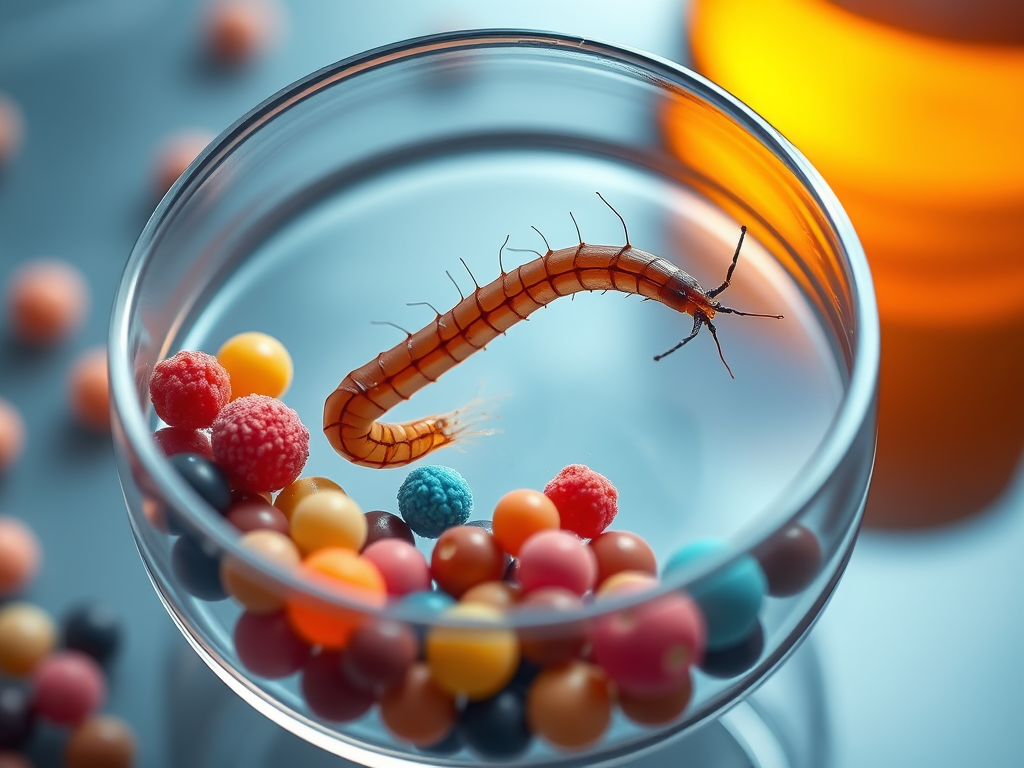
The worms were nurtured in proximity to the beads in a way that the beads’ texture confused them, and they considered the beads as food particles. These food-related cues impacted the dopamine/tyramine circuit and diminished the intestinal activity of FMO-2.
The findings revealed the triggering of the stress-adaptive pathways, despite the worms remaining in the fasting mode. They lived longer when FMO-2 was increased. However, in their prolonged survival, they became indifferent to threats. Paradoxically, there was a surge in serotonin when FMO-2 was entirely eliminated. This reduced the arousal state of the worm and increased its quiescence or stillness. The worm also appeared less curious, with minimal engagement.
The scientists interpreted that a proper concentration of FMO-2 is necessary to optimize life and maintain behavioral balance in the worm. They presumed that a similar mechanism might be operating in humans, which involves close coordination between NMDA receptor signaling, kynurenine/quinolinic acid, serotonin, and tryptophan metabolism.
Finally, the findings suggest that environmental perception can be so strong that it may offset the benefits of caloric restriction/fasting. On the other hand, this revelation opens up doors for anti-aging treatments that may target FMO in a way to surpass the behavioral degradation.
Future anti-aging treatments may mimic caloric restriction and activate downstream stress responses, eliminating the need for long-term dieting. However, the management of behavioral trade-offs is something scientists will need to examine closely while testing these novel therapies. This goal will require balancing the flux of serotonin and kynurenine.
Watch the complete podcast episode here.
Key takeaways
- Sensory biology can override diet benefits: touch and smell send “food available” signals that shut down FMO‑2’s longevity program.
- Behavior and lifespan can partially decouple: some fixes restore normal exploration without erasing all lifespan gains.
- Translation potential: targeting FMO‑2-linked pathways could deliver fasting-like benefits, provided we preserve motivation, curiosity, and hazard detection.
Action items
- Design your fasting environment: During fasting windows, minimize food preparation, kitchen time, and intense food aromas; batch cook after meals.
- Track signals, not just calories: think “sensory restriction” alongside calorie timing to protect longevity pathways.
- Follow biomarker clues: serotonin, quinolinic/kynurenic balance, and NMDA tone are promising tracks for future interventions.
If aging is partly a matter of perception, then longevity begins with designing the context based on perception management. We must curate what our senses encounter, and then only can we keep our inner longevity switch under our active control.
References
Kitto ES, Beydoun S, Leiser SF. Rewarding touch limits lifespan through neural-to-intestinal signaling. Proc Natl Acad Sci U S A. 2025 Oct 28;122(43):e2423780122. doi:10.1073/pnas. 2423780122. Available from: https://pubmed.ncbi.nlm.nih.gov/41129233/
Henry E, Schaller ML, Bhandari M, Easow SA, Tuckowski AM, Howington MB, et al. Metabolic regulation of behavior by the intestinal enzyme FMO-2. Sci Adv. 2025 Oct 24;11(43):eadx3018. doi:10.1126/sciadv.adx3018. Available from: https://www.science.org/doi/10.1126/sciadv.adx3018
To stay active and empowered with research-backed, evidence-based health and wellness content daily and learn its practical application in routine, don’t forget to follow my BioTuberOnline, Substack, Medium, LinkedIn, Patreon, and Blogger platforms.
Have a wonderful day!
Truly yours,
Dr. Khalid Rahman Health Scientist | Scholarly Communicator | Licensed Integrative Medicine Practitioner PhD (Clinical Research) | MSc (Bioinformatics) | MSc (Clinical Research & Regulatory Affairs) | Post Graduate Diploma in Computer Application | Bachelor of Unani Medicine & Surgery


Leave a Reply