

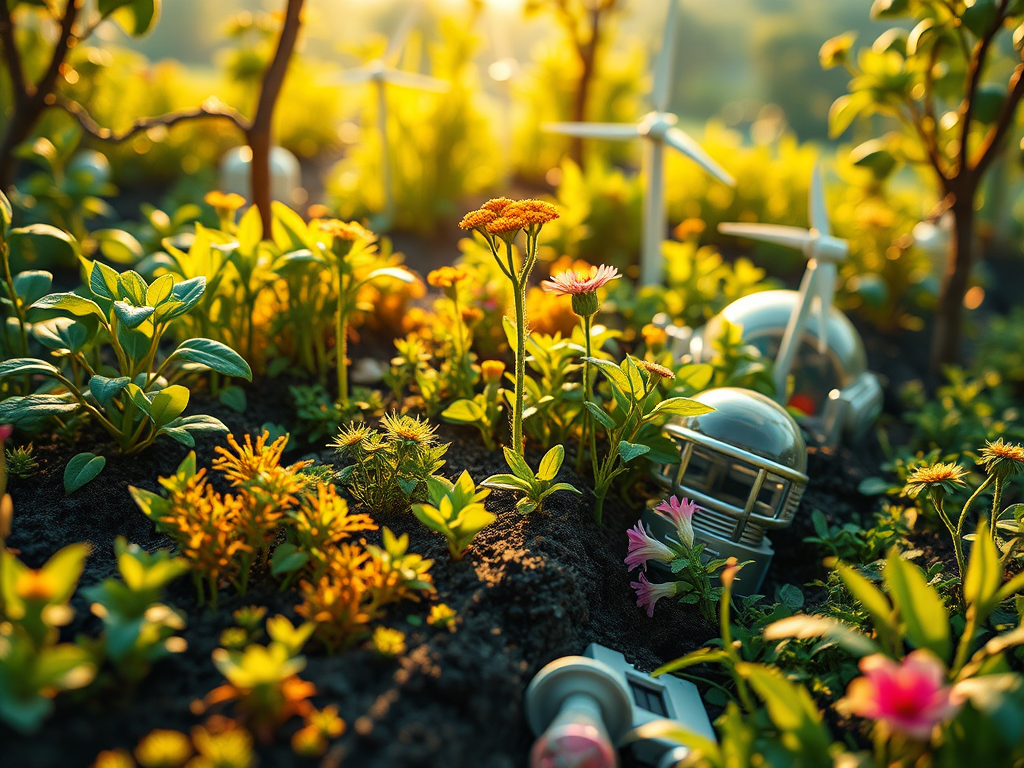
Bioeconomy Is a Vital System for Human Continuity. Here’s How Living Systems Quietly Became the Most Important Technology of the Century and Why Biology Will Shape the Global Economy, Our Survival, and the World After 2050
Curator’s Note: The bioeconomy is essential for human survival, addressing intertwined challenges such as food security, climate resilience, and economic continuity through biological systems. Historically rooted in ideas from the 1920s, it emphasizes renewal and collaboration over extraction, promoting long-term resilience. By 2050, demographic pressures will necessitate urgent investments in bioeconomic systems that localize production and adapt to environmental stresses. Technologies like biotechnology, artificial intelligence, and quantum computing are pivotal, enabling precise optimization and efficient biological processes. The bioeconomy represents a shift toward sustainable growth, integrating biological intelligence into economic strategies to ensure stability and well-being for future generations. This essay was written by Dr Mehmet Yildiz, a technologist, cognitive scientist, futurist, educator, and author of 50+ books. This is a summary chapter of his upcoming book Technology Horizons 2050 and Beyond. Readers from Medium can read this featured story at the Health and Science publication via this link.
Why the Bioeconomy Matters
When writing the first draft of this chapter, senior editors asked why bioeconomy matters for the public and how it relates to this futuristic book.
I want to summarize that conversation to offer some perspectives on this necessary discipline, which is not much covered in the press or on social media despite its criticality for our survival and future.
The bioeconomy matters because it addresses multiple existential challenges through a single systemic approach. Food security, energy stability, climate resilience, public health, and economic continuity all depend on biological systems that are under increasing strain.
Treating these challenges separately has produced fragile solutions. The bioeconomy reconnects them by recognizing biology as the common foundation beneath modern civilization.
Unlike extractive economic models, the bioeconomy creates value by working with living systems rather than exhausting them.
Bioeconomy replaces dependency on finite resources with renewable cycles, and short-term efficiency with long-term resilience. In doing so, it offers a practical path forward that aligns innovation with survival.
Now I’d like to give a brief historical background of this discipline.
A Word That Appeared Before We Were Ready for It

Long before the world became mesmerized by screens, algorithms, and digital abundance, a quiet idea surfaced from biology. In the 1920s, Russian biologist Fedor Ivanovich Baranoff used the term bio-economics to describe something profoundly simple: how much life a system can give without destroying itself.
His work focused on fisheries, yet the insight extended far beyond fish. Nature has limits, and ignoring them carries consequences.
Decades later, in the 1970s, economist Nicholas Georgescu-Roegen revived the idea with sharper urgency. He argued that economic systems do not float above nature. They operate inside it. Energy, materials, and life itself obey physical laws, especially the second law of thermodynamics, which governs the irreversible increase of entropy.
Growth without regard for biology, he warned, eventually consumes the very foundation on which it depends. At the time, the world was not ready to listen.
In 1997, the term resurfaced again in a different form. At a genomics seminar, Juan Enríquez and Rodrigo Martinez introduced a modern, technology-driven vision of the bioeconomy.
This version focused on biotechnology, genetics, and life sciences as engines of economic value. It aligned well with scientific optimism and later became the dominant interpretation in policy and industry.
What is striking is that the bioeconomy has been trying to enter human consciousness for more than a century. Yet, it has remained peripheral while digital technologies captured nearly all attention. We learned how to compute faster, connect instantly, and automate at scale, but we essentially postponed learning how to live within biological limits.
Today, that imbalance defines our dilemma.
Digital systems move at extraordinary speed, while biological systems respond at the pace of life. We celebrate data abundance, yet face soil depletion. We optimize attention while neglecting ecosystems.
We invest heavily in artificial intelligence, while underinvesting in biological intelligence that sustains food, health, and climate stability.
This chapter of Technology Horizons 2050 and Beyond begins from that tension. The bioeconomy is not a new invention waiting to be launched. It is an old insight resurfacing at the moment; it can no longer be ignored.
As we look toward 2050 and beyond, the question is no longer whether biology belongs at the center of economic thinking. The question is whether we will place it there deliberately, or only after systems begin to fail.

Why Will the Bioeconomy Become Critical by the 2050s?
The significance of the 2050s is less in the date itself and more in what will have disappeared by then. Many biological systems operate on long timescales.
For example, soil regeneration, ecosystem recovery, genetic diversity, and climate adaptation cannot be accelerated on demand. Decisions delayed today reduce the range of viable options tomorrow.
By mid-century, demographic pressure, urban concentration, and environmental stress compress timelines across food, energy, and materials systems.
Industrial models built for abundance and linear throughput struggle to adjust under these conditions, not because they lack efficiency, but because they lack flexibility. Once thresholds are crossed, substitution becomes expensive, slow, or impossible.
This is where timing becomes decisive. Biological production systems require early investment because they depend on cultivation, learning, and gradual optimization.
Regions that establish bioeconomic capacity before pressure peaks retain choice. Those who wait are forced into reactive transitions under constraint, when costs are higher, and trade-offs are sharper.
The 2050s also mark a shift in risk distribution. Supply disruptions, climate variability, and resource volatility increasingly affect multiple systems at once.
Without biologically grounded infrastructure in place, shocks cascade rather than dissipate. The bioeconomy reduces this fragility by shortening loops, localizing production, and embedding adaptability into the system itself.
In this sense, the bioeconomy is less a future opportunity than a timing problem. It must be built before it is urgently needed.
By the 2050s, the question will no longer be whether societies should invest in biological systems, but whether they prepared early enough to let those systems mature.
Relevance to Technology Horizons 2050 and Beyond
Within the context of this book, the bioeconomy represents a convergence point where technology, ecology, and human values intersect. It demonstrates how advanced science can reinforce life rather than dominate it.
By 2050, technological leadership will depend on computational power, automation, and the ability to integrate innovation with biological intelligence.
The bioeconomy stands as a measure of collective maturity. It reveals whether societies use technology to extract faster or to sustain longer.
The decisions made today will determine whether the bioeconomy evolves as a thoughtful design choice or arrives as a forced response to crisis. In either case, its influence on the second half of the century is unavoidable.
In this chapter, I frame the bioeconomy as a foundational system for human continuity rather than a secondary sustainability initiative. The bioeconomy addresses a reality that modern civilization can no longer defer.
Economic growth, population health, environmental stability, and technological progress all depend on biological systems that operate within finite limits.
For centuries, industrial expansion succeeded by separating production from nature. That separation now reveals its cost.
For example, climate instability, soil degradation, biodiversity loss, and fragile supply chains reflect the same underlying problem, such as economic systems evolving faster than their biological foundations.
The bioeconomy aims to restore that alignment.
From Extraction to Regeneration
For most of modern history, industrial progress followed a simple pattern. We extracted resources, converted them into products, used them briefly, and discarded the rest.
For example, oil became fuel and plastic. Minerals became electronics. Forests became buildings and paper.
This approach delivered speed and scale, but it also created systems that break easily under pressure. When supply chains stall, ecosystems degrade, or prices spike, the limitations of linear extraction become apparent.
The bioeconomy introduces a different logic, one already proven by nature. In healthy ecosystems, nothing is wasted.
For example, leaves fall, decompose, and nourish soil. Waste from one organism becomes nourishment for another. Energy flows continuously rather than being consumed once and lost. These systems endure because they regenerate rather than deplete their foundations.
When this biological logic enters economic design, the consequences become tangible.
For example, agricultural residues that once rotted or were burned turn into feedstock for biorefineries. Food waste becomes a source of energy, fertilizers, or bio-based materials. Carbon emissions are captured and reused within biological cycles rather than accumulating as long-term damage.
In short, what was previously treated as cost or pollution becomes a productive asset.
This shift does not reduce growth. It changes its character.
For example, growth becomes more stable because it depends on renewal rather than exhaustion. Industries become more resilient when they rely on local biological flows rather than distant extraction. Communities gain security because resources circulate within regional ecosystems rather than leaking away.
The bioeconomy shows that efficiency does not always come from doing more. It often comes from wasting less, designing smarter, and allowing systems to recover. By learning from living processes, economic activity becomes more durable. Growth continues, but it continues in a way that life itself can sustain.
Biotechnology: The Steering Intelligence of the Bioeconomy
Biotechnology functions as the steering force that enables the bioeconomy to move from concept to reality.
Without biotechnology, the bioeconomy remains an aspiration. With it, biological systems become programmable, measurable, and scalable.
Advances in synthetic biology, metabolic engineering, enzyme design, precision fermentation, and bioinformatics allow scientists and engineers to guide biological processes with unprecedented accuracy.
For example, cells become production units. Microorganisms manufacture fuels, chemicals, materials, and medicines. Biological pathways once shaped solely by evolution now operate with human guidance.
Biotechnology also introduces feedback and control. It means that data-driven models optimize yield, efficiency, and resilience. Genetic tools improve tolerance to climate stress, disease, and variability.
This convergence of biology and computation transforms agriculture, manufacturing, and healthcare into adaptive systems rather than static infrastructures.
In this sense, biotechnology does not replace nature. It collaborates with it. The success of the bioeconomy depends on how responsibly this collaboration is governed.
Agriculture as the New Industrial Backbone
Within the bioeconomy, agriculture expands beyond food production into a renewable industrial platform. Crops, forestry residues, algae, and organic byproducts supply biological feedstocks that support multiple value chains simultaneously.
This shift repositions rural regions as strategic innovation zones. Localized bioproduction reduces dependency on distant extraction and increases regional resilience.
When managed carefully, agricultural systems deliver food security, industrial inputs, and ecosystem services simultaneously.
Biorefineries: Where Biology Meets Engineering
Biorefineries serve as the operational core of the bioeconomy. Their role mirrors that of oil refineries in the fossil era, yet their philosophy differs fundamentally.
Instead of maximizing throughput at the expense of waste, they maximize utilization through integration.
A single feedstock can yield fuels, biochemicals, materials, fertilizers, and energy. Advances in biotechnology enable biorefineries to dynamically adjust processes in response to feedstock variation and market demand.
This flexibility allows the bioeconomy to scale regionally without imposing uniform solutions.
Sustainability as an Operating Constraint and Potential Intelligence
In the bioeconomy, sustainability becomes a design requirement rather than an ethical add-on.
Systems that generate excessive waste or degrade ecosystems lose efficiency and competitiveness.
When waste streams become inputs and byproducts gain value, economic and environmental goals naturally align.
Over time, sustainability becomes a performance metric rather than a regulatory burden.
In the context of bioeconomy sustainability, intelligence becomes layered.
Biological intelligence sustains life and nature.
Human intelligence sets direction.
Artificial and quantum intelligence expand perception.
When these layers align, the bioeconomy becomes less fragile and better able to support a complex world approaching 2050 and beyond.
How AI Might Contribute to the Bioeconomy
Artificial intelligence and quantum computing do not replace biology. They amplify our ability to understand, guide, and scale biological systems responsibly. In the bioeconomy, their value lies less in speed alone and more in insight, coordination, and foresight.
AI already serves as a cognitive layer for complex biological systems. Living processes generate massive amounts of data, from genomic sequences and soil microbiomes to fermentation dynamics and crop behavior under stress.
Human intuition alone cannot track these interactions at scale. AI systems help identify patterns, predict outcomes, and optimize decisions across agriculture, biomanufacturing, and ecosystem management. This capability turns biological variability from a risk into a manageable feature.
In agriculture, AI improves precision rather than intensification. Machine learning models guide planting schedules, nutrient use, water management, and disease prevention based on real-time data rather than averages.
This reduces waste while improving yield stability under changing climate conditions. For the public, this translates into more reliable food supplies, healthier soils, and lower environmental pressure without sacrificing productivity.
In biorefineries and bio-based manufacturing, AI supports process optimization. Biological production systems are sensitive to temperature, timing, microbial balance, and feedstock composition.
AI models dynamically adjust their parameters, improving efficiency while reducing energy consumption and material loss.
These improvements matter because scalability determines whether bioeconomic solutions remain experimental or become economically viable.
How Quantum Computing Might Contribute to the Bioeconomy
Quantum computing enters the picture at a different layer. While still emerging, its relevance to the bioeconomy is in its ability to model molecular and biochemical systems that exceed classical computational capacity.
Many biological processes depend on quantum-level interactions, including enzyme activity, protein folding, and molecular binding. Accurately simulating these processes accelerates the discovery of new enzymes, materials, and biological pathways critical to sustainable production.
In practical terms, quantum computing could shorten development cycles for bio-based alternatives. What currently takes years of laboratory experimentation may become more targeted and efficient through advanced simulation.
This matters greatly in the 2030s and 2040s, when time becomes as valuable as resources in responding to environmental and supply pressures.
The most important contribution of AI and quantum computing, however, may be their role in coordination. The bioeconomy spans food systems, energy, healthcare, materials, and ecosystems.
AI systems integrate data across these domains, revealing trade-offs and synergies that remain invisible in siloed decision-making. This supports better policy design, smarter investment, and more resilient infrastructure.
For everyday life, these technologies silently shape outcomes people care about.
For example, food that remains affordable despite climate stress. Medicines are developed faster and are tailored more precisely. Materials that last longer and pollute less. Communities that adapt rather than react when conditions change.
AI and quantum computing do not guarantee a successful bioeconomy. They are instruments, not answers. Their impact depends on governance, ethics, transparency, and public trust. Used thoughtfully, they help humanity work with biological systems rather than overpower them.
Why Governments and Research Institutions Matter
Governments shape land use, education, regulation, and infrastructure.
Research institutions translate fundamental biology into scalable applications while safeguarding ethical boundaries.
Without public leadership, the bioeconomy risks fragmentation and inequity. With it, biological innovation becomes a shared foundation for prosperity.
Where We Are Now: Early Signals, Fragmented Systems
At present, the bioeconomy exists as a collection of promising but disconnected efforts. Bio-based fuels, sustainable agriculture, waste valorization, bio-based materials, and biotechnology often advance in parallel rather than in concert.
Pilot projects demonstrate feasibility, yet few operate at sufficient scale to reshape regional or national economies.
The primary constraints are structural rather than conceptual. Scaling biological processes remains costly and complex. Infrastructure built for fossil-based systems struggles to accommodate biological variability.
Regulatory frameworks lag behind innovation, creating uncertainty for investors and researchers. As a result, progress remains uneven, concentrated in regions with strong public funding, advanced research capacity, or favorable policy environments.
At the same time, research continues to expand the frontier. Advances in biotechnology, data-driven agriculture, bioprocess engineering, and systems biology reveal what biological systems can achieve when guided intelligently.
I believe the risk at this stage is not a lack of innovation but a lack of coordination. Without shared frameworks, breakthroughs remain localized rather than transformative.
The 2030s: From Pilots to Platforms
The 2030s represent a decisive transition decade. The central deliverable of this period is scaling with intent. Successful regions move beyond isolated pilots and begin building bioeconomic platforms that connect agriculture, waste streams, energy systems, and biomanufacturing.
Biorefineries integrate more tightly with local and regional feedstocks, including agricultural residues, forestry byproducts, and urban organic waste.
Biotechnology improves process reliability, reducing sensitivity to climate variability and feedstock inconsistency. Digital tools enable real-time monitoring and optimization across production chains.
Policy alignment becomes visible rather than rhetorical. Climate targets, food security strategies, industrial policy, and research funding converge under explicit bioeconomic roadmaps.
Education and workforce programs adapt, producing technicians, engineers, and system managers fluent in biological production.
Regions that achieve this integration begin to reduce their dependence on imported materials and on volatile supply chains.
The 2040s: System-Level Integration
By the 2040s, the defining deliverable is integration across systems. Biological production moves from the periphery to the core of industrial activity.
Bio-based materials achieve performance parity or superiority in construction, packaging, textiles, and manufacturing. Lifecycle design becomes standard practice rather than an exception.
Healthcare undergoes parallel change. Regenerative medicine, biofabrication, and biologically derived therapies scale within mainstream healthcare systems. Production shifts closer to demand, improving resilience and accessibility.
At this stage, biotechnology, agriculture, and industry operate less as separate sectors and more as interconnected components of a single adaptive system.
Governance also matures. Regulatory frameworks evolve to responsibly manage biological innovation, addressing biosafety, land use, equity, and long-term ecological impacts.
The bioeconomy becomes measurable, accountable, and strategically managed rather than experimental.
The 2050s: Stability Through Regeneration
In the 2050s, the core deliverable might be systemic stability. A mature bioeconomy functions as critical infrastructure rather than a growth initiative.
For example, carbon cycles might close within managed biological systems. Material loops might shorten as waste streams re-enter production. Economic activity might support ecosystem recovery instead of accelerating degradation.
Regions that invested early might be more resilient. Food systems adapt more smoothly to climate stress. Energy and materials supply chains absorb shocks without cascading failure. Employment remains rooted in local knowledge and ecosystems, reducing vulnerability to global disruption.
Late adopters face different conditions. For example, higher transition costs, limited flexibility, and increased exposure to environmental and geopolitical volatility constrain options.
By this decade, the bioeconomy no longer represents a strategic choice. It means a baseline requirement for maintaining social and economic continuity.
What This Means for the Public
For the public, the bioeconomy is no longer an abstract policy concept or a distant technological shift. It quietly reshapes the conditions of everyday life.
It determines whether food remains nutritious and affordable as climate patterns shift. It influences whether communities depend on fragile global supply chains or develop resilient local systems rooted in their own land and knowledge.
Energy security in a bioeconomic system looks different. Instead of relying solely on centralized, geopolitically exposed sources, regions can convert agricultural residues, organic waste, and biological byproducts into usable energy and materials.
This reduces vulnerability to external shocks and stabilizes costs over time. For households, this stability matters more than innovation headlines.
Healthcare also changes in subtle but meaningful ways. Bioeconomic innovation accelerates the development of medicines, vaccines, and regenerative therapies while reducing dependency on scarce raw materials.
Personalized treatments become more accessible as biological production systems adapt to individual and population-level needs. The result is care that evolves with people rather than forcing people to adjust to rigid systems.
Employment in the bioeconomy shifts away from extractive labor toward knowledge-based and stewardship-oriented roles.
For example, farmers become system managers. Technicians become bio-process specialists. Communities gain jobs that can’t be easily outsourced because they depend on local ecosystems and expertise.
This creates economic dignity alongside sustainability.
In my opinion, the most profound change occurs in how prosperity is understood. The bioeconomy reframes success as continuity rather than conquest. This means that well-being increases when economic activity supports living systems rather than depletes them.
For the public, this reframing restores trust that progress can improve the quality of life without sacrificing environmental stability or future opportunity.
The bioeconomy matters to us because it connects survival, health, and livelihood into a single coherent vision. It offers reassurance that technological advancement can remain humane, grounded, and protective of the conditions that make life possible.
Conclusions and Key Takeaways
The bioeconomy brings a key truth into sharp focus. Every economy rests on biology, whether it acknowledges it or not. For example, food, energy, materials, health, and climate stability all begin in living systems.
When economic design ignores this foundation, growth becomes fragile. When it respects and supports it, societies gain the ability to endure change rather than collapse under it.
What makes the bioeconomy different from earlier industrial shifts is its direction of learning. Instead of forcing nature to fit machines, it asks machines to learn from nature.
Regeneration, recovery, and adaptation are no longer fancy or poetic ideas. They become practical design principles for how industries operate and how communities sustain themselves.
Biotechnology acts as the guiding intelligence that makes this possible. It allows humans to understand biological processes deeply and work with them deliberately. Yet power alone never guarantees wisdom.
The future of the bioeconomy depends on how thoughtfully this power is governed, how carefully ecosystems are protected, and how seriously long-term consequences are considered.
The coming decades will matter because timing shapes outcomes. Acting early allows societies to design systems calmly and intentionally. Acting late forces change under pressure, when options are fewer, and costs are higher.
The bioeconomy will arrive either way. The difference is in whether it emerges as a stable foundation or as an emergency response.
From my perspective, the most striking realization is that the tools needed to sustain life on Earth already exist. They grow, adapt, recycle, and heal around us every day.
The task ahead is not to invent a new planet-friendly future from scratch, but to recognize that life itself offers the most advanced technology humanity has ever encountered.
When you step back from this chapter, one insight might remain clear. Progress does not require overpowering nature. Progress lasts when it learns from it. That understanding may shape the most important economic decisions of the twenty-first century, determining our future.
Here is the introduction to this growing manuscript to be published as a book on 30 June 2026.
Technology Horizons 2050 and Beyond ♾️: Introduction
Why I decided to turn my manuscript into a book about the future of technology and sciencemedium.com
Thank you for reading this important chapter. I wish you a healthy and happy life. I also wish you and your loved ones a joyful festive season.
I am grateful that the distribution of the Cellular Intelligence book for 31 December 2025, as promised to my readers for my annual gift, has begun. Some book stores have published it earlier than others. Google Studios published the audio. Amazon and Apple will publish it soon.

Cellular Intelligence -Official Page — The Digitalmehmet Content Ecosystem
Cellular Intelligence: Stronger Mitochondria, Sharper Brain, and Healthier Life at Any Age Health, Wellness, &…digitalmehmet.com
I wrote many stories explaining the fundamental requirements of the brain and nervous system with nuances in previous stories, so I link them as reference here:
Here’s How to Make the Nervous System More Flexible and Functional
Here’s How I Train My Brain Daily for Mental Clarity and Intellectual Productivity.
You can find many relevant stories about brain health and cognitive performance on this list: Brain Health and Cognitive Function.
I also wrote several stories about ketosis and the ketogenic lifestyle, reflecting my experiences and literature reviews, which you can find in this list: Ketosis and Ketogenic Lifestyle.
I am pleased that my 3 new books, What the Brain Needs, Why We Fail, and How We Can Fix It, Ketosis + BDNF: The Healing Molecules That Saved My Life, and Cellular Intelligence, were published in December 2025 and are now available in many bookstores
You can check out my FEATURED series of 50+ books on Amazon markets:
Substack Newsletter Mastery, Excellence, and Eminence Series
Some of my books are published at Apple Stores, Smashwords, Vivlio, Kobo, Barnes & Noble, BooksaMillion, Fable, or my discount bookstore.
If you are a writer, you are welcome to join my publications by sending a request via this link. I support 40K writers who contribute to my publications on this platform. Check out the recent update for the writers of my publications.
You can contact me via my website. If you are a new writer, check out my writing list to find some helpful stories for your education. You can also join my author platform as a guest blogger.
I invite you to subscribe to my publications on Substack, where I offer experience-based and original content on health, content strategy, book authoring, and technology topics you can’t find online to inform and inspire my readers.
Healthspan Mastery (NEW)
Get an email whenever Dr Mehmet Yildiz publishes. He is a top writer and editor on Medium.
dr-mehmet-yildiz.medium.com
Check out Free Blog Posts by Digitalmehmet Contributors. Here is the link to my FREE personal blogs. Now you can read our blog posts via a Flipboard Magazine for convenience.


Leave a Reply