

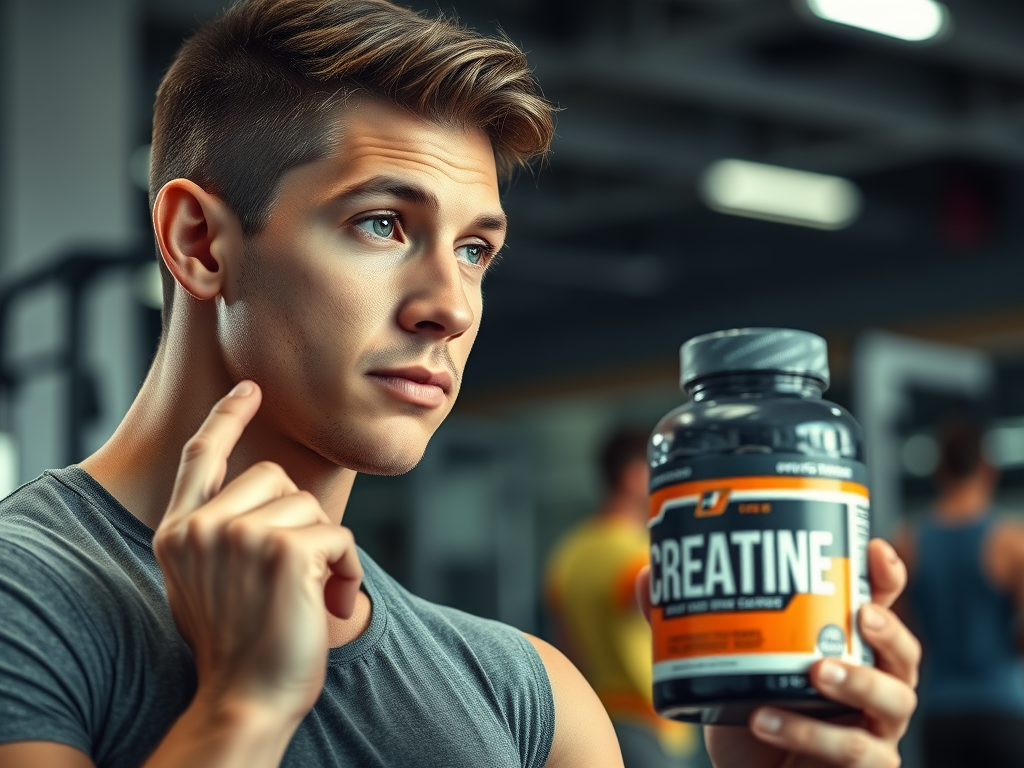
I Explain How an Old Single Hormone Signal Became a Myth Through Misread Science and What the New Evidence Actually Shows
Curator’s note: The myth that creatine causes hair loss originated from a misinterpretation of a 2009 study focusing on short-term hormonal changes in male athletes, without assessing hair outcomes. This unfounded fear persisted for over fifteen years, despite a thorough 2025 study measuring creatine’s effects on both hormone levels and hair health. The 2025 research found no significant impact on hair density or hormonal balance, contradicting earlier assumptions. It emphasized the distinction between observed hormonal shifts and biological outcomes, underscoring the importance of careful scientific interpretation and the need to base public concerns on substantial evidence rather than speculation. Readers from our Medium community can read this story and share their thoughts via this link. This story was written by Dr Mehmet Yildiz, a cognitive scientist, technologist, and chief editor of Illumination Integrated publications on Medium, Substack, and Patreon.
Dear Subscribers,
Happy New Year! In this story, I will answer a commonly asked question about creatine, which is a valuable supplement, and I covered in several articles before.
When science is removed from its context, even good evidence can give rise to powerful myths. A single data point, detached from its limits, can quickly turn reassurance into fear. I have seen how this happens, especially when the issue touches something deeply personal.
For many men, hair is more than appearance. It is identity, confidence, and youth. I still remember a business trip in Europe in the early 2000s when I boarded a flight filled with men whose heads were visibly bandaged and bleeding. At first, I thought they were returning from a disaster zone.
Only later, listening to conversations, did I realize they had all traveled to the same country for low-cost hair transplant surgery. One Australian man explained that a procedure costing several thousand dollars at home was available for a fraction of the price abroad.
That experience stayed with me. It revealed how strongly the fear of hair loss can drive behavior. When a young man hears that something he values might be threatened, he rarely waits for nuance. He reacts first.
This is precisely why claims linking creatine to hair loss spread so quickly and why they deserve careful, calm, and evidence-based examination.
Creatine is so crucial for our cells and mitochondria that I included a chapter about it in my recent book, Cellular Intelligence.

As mentioned in a previous book chapter, not many supplements have been studied as extensively as creatine, yet few have attracted a rumor as persistent as the claim that it causes hair loss. The idea appears frequently in gyms, online forums, and even clinical conversations.
What makes this claim unusual is that it did not originate from anecdote or case reports of hair thinning. It emerged from a single physiological observation that was later stretched by some who don’t like creatine far beyond what the data could support.
A misinterpretation of an early study triggered a rumor that lasted for over fifteen years, shaping public perception of creatine in ways the evidence never supported.
Understanding how this happened offers a useful lesson in scientific interpretation, biological nuance, and the difference between mechanism and outcome.
The Study That Sparked the Concern
The hair-loss narrative traces back to a 2009 study conducted in male rugby players, published in the Clinical Journal of Sport Medicine. The researchers were not investigating hair at all. Their goal was to examine how short-term creatine monohydrate supplementation influenced androgen hormones.
Over three weeks, participants followed a high-dose protocol consisting of a loading phase followed by maintenance. The study reported a statistically significant increase in circulating dihydrotestosterone (DHT), along with an increased DHT-to-testosterone ratio.
This finding mattered because DHT is known to play a role in androgenetic alopecia in genetically susceptible individuals. Over time, DHT can contribute to follicle miniaturization in specific scalp regions.
The leap from this observation to “creatine causes hair loss” happened quickly, but it was a leap, not a conclusion.
Crucially, the study did not measure hair density, hair shedding, follicle health, or scalp outcomes. It measured a hormone signal under a very specific context: young male athletes, short duration, and a relatively aggressive dosing strategy.
The results suggested a possible mechanistic pathway rather than a clinical outcome.
Hormones, Hair, and the Problem with Assumptions
An increase in DHT does not automatically translate into hair loss.
Hair follicles respond to androgens in a highly individualized manner, governed mainly by the genetic sensitivity of follicular androgen receptors.
Many individuals with elevated or fluctuating DHT never experience hair thinning, while others with normal levels do.
In clinical practice, hair loss reflects the convergence of genetics, age, stress, inflammation, nutrition, endocrine context, and local scalp biology.
A single hormonal change, especially when transient and modest, rarely determines the outcome on its own.
This distinction between biological plausibility and demonstrated effect is where much of the confusion arose.
A Study Designed to Answer the Actual Question
In 2025, a randomized controlled trial directly addressed the question that the 2009 study never set out to answer.
I want to highlight that a single misread study set off more than fifteen years of speculation and myth, during which creatine carried a reputation that the broader scientific literature did not justify.
Now, let me introduce the rigorous approach of the new study.
Rather than inferring hair outcomes from hormone levels, the 2025 clinical study investigators measured both endocrine markers and hair-related parameters over a more extended intervention period.
Participants received creatine or a placebo under controlled conditions, and outcomes included circulating androgens and indicators relevant to hair health.
The results were unambiguous. Creatine supplementation did not produce significant changes in testosterone or DHT compared to placebo, and no differences were observed in hair density, hair growth measures, or follicle-related outcomes.
In other words, when hair was actually measured, no effect appeared. This study did what the original speculation could not: it tested the hypothesis directly.
Why the Two Findings of High Quality Clinical Studies Are Not Contradictory
At first glance, the 2009 and 2025 studies seem to disagree. In reality, they address different questions at different levels of biological organization.
The earlier study observed a short-term hormonal shift in athletes under a specific protocol. The latter study evaluated whether creatine supplementation, as commonly used, leads to measurable changes in hair biology. One examined a signal. The other examined an outcome.
When viewed together, the evidence suggests that, under certain conditions, creatine can interact with endocrine pathways, but this interaction does not result in clinically meaningful hair loss in healthy individuals.
What the Broader Literature Shows
When these two studies are placed within the broader body of research, the picture becomes clearer.
Multiple reviews and controlled trials examining creatine supplementation have found no consistent effect on testosterone, DHT, or androgen-dependent outcomes in humans.
Long-term supplementation studies, including those spanning months or years, have not reported an increased incidence of hair thinning (alopecia) as an adverse effect.
Epidemiological observations also matter. Creatine is one of the most widely used supplements globally, across diverse populations and age groups. If it were a meaningful driver of hair loss, consistent clinical signals would be difficult to miss. To date, such signals have not emerged.
A More Accurate Way to Frame the Question
Rather than asking whether creatine “causes” hair loss, a more scientifically honest and helpful question would be:
Does creatine meaningfully alter hair biochemistry in a way that increases risk beyond baseline genetic and environmental factors?
Based on current evidence, the answer appears to be no.
This does not mean that all individuals respond identically. Biology never works that way. But it does mean that the widespread fear surrounding creatine and hair loss is disproportionate to the data supporting it.
The Take-Home Insight
The creatine–hair loss story is a reminder of how easily mechanistic findings can harden into myths when context is lost.
A hormone change observed under specific conditions became a generalized warning, even though the outcome of concern was never measured.
Good science moves in the opposite direction. It starts with hypotheses, tests outcomes directly, and revises beliefs as evidence accumulates.
When that process is followed, the current literature does not support the claim that creatine supplementation causes hair loss in healthy adults.
For researchers, this highlights the importance of distinguishing surrogate markers from clinical endpoints. For clinicians, it highlights the value of reassuring patients with evidence rather than speculation.
For the public, it offers a calmer conclusion: creatine’s reputation in this area has traveled much faster than the data. Check out my recent book chapter to learn more about it:
Wonders of Creatine: Why I Added a Chapter About It in the Cellular Intelligence Book
Insights into the Energy Buffer That Serves Muscles, Boosts the Brain, Nourishes Cells, and Empowers Mitochondriamedium.com
To bring this discussion entirely up to date, it helps to look at the most recent evidence. In April 2025, a well-designed 12-week randomized controlled trial published in the Journal of the International Society of Sports Nutrition examined healthy, resistance-trained men who took 5 grams of creatine monohydrate daily.
The researchers tracked hormone levels, including DHT, and carefully monitored hair-related outcomes. They found no changes in DHT, no disruption of hormonal balance, and no evidence of hair loss.
In other words, when creatine was tested directly under controlled conditions, the feared effect simply did not appear.
Summary of the Literature Context
Short-term creatine supplementation has, in isolated settings, been associated with transient hormonal changes under specific experimental protocols, without evidence of clinical consequences.
Randomized controlled trials that directly examined hair health and endocrine outcomes have found no adverse effects on hair loss.
Systematic reviews and long-term supplementation studies consistently report a strong safety profile for creatine, with no credible signal linking it to androgen-driven hair loss.
If you are interested in other molecules, nutrients, or supplements, you may find some helpful and research-based stories from my list:
List: Valuable Nutrients and Supplements | Curated by Dr Mehmet Yildiz | Medium
Valuable Nutrients and Supplements · 35 stories on Mediumdr-mehmet-yildiz.medium.com
Thank you for reading my perspectives. I wish you a healthy and happy life.
I am grateful that the distribution of the Cellular Intelligence book for 31 December 2025, as promised to my readers for my annual gift, has begun. Some book stores have published it earlier than others. Google and Amazon published the audio, and Apple will publish it soon. Cellular Intelligence -Official Page
I wrote many stories explaining the fundamental requirements of the brain and nervous system with nuances in previous stories, so I link them as reference here:
Here’s How to Make the Nervous System More Flexible and Functional
Here’s How I Train My Brain Daily for Mental Clarity and Intellectual Productivity.
You can find many relevant stories about brain health and cognitive performance on this list: Brain Health and Cognitive Function.
I also wrote several stories about ketosis and the ketogenic lifestyle, reflecting my experiences and literature reviews, which you can find in this list: Ketosis and Ketogenic Lifestyle.
I am pleased that my 3 new books, What the Brain Needs, Why We Fail, and How We Can Fix It, Ketosis + BDNF: The Healing Molecules That Saved My Life, and Cellular Intelligence, were published in December 2025 and are now available in many bookstores
You can check out my FEATURED series of 50+ books on Amazon markets:
Substack Newsletter Mastery, Excellence, and Eminence Series
Some of my books are published at Apple Stores, Smashwords, Vivlio, Kobo, Barnes & Noble, BooksaMillion, Fable, or my discount bookstore.
If you are a writer, you are welcome to join my publications by sending a request via this link. I support 40K writers who contribute to my publications on this platform. Check out the recent update for the writers of my publications.
You can contact me via my website. If you are a new writer, check out my writing list to find some helpful stories for your education. You can also join my author platform as a guest blogger.
I invite you to subscribe to my publications on Substack, where I offer experience-based and original content on health, content strategy, book authoring, and technology topics you can’t find online to inform and inspire my readers.
Healthspan Mastery (NEW)
Get an email whenever Dr Mehmet Yildiz publishes. He is a top writer and editor on Medium.
dr-mehmet-yildiz.medium.com
Check out Free Blog Posts by Digitalmehmet Contributors. Here is the link to my FREE personal blogs. Now you can read our blog posts via a Flipboard Magazine for convenience.


Leave a Reply