

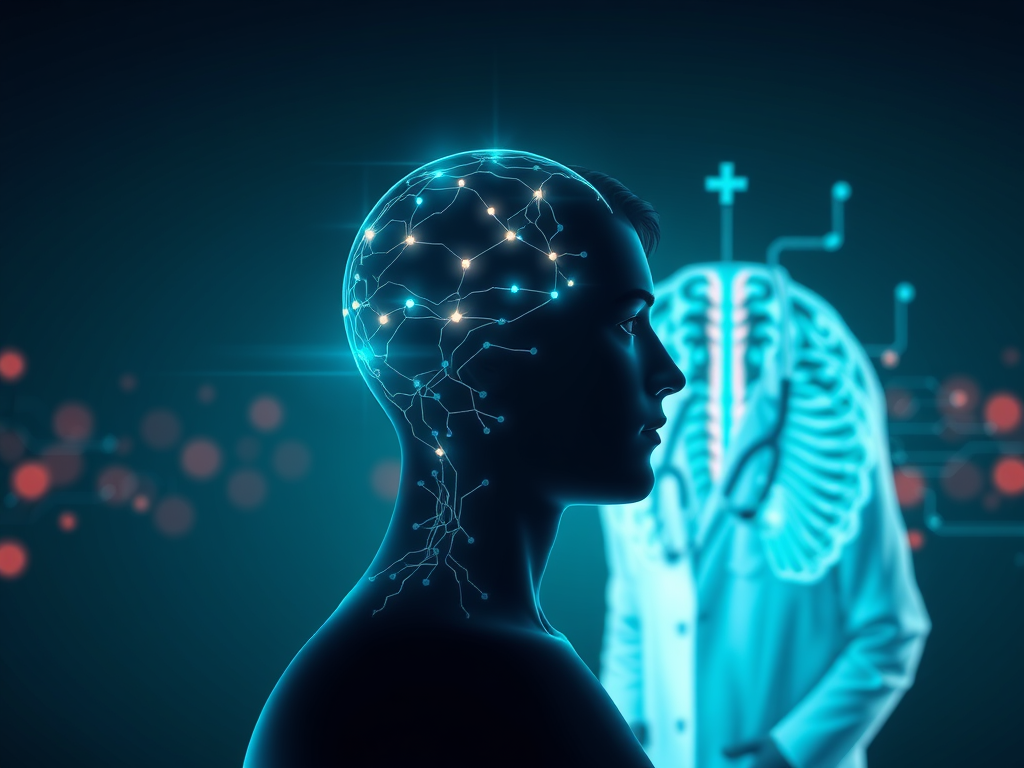
Curator’s Note: Artificial intelligence is transforming healthcare, influencing how clinicians think, decide, and interact with patients. This transformation brings both cognitive shifts and emotional responses, such as increased doubt and reliance on algorithms. AI tools are now integrated into clinical settings, changing problem framing and risk assessment. However, they also risk increasing clinician stress and burnout. Studies show while AI can outperform humans in certain tasks, it may lead to frustration and role confusion. The focus should be on redefining the partnership between human cognition and AI, emphasizing the preservation of meaningful human interactions in care. This article was penned by Dr Shiv K Goel for the readers of Digitalmehmet.
How AI Is Changing the Way We Think in Healthcare
Artificial intelligence is rapidly transforming healthcare. The deeper question is: how is AI reshaping the way clinicians think, decide, and relate to their patients? What is AI doing to our nervous systems in the process? This post examines the subtle cognitive shifts that happen. It also looks at emotional changes when human judgment is constantly compared, corrected, or augmented by machines.
Where AI Already Lives in the Exam Room

AI is no longer theoretical in medicine. Clinical decision support tools suggest diagnoses and treatment plans, and imaging algorithms read CT scans and MRIs with increasing accuracy. Triage systems sort patients in emergency departments, and chatbot symptom-checkers often serve as the first point of contact before a human clinician ever enters the picture. Each of these tools influences how physicians frame problems, weigh risks, and trust their own instincts.
For a deeper dive into agentic AI in medicine, you can read my related KevinMD piece. It discusses the risks of automating the doctor. “Agentic AI in medicine: the danger of automating the doctor.”
What AI Does to Human Cognition
An algorithm can flag patterns faster than the human eye when a doctor sits beside it. This situation can sharpen clinical reasoning. However, it can also create doubt, over-reliance, or quiet anxiety. Does the clinician start second-guessing their intuition? Do they defer too quickly to the machine when uncertain—or, conversely, ignore helpful prompts to preserve a sense of autonomy? Over time, this dynamic can reshape attention, decision thresholds, and even a physician’s sense of competence and identity.
We are experimenting with this in real life. If you’re interested, explore our AI health assessment tool at Prime Vitality Care. It uses data to spark deeper conversations. This tool does not replace clinical judgment.
A Nervous System Under Pressure
These cognitive shifts are not just abstract. They show up in the body as elevated stress. There is also disrupted sleep and shallow breathing. Additionally, there is a background sense of being constantly evaluated or replaceable. The nervous system was built for rhythm, limits, and embodied connection, not for ceaseless comparison with a tireless, data-driven counterpart. When AI tools are introduced without attention to this human physiology, they risk amplifying burnout instead of relieving it.
To see how we address nervous system regulation, visit Prime Vitality Care: Wellness & Beauty in San Antonio, TX. We also focus on circadian health and stress management in the clinic.
Questions for Readers
As a patient, would you feel more or less safe knowing your doctor is using AI to support their decisions? As a clinician, have you ever felt subtly undermined—or quietly supported—by an algorithm sitting in the background of your workday? What balance would feel right for you between human intuition and machine optimization in the exam room?
Evidence and Emerging Data
Early studies suggest that AI can match or exceed human performance in narrow tasks like image interpretation. However, other research points to new forms of “AI-induced frustration.” Clinicians experience role confusion when tools are poorly integrated. Some surveys indicate patients are open to AI assistance. However, they remain wary of fully automated care. This underscores the importance of trust, transparency, and human presence. Together, these findings highlight that the question is not simply whether AI works. It is about how AI changes relationships, responsibilities, and the experience of care.
For more context on how we’re integrating AI with functional and aesthetic medicine, visit the Prime Vitality Wellness & Dr. Shiv Goel: News & Media Center.
Conclusion: Redefining Partnership, Not Replacement
Ultimately, the real opportunity is not to replace clinicians with AI. The goal is to redefine partnership. This partnership is between human cognition and machine intelligence. It is also between technology and the living bodies it is meant to serve. The challenge is to design systems that honor human limits. These systems must protect nervous systems. They should also keep meaning, relationship, and presence at the center of care. If we can do that, AI can become a powerful ally rather than a silent source of stress or disconnection.
Read the full article here: https://elejrnl.com/?p=4236506
About the Author
Dr. Shiv Kumar Goel is a board-certified Internal and Functional Medicine physician. He is also an aesthetic medicine specialist and the founder of Prime Vitality Wellness in San Antonio, Texas. He leads the integration of advanced health technology. This includes Time Vitality AI. He combines it with holistic, mind–body medicine to help patients achieve long-term wellness. His approach promotes longevity and vitality.


Leave a Reply