

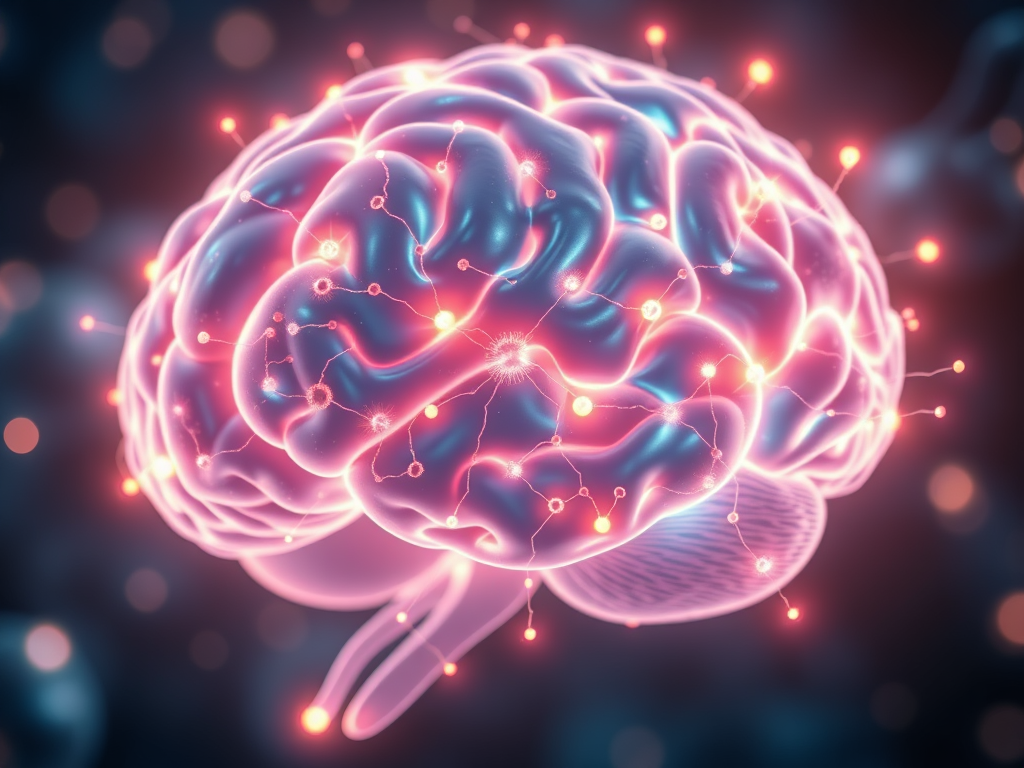
Cellular Energy Forms Cognition, Healthspan, Graceful Aging, and Accelerated Superlearning as a Holistic Resource
Curator’s Note: Neuro-Mitochondrial Intelligence™ explores the critical link between brain function and mitochondrial energy production. This connection reveals that cognition, emotional regulation, and overall health rely on stable cellular energy systems. Mitochondria, as the powerhouses of cells, facilitate neuronal communication, affect learning capacity, and influence emotional stability. Evidence suggests that when mitochondrial function deteriorates, cognitive clarity and resilience decline, leading to symptoms like fatigue and mood instability. The author emphasizes that understanding this energetic foundation can reshape how we approach health, learning, and aging, fostering improved cognitive and emotional well-being while promoting graceful aging through optimal cellular energy management. This essay, which is also a comprehensive book chapter, was written by Dr. Mehmet Yildiz, a cognitive scientist and seasoned technologist in the healthcare sector.
What Neuro-Mitochondrial Intelligence™ (NMI)
Neuro-Mitochondrial Intelligence™ describes the hidden partnership between the brain and the mitochondria that power it. Every thought, memory, emotion, and moment of focus requires a precise flow of cellular energy produced by these microscopic organelles. When mitochondrial networks function efficiently, neurons communicate smoothly, learning becomes easier, emotional responses remain balanced, and cognitive clarity emerges naturally. In this sense, intelligence is not only a mental ability but also an energetic condition. Understanding this relationship offers a powerful insight: the quality of our thinking reflects the vitality of the cellular engines fueling the brain.
Graceful aging, therefore, depends partly on how well the brain’s energy systems are preserved over time.
A useful way to understand many physical and mental symptoms is to examine what happens when mitochondrial networks become less efficient.
Neurons are among the most energy-demanding cells in the body, and their ability to communicate depends on a constant and well-regulated supply of cellular energy.
When mitochondrial function becomes impaired through chronic stress, metabolic instability, inflammation, toxic exposure, or prolonged sleep disruption, neurons struggle to maintain electrical gradients, neurotransmitter recycling, and calcium signaling.
The nervous System then shifts into a less stable regulatory state. Signals become less precise, recovery slows, and coordination between brain regions weakens.
In everyday life, this may appear as fatigue, brain fog, mood volatility, reduced stress tolerance, or autonomic imbalance affecting digestion, sleep, and heart rate variability.
For this reason, many researchers now view mitochondrial dysfunction as an upstream contributor to nervous system dysregulation that can influence both physical and psychological symptoms across a wide range of chronic conditions.
Exploring the Nuances of Neuro-Mitochondrial Intelligence™
What if clear thinking were less a matter of discipline and more a matter of energy? What if our health, well-being, and even the trajectory of graceful aging depend largely on microscopic organelles that live inside every cell of the body?
These questions may sound surprising at first, as they once belonged to the margins of neurobiological and cognitive science research. Yet they are increasingly being explored by neuroscientists, metabolic researchers, and clinicians worldwide.
A growing body of evidence suggests that the stability of cellular energy systems — particularly mitochondrial function — shapes how clearly we think, how resilient we feel, and how well our brains and bodies adapt over time.
For centuries, intelligence has been discussed in psychological terms. We speak of attention, memory, willpower, and motivation as if they arise primarily from abstract mental effort.
Yet the brain is not an abstract machine. It is a biological system that operates through electrical signaling, chemical gradients, and continuous energy exchange. Behind each of those processes is a microscopic but powerful organelle: the mitochondrion.
Understanding how these tiny cellular engines influence cognition changes how we think about learning, aging, and health itself. It reveals that the quality of our thoughts, memories, and emotions is deeply connected to the energetic state of our cells. This insight sits at the intersection of four themes I explore throughout my work.
In Cellular Intelligence, I examine how cellular signaling systems coordinate metabolism, immunity, and resilience.
In Healthspan Mastery, I describe how daily behaviors shape biological regulation across decades.
In The Science and Wisdom of Graceful Aging, I explore how those biological systems support cognitive clarity and dignity later in life.
In Accelerated Superlearning, I investigate how the brain adapts when learning environments align with biological capacity.
Although these books examine different domains, they converge on a common principle. Cognition, healthspan, aging, and learning all depend on the same energetic foundation. At the center of that foundation sits the neuro-mitochondrial network.
Purpose of This Important Book Chapter

Over many years of studying health, cognition, and human potential, I began to notice a recurring pattern that initially puzzled me.
People approached problems such as fatigue, brain fog, declining memory, metabolic disease, and reduced motivation as if each belonged to a separate domain.
Physicians examine metabolism, psychologists explore emotions, psychiatrists study neurotransmitters, educators refine learning strategies, and aging researchers investigate longevity. Each discipline offers valuable insight. Yet the human organism does not experience these systems separately.
Yet when I observed individuals closely, including clients, students, colleagues, and even my own physiological responses during periods of intense work or recovery, I noticed that these challenges were not isolated. They tended to emerge together.
There is a strong combining factor. For example, when energy improved, clarity improved, when metabolic stability returned, mood usually stabilized, and when learning environments were aligned with biological rhythms, cognition flourished again.
This observation eventually led me toward a deeper biological question. Instead of asking why people struggled with individual symptoms, I began asking a more fundamental question:
What regulates the energy that allows all of these systems to function in the first place? The answer repeatedly pointed to the same cellular structures — mitochondria — and to the broader metabolic systems that support them.
That realization gradually connected four themes that had previously appeared to belong to different books I had written. At first glance, these topics may appear unrelated. One concerns cellular biology, another longevity, another learning, and another cognitive performance. Yet beneath these themes lies a single organizing principle.
Human capability depends on biological energy. Whether we are thinking, learning, recovering, creating, regulating emotions, or adapting to stress, the same energetic infrastructure sustains all of these functions.
When that infrastructure becomes unstable, difficulties appear in many areas of life simultaneously. When it is supported, improvements often cascade across multiple domains. This chapter emerged from that realization.
I wrote this unifying chapter to bring together insights from neuroscience, metabolism, aging research, and learning science into one coherent perspective.
My intention is not to offer a single intervention or rigid doctrine. Instead, it is to illuminate how cellular energy, metabolic flexibility, and mitochondrial function quietly shape the quality of our thinking, the resilience of our bodies, and the trajectory of our lives.
When readers begin to see health, cognition, and aging through this energetic lens, a remarkable shift will occur.
Problems that once seemed unrelated will begin to form a coherent pattern. Solutions that once felt complicated become more intuitive.
And the path toward healthspan, graceful aging, and lifelong learning becomes clearer, not through extreme measures, but through understanding how the body’s energy systems truly operate.
The Brain’s Hidden Energy Demand
One of the most striking facts in biology concerns the brain’s energy requirements. Although the brain represents only a small fraction of body mass, it consumes a remarkably large share of the body’s energy resources.
Neurons maintain electrical gradients across membranes, recycle neurotransmitters, regulate calcium signaling, and remodel synaptic connections continuously. Each of these processes requires constant energy delivery.
Unlike muscles or the liver, neurons cannot store meaningful reserves of fuel. Their activity depends on uninterrupted mitochondrial function.
Even minor disturbances in cellular energy production can influence signaling speed, coordination between brain regions, and the brain’s capacity to sustain attention. For this reason, the brain does not tolerate shortcuts in energy.
When mitochondrial energy production becomes unstable, the brain adapts by reducing processing intensity. What we interpret as mental fatigue frequently reflects a protective biological response rather than a failure of motivation.
Seen from this perspective, cognitive performance becomes inseparable from cellular energy regulation.
Learning Is an Energetic Event
Learning is commonly described as a cognitive process, yet, from my experience, it is biologically an energetic one.
Whenever the brain acquires new information, networks of neurons strengthen or weaken their connections. This remodeling process, known as synaptic plasticity, requires precise bursts of energy at specific locations within neural circuits.
Mitochondria respond dynamically to these demands. They migrate toward active synapses, supplying the energy necessary to sustain neurotransmission, regulate calcium signaling, and activate gene expression programs associated with memory formation.
When mitochondrial distribution and signaling function efficiently, learning becomes faster and more durable.
When energy delivery becomes inconsistent, the brain struggles to maintain the synaptic changes that support long-term memory. In other words, memory is built with energy as much as repetition.
This insight reframes accelerated learning in biological terms. Superlearning techniques succeed when they align with the brain’s energetic capacity rather than overwhelming it.
Why Focus Disappears Under Fatigue
Some people interpret a decline in focus as a psychological weakness. From a biological perspective, however, it represents a protective adaptation.
Sustained attention requires stable energy flow across multiple neural networks. When mitochondrial efficiency declines, even temporarily, the brain responds by narrowing its processing bandwidth.
Distraction increases, cognitive task switching becomes more difficult, and mental endurance fades. These changes are not signs of laziness. They represent the brain’s attempt to conserve energy while maintaining essential functions.
Understanding this mechanism can transform how we approach productivity and learning. Instead of forcing attention through willpower alone, it becomes more effective to restore the energetic conditions that support cognitive performance.
Clear thinking begins with cellular energy stability.
The Emotional Dimension of Cellular Energy
Energy regulation also influences emotional life in ways that are usually overlooked. Emotional responses arise through coordination between several brain regions, particularly the prefrontal cortex and the limbic system.
These regions exchange information rapidly, integrating perception, memory, and physiological signals to shape emotional interpretation.
Such coordination requires precise timing and a reliable energy supply. Mitochondria support both processes by regulating cellular metabolism and calcium signaling within neurons.
When mitochondrial signaling remains balanced, emotional responses tend to remain flexible and proportionate. When energy regulation becomes unstable, emotional states may become amplified or blunted.
Anxiety, irritability, and persistent fatigue typically reflect prolonged energetic strain within neural circuits. From this perspective, emotional resilience depends not only on psychological strategies but also on cellular energy stability.
Why Cognitive and Metabolic Symptoms Appear Together
Many patients experience brain fog, fatigue, insulin resistance, and mood changes at the same time. Conventional models treat these symptoms as separate conditions. Mitochondrial biology suggests a more integrated explanation.
The brain, muscles, liver, and immune system share overlapping metabolic signaling pathways. When mitochondrial function declines systemically, disturbances appear simultaneously across multiple organ systems.
This explains why improving metabolic regulation often enhances cognitive clarity and emotional stability simultaneously. The underlying issue is not confined to a single organ. It reflects a broader disturbance in cellular energy management.
Recognizing this connection forms a central principle of healthspan and longevity science: biological systems operate as integrated networks rather than isolated compartments.
The Long Arc Toward Neurodegeneration and Nervous System Dysregulation
Research into neurodegenerative diseases provides further evidence of the neuro-mitochondrial connection.
For example, in conditions such as Alzheimer’s disease, Parkinson’s disease, and ALS, mitochondrial dysfunction appears early in the disease process.
Energy production declines, calcium regulation becomes unstable, and oxidative stress gradually accumulates within neural tissue.
These changes develop slowly over many years. By the time cognitive symptoms become visible, cellular stress has often been building for decades.
Understanding this timeline can shift our perspective on prevention. Protecting mitochondrial health throughout adulthood may influence cognitive resilience long before symptoms appear.
The Larger Insight
When viewed together, these observations reveal a powerful and unifying principle. Cognition, learning capacity, emotional stability, and long-term neurological health all depend on the same biological foundation: The integrity of cellular energy systems. This realization connects the themes explored across my four books.
Cellular intelligence describes how cells coordinate energy and signaling.
Healthspan mastery explains how daily habits support those cellular systems.
Graceful aging explores how these processes preserve cognitive clarity as we age.
Accelerated superlearning shows how the brain adapts when learning environments respect biological limits.
Each perspective examines a different layer of the same architecture: the brain’s energy architecture.
When mitochondrial systems function well, the brain gains the capacity to learn deeply, think clearly, and remain resilient across decades. When energy regulation deteriorates, cognition becomes fragile.
We frequently ask how to think better, learn faster, or remain mentally sharp with age. A deeper question may be more useful. How can we support the cellular systems that make clear thinking possible in the first place?
The answer is not in a single intervention or technique. It is in cultivating the biological conditions that allow mitochondria, neurons, and metabolic systems to work in harmony.
When cellular energy is stable, cognition flourishes. And when cognition flourishes, the possibilities for learning, creativity, and graceful aging expand in ways that some of us cannot even imagine now.
My SMART MIND Loop™covers and articulates the nuances of my Neuro-Mitochondrial Intelligence™. I developed this neuroscience-backed, 12-step system refined through decades of research, collaboration, and sensible biohacking experimentation in neurobiology, neurochemistry, neurocomputing, neuronutrition, nutritional biochemistry, neuroethics, noetic intelligence, education, and accelerated superlearning.

Neuro-Mitochondrial Intelligence™ covers the dynamic relationship between brain function and cellular energy systems. It refers to the capacity of neurons and mitochondrial networks to coordinate energy production, signaling, and adaptation to support learning, emotional regulation, cognitive clarity, and long-term brain resilience.
Conclusions and Key Insights for NMI
The Energetic Architecture of a Thinking Life
When we step back from the individual mechanisms discussed in this chapter, a larger pattern becomes visible.
Mitochondria, metabolic flexibility, ketogenic metabolism, learning capacity, and graceful aging may appear at first to belong to different scientific domains. Yet they all converge on a single organizing principle: the stability and adaptability of cellular energy.
Mitochondria represent the biological foundation of that principle. These organelles regulate how efficiently cells convert nutrients into usable energy.
When mitochondrial networks function well, neurons receive the steady energy supply required to maintain electrical signaling, regulate calcium dynamics, and support synaptic remodeling.
When mitochondrial performance declines, the brain does not simply “think less clearly.” It begins to conserve resources. Attention narrows, memory formation weakens, emotional regulation becomes less stable, and resilience to stress declines.
Metabolic flexibility determines how effectively those mitochondria can operate under changing conditions. A flexible metabolism allows cells to shift between different fuel sources, including glucose, fatty acids, and ketone bodies, depending on availability and demand.
This adaptability provides a metabolic safety net for the brain. When glucose supply fluctuates, or energy demand rises, alternative fuels can sustain neuronal activity and protect cognitive function, as I covered in my other book titled Ketosis + BDNF: The Healing Molecules That Saved My Life.
Ketogenic metabolism represents one example of this adaptive capacity. Ketone bodies serve as an efficient mitochondrial fuel, particularly for neurons under energetic stress.
You can learn more about ketosis from these two nuanced and experience-based stories backed by scientific studies:
Biochemistry of Ketosis Simplified with Nuanced Perspectives and Personal Experiences
Explaining the mysteries of ketogenesis and gluconeogenesis based on deep research and my decades of experimentationmedium.com
β-Hydroxybutyrate: 2 Vital Role of Ketogenesis in the Brain for Dementia Prevention / Treatment
Ketosis can increase mitochondrial bioenergetics activation and brain-derived neurotrophic factor, resulting in the…medium.com
Research over the past decades has shown that ketones can enhance mitochondrial efficiency, stabilize neuronal signaling, and, in certain clinical contexts, improve neurological outcomes.
More broadly, they demonstrate that the brain can thrive on multiple energy pathways when metabolic systems remain flexible.
The implications extend beyond metabolism into the domain of learning itself. Accelerated learning requires synaptic plasticity, sustained attention, and efficient neural communication.
All of these processes depend on a stable cellular energy supply. When mitochondrial function and metabolic flexibility are preserved, the brain retains its ability to form new connections, consolidate memories, and integrate knowledge across decades.
This realization brings us back to the deeper theme of graceful aging. Aging well is not simply about accumulating years while resisting disease.
Aging involves preserving the biological systems that sustain curiosity, emotional balance, and intellectual engagement throughout life. At its core, graceful aging reflects energetic integrity.
When mitochondrial health, metabolic flexibility, and cognitive engagement remain aligned, the brain retains its capacity to learn, adapt, and contribute. The result is not merely a longer life, but a life in which clarity, vitality, and wisdom continue to grow together.
The Science & Wisdom of Graceful Aging will be published on 30 April 2026 as digital, print, and audio versions and will be available at major bookstores. I will share some chapters here and on other platforms.
I introduced this book in two stries including the theoretical framework behind it called The GRACEFUL MIND™ Map:
Why I Decided to Turn My Longevity Research Manuscript on Graceful Aging into a Book
The GRACEFUL MIND™ Map for Living a Healthier, Happier, Longer, and Satisfying Life
The Neurobiology of Feeling: How Thoughts, Emotions, and Aging Interact
I penned several stories about ketosis and the ketogenic lifestyle, reflecting my experiences and literature reviews, which you can find in this list: Ketosis and Ketogenic Lifestyle.
I wrote many stories explaining the fundamental requirements of the brain and nervous system with nuances in previous stories, so I link them as a reference here:
Here’s How to Make the Nervous System More Flexible and Functional
Here’s How I Train My Brain Daily for Mental Clarity and Intellectual Productivity.
You can find many relevant stories about brain health and cognitive performance on this list: Brain Health and Cognitive Function.
If you are interested in health topics, you may also find sample chapters from the Healthspan Mastery work to be published next month.
Here are specific chapters or stories about aging:
Understanding Key Factors That Shape Aging and How They Influence Healthspan
Relationships Between Mitochondrial Signaling, Brain Plasticity, and the Biology of Aging
Dementia: An Overview of “Mini-Mental State Examination” Tests for the Aging Population
Sample Chapters of Healthspan Mastery
Here are multiple sample chapters of Healthspan Mastery I shared here before:
Longevity Escape Velocity: Promise, Pressure, and Practical Limits
Understanding the Compression of Morbidity Concept for Healthspan
A Little Daily Discomfort Can Go a Long Way for Your Healthspan
Understanding and Addressing Stress Triggers and Aggravators Made Me Healthier and Happier
Why Do I Feel Empty When Nothing Is Obviously Wrong in My Life?
I Do Everything to Be Happy, Yet Something Still Feels Missing.
Eudaimonic Rewards: How the Brain Sustains Joy, Meaning, and Healthspan
Behaviourceuticals vs Pharmaceuticals: Finding the Balance for Healthspan and Cognitive Performance
How to Reset Neural Circuits Causing Discomfort and Life Dissatisfaction
Food for Healthspan: What You Eat Determines the Quality of Your Life
The Body and Mind Need Constant Motion to Sustain Energy, Strength, Flexibility, and Vitality
I created lists so that you can find relevant stories easily.
Collection 1: Nutrition and Customized Diets
Collection 2: Valuable Nutrients and Supplements
Collection 3: Brain Health and Cognitive Function
Collection 4: Fasting, Ketosis, Autophagy, Mitophagy
Collection 5: Weight Loss / Muscle Gain
Collection 6: Ketosis and Ketogenic Lifestyle
Collection 7: Major Health Conditions
Thank you for reading the chapters of Train Your Brain for a Healthier and Happier Life.
I always focus on chronic stress for healthspan. Therefore, I highlight that a mindful approach to life and regular meditation practice three times daily for me addresses the effects of many stress triggers and aggravators in the long term, serving as a buffer from them.
Meditation Can Boost the Cortical Thickness in the Brain and Prevent It from Thinning
At cellular, genetic, and systemic levels, meditative practices might alter the structure and biochemistry of the brainmedium.com
I am pleased that my new health and wellness books, What the Brain Needs, Why We Fail, and How We Can Fix It, Ketosis + BDNF: The Healing Molecules That Saved My Life, Cellular Intelligence, and Feel Better, Live Smarter, Thrive Anywhere, were published in December 2025 and are now available in many bookstores.
You can check out my FEATURED series of 50+ books on Amazon markets:
Substack Newsletter Mastery, Excellence, and Eminence Series
Some of my books are published at Apple Stores, Smashwords, Vivlio, Kobo, Barnes & Noble, BooksaMillion, Fable, Bookshop.org, or my discount bookstore.
If you are a writer, you are welcome to join my publications by sending a request via this link. I support 41K writers who contribute to my publications on this platform. Check out the recent update for the writers of my publications.
You can contact me via my website. If you are a new writer, check out my writing list to find some helpful stories for your education. You can also join my author platform as a guest blogger.
I interviewed several new professionals and thought leaders. You can find them linked to the end of the latest one.
I invite you to subscribe to my publications on Substack, where I offer experience-based and original content on health, content strategy, book authoring, and technology topics you can’t find online to inform and inspire my readers.
Healthspan Mastery (NEW)
Get an email whenever Dr. Mehmet Yildiz publishes. He is a top writer and editor on Medium.
dr-mehmet-yildiz.medium.com
Check out Free Blog Posts by Digitalmehmet Contributors. Here is the link to my FREE personal blogs. Now you can read our blog posts via a Flipboard Magazine for convenience.


Leave a Reply