

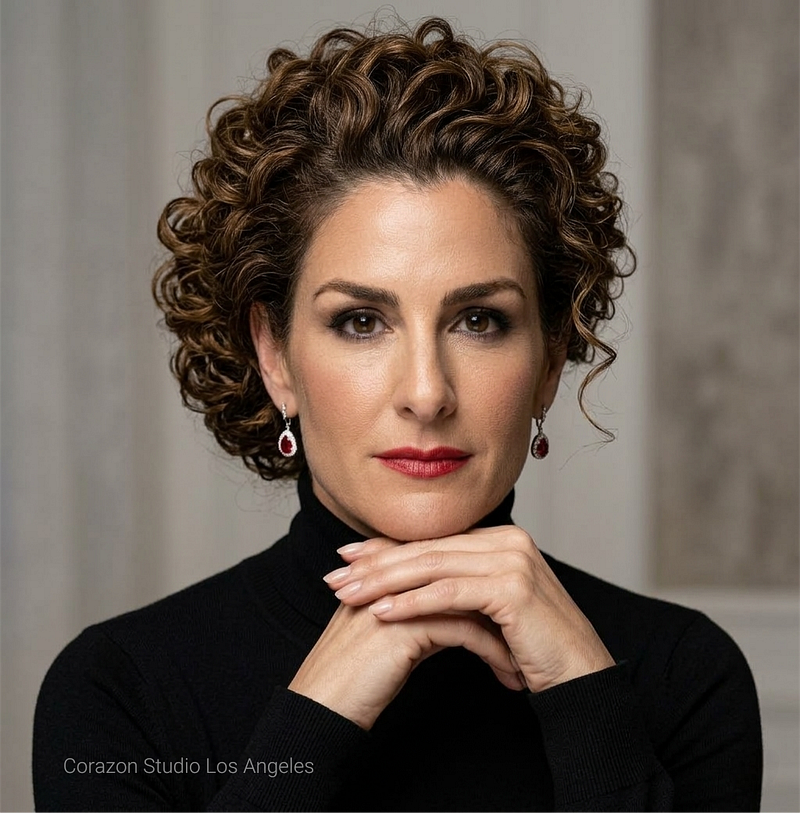
Dr. Pamela Ramirez, MD, PsyD, PhD, is a psychiatrist, psychologist, book author, and visual artist known as QueenNoble
Curator’s Note: Dr. Pamela Ramirez is a multifaceted professional, serving as a psychiatrist, psychologist, author, and visual artist under the name QueenNoble. Living in Paris, she navigates the intersection of neuroscience, psychology, and creativity in her work. Her artistic journey began in the 1990s, focusing on texture and emotional expression, while her writing delves into neurobiology and motivation, exemplified in her book, “The Chemistry of Productivity.” Ramirez believes that health involves self-awareness, emotional intelligence, and supportive environments. She finds inspiration in observing human interactions and exploring philosophical themes, aiming to facilitate a deeper understanding of the human experience through her interdisciplinary endeavors. This interview was conducted by our chief editor Dr Mehmet Yildiz, who is also the owner of the ILLUMINATION Integrated Publications on Medium and Substack, supporting over 41,000 writers and over 300,000 readers.
Dear Subscribers,
Happy Sunday! One of the most rewarding aspects of running publications on Medium is the opportunity to introduce readers to thoughtful contributors whose work bridges multiple fields of knowledge. Writers who combine scientific insight with creative expression bring a depth of perspective that enriches our community conversations.
Dr. Pamela Ramirez, PsyD, MD is one such voice. Her background as a psychiatrist, while also pursuing a parallel life as an author and visual artist, attracted my attention. Her work explores the intersection of neuroscience, psychology, creativity, and human consciousness.
When I noticed the thoughtful themes emerging in her writing and artistic work in my publications, I felt our readers would appreciate learning more about the ideas that shape her perspective.
In this interview, I invited Dr. Ramirez to share the amazing story behind her work, the intellectual influences that shaped her thinking, and the questions that continue to inspire her as a scientist, clinician, and creator.
You can also read the script of this interview at the SYNERGY publication on Medium.com, empowering thousands of writers, freelancers, and content startups.
Hi Dr. Ramirez, to begin, could you share a little about your background and the path that brought you to your work today?
Hi, Dr. Yildiz. Thank you for the kind invitation. I currently live in Paris, France, where I work as a psychiatrist in private practice. I am also a mother to a beautiful child, who has been one of the most meaningful aspects of my life.
Alongside my medical work, I maintain an active life as a painter and author. In the art world, people know me under the nickname QueenNoble.
My professional and creative lives have developed in parallel. Apart from medical school and psychiatry internship, my formal academic training is in psychology and neuroscience, and I hold a PhD in human behavior.
That scientific background deeply informs both my clinical practice and my artistic expression. I have long been fascinated by the structure of the human mind and the mechanisms that shape emotion, perception, and self-awareness.
My artistic journey began in the early 1990s when I first discovered the expressive possibilities of texture in visual art. Over time, my work evolved toward contemporary and minimalist styles, incorporating layered materials, embossed surfaces, and intricate textures.
Many of my pieces sit at the intersection of painting and sculpture. I am interested in how visual and tactile elements can evoke psychological reflection. In some cases, I even connect portrait work with musical composition, exploring how sound and imagery can together express emotional depth.
Across both my clinical and artistic work, a common theme continues to appear: human consciousness. My paintings frequently explore introspection, emotional complexity, and the unseen dimensions of inner life. I hope that viewers who encounter my work feel invited to pause and reflect on their own inner landscape.
Writing became another extension of this exploration. As an author, I focus on intensive human development, neuroscience, and the psychological architecture of behavior. My work examines how neurological processes influence creativity, motivation, emotional regulation, and decision-making.
One of my books, The Chemistry of Productivity: Unlock the Brain Chemicals That Turn Ordinary Work Into Superhuman Power, examines the neurobiology behind motivation and high performance.
In that work, I discuss several key neurochemical systems, including dopamine, serotonin, oxytocin, endorphins, acetylcholine, and norepinephrine. These chemical messengers regulate many aspects of cognition and emotional balance, shaping how we focus, how we feel, and how effectively we work.
A central idea in the book is that productivity cannot be understood purely as discipline or effort. Human performance is deeply connected to neurobiology. When these chemical systems function harmoniously, we can enter a cognitive state that psychologists describe as flow.
In that state, concentration becomes sharper, creativity expands, and ideas emerge with greater clarity. My goal as an author is to help readers understand how daily habits, small behavioral adjustments, and mindful routines can naturally support these biological systems, allowing people to work with their brains rather than struggling against them.
In addition to my clinical, artistic, and literary work, I am involved in several international cultural and research communities. I contribute as both an author and an artist within the Europeana network, where art, scholarship, and cultural heritage intersect.
Europeana is an important initiative within the European cultural sector. It supports museums, archives, libraries, and research institutions in sharing cultural heritage through digital platforms. The organization also develops tools, expertise, and collaborative frameworks that help cultural institutions adopt digital innovation while preserving historical knowledge.
Within this ecosystem, I participate in several communities, including EuropeanaTech, the Research Community, the Education Community, the Communicators Community, the Impact Community, and the Climate Action Community.
For me, these diverse fields, psychiatry, neuroscience, art, and writing, are deeply interconnected. Each discipline offers a different lens through which to examine the same enduring question: what it truly means to be human.
Why did you choose your profession?
In many ways, I feel that the profession found me rather than the other way around.
Art was my earliest language. Long before I understood the formal vocabulary of psychology or neuroscience, I understood texture, color, and movement.
Creating images allowed me to express emotions and perceptions that words alone could not fully contain. Painting became a way of observing the inner life, both my own and that of others.
As I grew older, my curiosity about the human mind deepened. I wanted to understand the mechanisms behind emotion, thought, and behavior. Studying psychology and human behavior offered a structured way to investigate those questions. Medicine and psychiatry later provided the clinical framework for working directly with people and supporting their mental well-being.
Over time, I realized that these two paths, art and psychiatry, were not separate at all. They simply approach the same human questions from different directions. Psychiatry examines the mind through scientific inquiry, clinical observation, and neuroscience. Art explores the same terrain through imagery, texture, and emotional expression.
For me, practicing psychiatry while continuing my artistic work creates a meaningful dialogue between science and creativity. One discipline helps explain the architecture of the mind, while the other gives form to the experiences that live within it. Together, they offer a richer way to explore what it means to be human.
What do health and well-being mean to you?
For me, health and well-being begin with self-awareness.
Many people associate wellness primarily with the absence of illness. In my view, the concept is much broader. Well-being involves understanding our emotional patterns, recognizing how our thoughts influence our behavior, and developing the resilience needed to adapt to life’s changing circumstances.
Mental health also grows within a supportive environment. Relationships, meaningful work, and opportunities for creative expression all contribute to psychological balance. When individuals feel connected to their purpose and have healthy ways to process their experiences, their sense of well-being tends to deepen.
Creativity plays a particularly important role in this process. Artistic expression offers a pathway for emotions that may be difficult to express through language alone. Through color, form, and movement, art can reveal internal states that remain hidden in everyday conversation.
From a psychological perspective, creative activity can serve as a bridge between the conscious and the subconscious mind. It allows individuals to externalize feelings, reflect on them, and gradually understand their meaning.
In that sense, art is more than a form of expression. It can also function as a therapeutic process that supports emotional integration and personal growth.
What are your hobbies, or what excites or entertains you?
I find deep enjoyment in simple observations. For example, watching people interact with the world around them has always fascinated me.
There is something compelling about those quiet human moments that usually pass unnoticed. For instance, a musician completely absorbed in a performance, a dancer practicing alone in a studio, or someone sitting in a café lost in thought.
These scenes may appear ordinary, yet they reveal so much about human emotion and inner life. Many of my ideas for paintings and writing begin with observing moments like these.
I am also very interested in cultural and heritage research. I spend time reading about history, theology, and the development of civilizations. Understanding how societies evolve and how belief systems shape human behavior provides a broader context for both my artistic work and my reflections on psychology.
Reading remains one of my greatest sources of inspiration. I am particularly drawn to psychology, philosophy, and biographies of influential thinkers and creators. Learning how others perceive the world expands my own perspective and continually sparks new ideas.
And of course, time in the studio always excites me. Experimenting with materials, discovering new textures, and exploring different techniques is a process that never feels repetitive. Each experiment opens the possibility of seeing something familiar from a completely new angle.
What are the top books that affected your life?
Some books simply provide information. Others reshape how we think about the world and ourselves. The books that influenced me most belong to the second category. They changed how I understand the human mind, the experience of suffering, and the search for meaning in life.
One of the most powerful works for me is Viktor Frankl’s Man’s Search for Meaning. Frankl wrote about surviving unimaginable hardship during the Holocaust, yet the book is fundamentally about the human capacity for meaning. His reflections reveal profound insights into dignity, resilience, and purpose. As a psychiatrist, I see daily how essential meaning is for psychological health. As an artist, I find that same theme appearing in many forms of human expression.
Another thinker who has influenced me deeply is Carl Jung. His work, The Archetypes and the Collective Unconscious, explores the symbolic patterns that appear across cultures in myths, dreams, and artistic expression. Jung recognized that much of human creativity arises from layers of the psyche beyond conscious awareness. Artists sense this intuitively. When I work with texture and layered materials in my paintings, I sometimes think about these hidden psychological landscapes that shape our imagination.
From a philosophical perspective, Friedrich Nietzsche has also been an important influence. His book Beyond Good and Evil challenges readers to examine assumptions about morality, identity, and power. Nietzsche’s writing encourages intellectual courage. He asks us to question inherited beliefs and to reflect honestly on the values that guide our lives.
I am also very inspired by the poetry of the Persian mystic Rumi. His words have endured for centuries because they speak directly to a universal aspect of human experience. I frequently return to The Essential Rumi. His poetry expresses deep psychological and spiritual insights with remarkable clarity and simplicity.
One line that has stayed with me for many years is: “Yesterday I was clever, so I wanted to change the world. Today I am wise, so I am changing myself.”
That sentence captures an important psychological truth. Genuine change begins within the individual before it becomes visible in the external world.
Another book that influenced my thinking about the human mind is Daniel Kahneman’s Thinking, Fast and Slow. Kahneman explains how the brain processes information through different cognitive systems and how easily our judgments can be influenced by bias and intuition. His work offers a valuable reminder that human perception is powerful, yet also imperfect.
Taken together, these writers represent different perspectives through which I reflect on the human condition: psychology, philosophy, poetry, neuroscience, and cognitive science. Their ideas continue to inform both my clinical work and my artistic practice. In many ways, all of these influences return to the same enduring question that fascinates me as a psychiatrist, an artist, and a writer. What does it truly mean to be human?
Why do you write on Medium?
I write on Medium because it enables thoughtful conversation.
It is one of the rare digital spaces where ideas related to psychology, creativity, philosophy, and personal growth can coexist. The readers here tend to be curious and reflective, which makes the dialogue meaningful.
Writing on Medium allows me to share insights that extend beyond the canvas and into broader conversations about human behavior and creativity.
Do you write on other platforms like Substack? If so, how do you find them?
I occasionally explore other platforms, including Substack.
Substack offers a more direct and intimate relationship with readers through newsletters and dedicated communities. It allows writers to cultivate deeper conversations with their audience.
Both platforms have strengths. Medium encourages discovery, while Substack nurtures deeper connections.
What are your values as a writer?
Authenticity is central to my writing.
I believe writing should offer insight rather than simply fill space. Whether I am discussing psychology, creativity, or personal growth, my goal is always to provide ideas that encourage reflection.
Clarity, honesty, and intellectual curiosity guide everything I write.
How do you connect with your readers?
I connect with readers by addressing universal emotional experiences.
When people recognize their own thoughts, struggles, or aspirations in a story, a connection naturally forms. That recognition often creates a powerful moment of reflection.
Writing becomes meaningful when readers feel seen and understood.
Why did you join ILLUMINATION, and how do you find it so far?
I joined ILLUMINATION because it embraces diverse voices and interdisciplinary ideas. I admire its inclusivity.
As someone who navigates the worlds of art, psychology, and writing, I value communities that encourage exploration and intellectual diversity.
So far, I have found it to be a vibrant and supportive environment where writers and readers inspire one another.
Who are some writers you follow on Medium or other platforms?
I am drawn to writers who explore psychology, philosophy, creativity, and human behavior. I deeply appreciate authors who challenge assumptions and offer thoughtful perspectives on complex topics. For me, depth and authenticity are far more compelling than popularity.
What are your top stories that you want to share with your audience, and why?
First, I’d like to share the names of my recent stories and then mention a few I enjoyed reading from other writers.
In terms of reading, I follow your writing on health, wellness, and cognitive science. One of my favourite stories from your collection is How to Slow Down Subjective and Objective Cognitive Decline.
I also adore the scientific and humorous stories of Dr. Michael Broadly. Among his stories, my favourite is Cellular Responses to Ketosis: Can Cancer Cells Listen and Behave?
A remarkable story by Dr. Hatem El-Nagar is worth mentioning. It is titled Don’t Lick the Spoon: Why One Sweet Moment Could Send Your Child to the ICU.
I also like the book reviews of fellow psychiatrist Dr. Albert Jones. His review of your fascinating book, titled Review of Train Your Brain for a Healthier and Happier Life, was very inspiring to me.
I read many such inspiring stories, especially on ILLUMINATION, which I can’t mention in this conversation, and perhaps I should create a collection like your curators, Dr. Broadly, Aiden, or Saima.
What are the success factors for you as a writer?
Success, to me, is measured by impact rather than numbers.
When a reader tells me that something I wrote changed how they see themselves or the world, that is meaningful success.
Consistency, curiosity, and authenticity are my core values and are essential to me. I see writing as a long conversation with humanity, not a momentary performance.
What do you recommend to new writers?
I have a few simple recommendations that worked for me.
Firstly, write with honesty and courage. Many new writers try to imitate voices they admire, but the most powerful voice they possess is their own perspective.
Secondly, read widely, think deeply, and write regularly with courage and grace.
Thirdly, do not allow algorithms or immediate reactions to define your confidence as a writer. Great writing grows quietly and sustains over time.
What are your plans as a writer or as a professional?
My plans revolve around continuing to explore the intersection of art, psychology, and human consciousness. These three fields have always felt connected to me.
Psychiatry allows me to study the mind through science and clinical practice, while art provides a visual language to express experiences that are often difficult to capture in words alone. Writing sits somewhere in between, offering a space where reflection, analysis, and creativity can come together.
In the coming years, I hope to expand my writing through books that bring these disciplines closer together. I am interested in creating work that helps readers understand how emotional life, neurological processes, and creative expression influence one another.
At the same time, I will continue developing my visual art, experimenting with textures and forms that invite viewers to slow down and reflect.
Ultimately, my goal is quite simple, although the idea behind it is profound. I hope that my work, whether through painting, writing, or psychiatry, encourages people to look inward with curiosity and compassion.
If something I create allows a person to pause for a moment, reflect on their own inner world, and understand themselves with a little more clarity, then I feel that my work has fulfilled its purpose.
Thank you for this excellent opportunity, Dr. Yildiz. I appreciate your work and your community on Medium and other platforms.
Many thanks to Dr. Ramirez for giving us a glimpse of her interesting and diverse background. You can connect with her and find her content at her website, LinkedIn, Europeana, Instagram, Artmajeur Ambassador, and Google.
Thank you for reading my interviews. I wish you a healthy and happy life.
This interview series is an excellent networking opportunity for new writers looking to build their audiences across multiple platforms.
The more successful people you meet and engage with, the more successful you can become, from my experience. The more you give without expecting, the more you receive, as my grandparents taught me.
Thank you for being part of our community and joining our joyful and exciting journey. You can review some sample interviews I conducted. Please consider reviewing their profiles and stories, sharing them in your network, and reaching out to them to expand your professional connections.
Links to Prior Interviews and Conversations
Interview Lukman Aufbau, Interview Tanugandass, Interview Dr. Shiv K. Goel, Interview James Alexander, PhD, Interview, S R Harsha, Interview Adam Regiaba, Interview Elizabeth Woods,Interview Gary L. Fretwell, Interview, Keith Williams, Interview, Liauw Pauw Phing, Interview Somya Golchha, Interview, Alexander Simon, Interview, Paul | Divine Light Path, Interview, Ben J Clarke, Interview, Dr. Hatem El-Nagar, Interview Vic Shayne, Interview, Dr diana swezy, Interview, Dr Ashish Juneja, PhD, Interview Dr. Khalid Rahman, Interview Georgia Kreiger, Interview Hamid Akhtar, Interview Bear Kosik, Interview Dr Russell Carr,Interview Fildy Bejaoui, Interview Peter Mukherjee, Interview Patricia Ross, Interview Ana J, Interview Dr. Jason Hung, Interview Maria Cross,Interview Brooklyn Grace (editor), Interview Grant Lawson, Interview Ute Luppertz ✨, Interview Dr Kenneth Silvestri, Interview MAGDALENA PONURSKA, Interview with Joanie Adams (left Medium), Interview Liat Portal, Interview Dr Dominic Farsi, PhD RNutr, Interview Sara Redondo, MD, Interview Dr Bronce Rice, Interview Yana G.Y. Interview Dr. Gabriella Korosi, Interview Sinem Günel, Interview Recep Taylanhan, Interview John Worthington, Interview, Joellyn Rose Keener, ✍️Author Deaf and Determined, Interview Thomas Cherickal, Interview, Shamim Rajani, Interview, Svyatoslav Biryulin,Interview, Danielle Benvenuto, Interview Scarlet Ibis James 🦩, Interview Biswanath Datta,Interview Veronica Llorca-Smith,Interview James King, Interview Lauren Grawert, MD,InterviewJerry Keszka, Interview Davor Katusic,Interview David Gerken,Interview Claudio D’Andrea, Interview William Spivey,Interview James Boylan, Interview Ruby Noir, Interview Joshua Mason, Interview Michelle Mariscal, Interview Tim Denning, Interview Wendi Gordon, Interview Elle, Interview Bill Petro, Interview Sylvain Zyssman, Interview Matthew Bamberg, Interview Øivind H. Solheim, Interview Payal Koul, Interview Matt Lillywhite, Interview Genius Turner, Interview Shirley Willett, Interview David Mokotoff, MD, Interview Martin D. Hirsch, Interview Gill McCulloch, Interview Adelia Ritchie, PhD, Interview Dr. Lutz Kraushaar, Interview Lorwen Harris Nagle, PhD, Interview Matt Williams-Spooner, Ph.D., Interview Pernoste & Dahl, Interview Luay Rahil, Interview Melissa Kalt, MD, Interview Ayodeji Awosika, Interview Dr. Preeti Singh, Interview Dr. ADAM TABRIZ, Interview Dr John Frederick Rose, Interview Yogesh Haribhau Kulkarni (PhD), Interview Hakima T A N T R I K A, Interview Mark Sanford, Ph.D, Interview Raymond M.E. Aguirre, Interview Keri Mangis, Interview John D. Leavy, Interview Toni Koraza, Interview Annelise Lords, Interview, Mike Zillo, Interview Charles Roast, Interview Libby Mitchell, Interview Timothy Key, Interview, Christopher D. Connors, Interview Desiree Driesenaar, Interview Jill Ebstein, Interview Bill Abbate, Interview Anita Lesko, Interview John Cousins, Interview Suntonu Bhadra, Interview Lawson Wallace, Interview Chelsea Renee MAT, Interview MaryJo Wagner, PhD, Interview Martine Weber, Interview Michael Patanella, Interview Tree Langdon, Interview, Agnes Laurens, Interview Liam Ireland.
Our editors compile them in a collection. If you want to be interviewed, please leave a comment on this story or reach out to me via this form.
We also posted our new newsletter for January 2026 updates. Please share it on your socials so that more writers and readers can benefit from our free community services.
January 2026 Updates by ILLUMINATION Integrated Publications
Submission Guidelines, New Publications, and Plans for 2026medium.com
Recently, I wrote a story about book authors. If you are an author or planning to write a book soon, my story might be helpful to you.
2026 Pilot for Authors: An Innovative Book Income Revenue Share with Experts
An Invitation to Write, Publish, and Earn Without Barriers with My Editing, Marketing, and Distribution Support as an…medium.com
You are also welcome to join my new Expert Contributor Network. It will empower our new Substack Mastery Boost program.
If you are a business owner and want to sponsor talented writers contributing to my ecosystem and publications on Medium and Substack, please reach out to me via this form, and I will provide you with the best creators who can amplify your content efficiently to a broad audience.
Now, we have a new scholarly publication to empower academic writers and educate discerning readers. Here is the invitation to ILLUMINATION Scholar: A New Star Is Born on Medium🌟: Welcome to Illumination Scholar.
What’s the Expert Contributor Network at Digitalmehmet ?
Welcome to the Expert Contributor Network Curation Program at Digitalmehmet Content Ecosystem
I created this new initiative to empower experts and help them transition to the eminence path with community support…medium.com
For Substack writers, we created a 6-level course on Udemy titled From Zero to Substack Hero, which I also offer via my Content Strategy, Development, & Marketing Insights on Substack. If you are interested in joining, you can use these discount vouchers:
From Zero to Substack Hero — Level 1
From Zero to Substack Hero — Level 2
From Zero to Substack Hero — Level 3
From Zero to Substack Hero — Level 4, 5, and 6 Bundle [NEW]
And we also completed a new course titled Patreon Mastery.
I introduced the new Substack bundle for advanced writers and Patreon Mastery in two articles linked below for more information:
From Zero to Substack Hero: Advanced Levels 4, 5, & 6 Bundle Is Ready for Beta Learners
The Gift of Delay, the Promise of Growth: How my hectic schedule, our high standards, and a spirit of generosity shaped…medium.com
What If Your Creativity Could Fund Your Financial Freedom for a Lifetime?
Here’s Why I Created a Patreon Mastery Course for Creators, Freelancers, and Professionals on Udemy and How You Can…medium.com
I invite you to subscribe to my networks and publications on Substack, where I offer experience-based and original content on health, content strategy, book authoring, and technology topics you can’t find online to inform and inspire my readers.
Healthspan Mastery (NEW)
Get an email whenever Dr Mehmet Yildiz publishes. He is a top writer and editor on Medium.
dr-mehmet-yildiz.medium.com
If you are a writer, you are welcome to join my publications by sending a request via this link. I support 41K writers who contribute to my publications on this platform. You can contact me via my website. If you are a new writer, check out my writing list to find some helpful stories for your education.
You can find out about my scholarly work on my Google Scholar or Bohrium profiles. You may check out my other most loved stories on this platform. As a new instructor to publish Aiden’s courses, my Udemy profile includes 6-level Substack courses.
If you want to learn about the future of technology and science, I am authoring a new book titled Technology Horizons 2050 and Beyond ♾️
Here are links to my FEATURED series of 50+ books on Amazon markets:
Substack Newsletter Mastery, Excellence, and Eminence Series
Some of my books are published at Apple Stores, Smashwords, Vivlio, Kobo, Barnes & Noble, BooksaMillion, Fable, or my discount bookstore.
You may enjoy this comprehensive free book chapter I wrote for technology, enterprise, and business Architects as a gift: What Is a Digital Transformation Architect? Check out my updated posts on YouTube.
You can explore some of my books from my discount bookstore, including: The Mysterious Leadership Mind of Robert F. Kennedy Jr., Substack Mastery Version 2, Monetize Your Passion with WooCommerce, Agile Business Architecture for Digital Transformation V2, Agile Business Architecture for Digital Transformation (Audiobook), Cortisol Clarity, A Powerful Toolkit for Substack Newsletter Mastery, Smart and Ethical SEO, Train Your Brain for a Healthier and Happier Life, Modern Affiliate Marketing for Writers, 4 Pillars of Enterprise Architecture, and Smart Email Marketing Content Integration.


Leave a Reply