

Curator’s Note: Fresh data from Gusto’s April 30 report shows U.S. small businesses are expected to hire 974,000 new graduates in 2026. That number carries a bigger message. Even in an age of AI and cost cutting, companies know growth is built by people. Roles are changing, but human value remains. The smartest businesses are not replacing talent. They are combining technology with fresh minds to build stronger futures.
Introduction
Wise companies use AI to strengthen people. A machine can increase speed, but it cannot fully replace judgment, character, and responsibility. Work is not only output. It is also growth, trust, and service.
When technology helps people become better, stronger, and more useful, it creates lasting value. When it only removes people, it may save money for a moment, but weaken the foundation over time.
Why Companies Are Asking the Wrong Question About AI
A wiser question is, How can AI help people create more value? Across the modern economy, organizations that combine technology with human talent often outperform those focused only on cutting labor. Research from major global institutions shows that skills such as analytical thinking, creativity, leadership, resilience, and collaboration are rising in importance as AI spreads. This suggests the future of work is not human removal, but human elevation.
When leaders see people only as cost, they miss the deeper source of growth: judgment, trust, character, and imagination. A machine can process information, but it does not carry moral responsibility or human meaning. Companies asking only what to eliminate may gain short-term savings, while companies asking what to strengthen may build lasting advantage.
Automation Saves Costs, but Augmentation Builds Strength
In the Stanford AI Index 2026, generative AI reached 53% population adoption within three years, showing how quickly tools can spread. Yet speed of adoption is different from wisdom of use. Boston Consulting Group 2026 estimates 50% to 55% of jobs in the US will be reshaped by AI, meaning many roles will evolve rather than vanish. A 2026 AI Skills Shift Research Paper also found 78.7% of observed AI workplace interactions were augmentation rather than automation, suggesting AI is more often being used to support workers than replace them.
Balance is a timeless law. Machines can increase speed, but people create meaning. Automation can create quick savings. It reduces repetitive work, speeds operations, and lowers short-term costs. But wisdom teaches that value is not measured by speed alone. True strength comes from what grows, not only from what disappears. When companies use AI only to remove people, they may cut expenses. When they use AI to increase human capability, they build something deeper: skill, trust, judgment, and resilience.
Human Judgment Remains the Highest-Value Asset
In 2026, many technology firms have reduced staff while increasing AI spending and restructuring operations. Billions are being redirected toward chips, data centers, and automation systems, while thousands of routine roles are being reviewed or removed. At the same time, many of these same companies continue hiring in selective areas such as engineering, cybersecurity, product leadership, compliance, and strategy. The message is clear: tasks based on repetition are under pressure, while roles built on judgment are gaining value.
The Stanford AI Index 2026 highlights rapid AI adoption across industries, yet trust, oversight, and accountability remain central concerns. This explains why hiring has not disappeared, it has shifted. Companies still need people who can make difficult decisions, manage risk, interpret complexity, and lead responsibly. As machines grow more powerful, principled judgment becomes more precious.
The Companies Winning with AI Are Upgrading Talent
Current market behavior reveals another clear pattern. In 2026, many firms are no longer treating AI only as a replacement tool. Leading companies are investing in employee training, workflow assistants, coding support, sales intelligence, and decision tools that help teams perform at a higher level. Microsoft Work Trend Index: The Year the Frontier Firm Is Born reports that 82% of leaders say this is a pivotal year to rethink strategy and operations through AI, while many organizations are building human-agent teams rather than removing people entirely. The strongest advantage is no longer just headcount. It is how much output, creativity, and judgment each person can unlock with AI.
The market is discovering that technology alone does not create value. Value appears when people know how to use it wisely. AI can provide leverage, but talent turns leverage into results. This reflects a deeper principle: knowledge elevates those who apply it, and effort produces growth. Human beings were not created to remain static. They were created to learn, adapt, and rise. Companies that invest in upgrading people may build stronger futures than those that only reduce payrolls.
What Leaders Lose When They Cut Too Deeply
Current market behavior shows a familiar pattern. When pressure rises, many companies cut staff to protect margins, improve efficiency, or fund new AI investments. Yet deep cuts often remove more than salaries. They can drain institutional memory, weaken morale, slow execution, and damage the trust that strong teams depend on. What looks efficient in one quarter can become expensive in the next. A recent Business Today report on AI layoffs and the automation trap warned that aggressive automation may hurt companies as well as workers, while the PwC Global Workforce Hopes and Fears Survey 2026 shows employees increasingly value trust, adaptability, and growth.
There is also a timeless management truth here. Strength works best when joined with trust. Decisions create value when they stay balanced and avoid excess. People are not just costs on a spreadsheet. They carry experience, relationships, judgment, and future potential. Wise leaders understand that numbers matter, but foundations matter more. Those who cut only for short-term relief may weaken tomorrow’s performance. Those who transform carefully while protecting talent often build companies that last longer and recover faster.
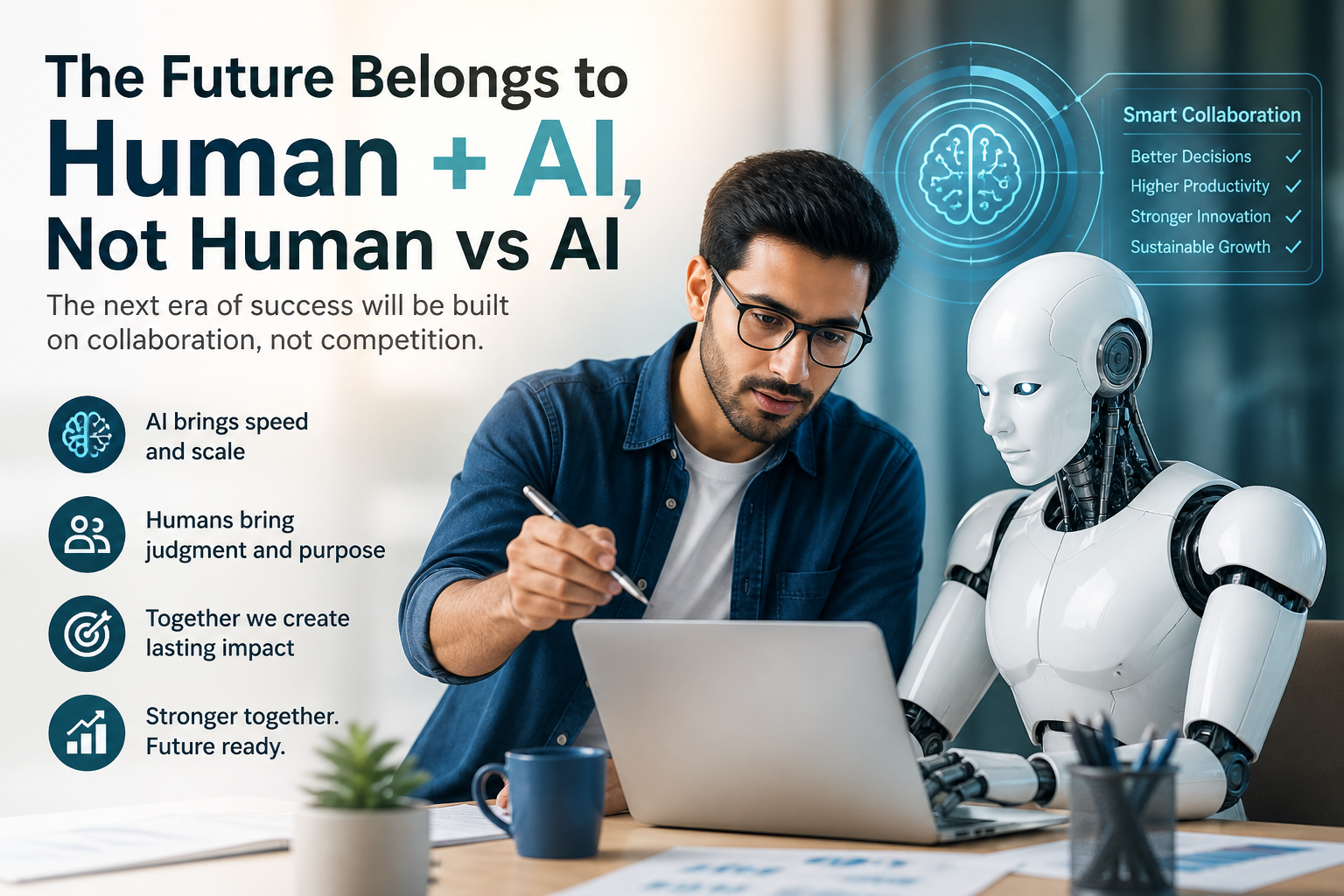
The Future Belongs to Human + AI, Not Human vs AI
In 2026, many companies are learning that the strongest results come when AI handles speed, scale, and repetition, while people focus on judgment, relationships, creativity, and strategic decisions. Firms that once viewed AI mainly as a cost-cutting tool are now investing in internal assistants, workflow tools, and employee upskilling. The Boston Consulting Group: AI Will Reshape More Jobs Than It Replaces argues that AI is more likely to transform roles than erase them, pushing organizations toward redesigning work around human and machine collaboration.
Tools create the most value when they serve human strengths, not compete with them. Speed without wisdom can mislead, while intelligence guided by people can create progress. Wise leaders understand that the real contest is not human versus AI. It is companies that combine both versus companies that misunderstand both.
Author: Hamid Akhtar
hmdlabee@gmail.com
https://www.linkedin.com/in/technicalwriterus/
https://medium.com/@hmdlabee


Leave a Reply