

Curator’s Note
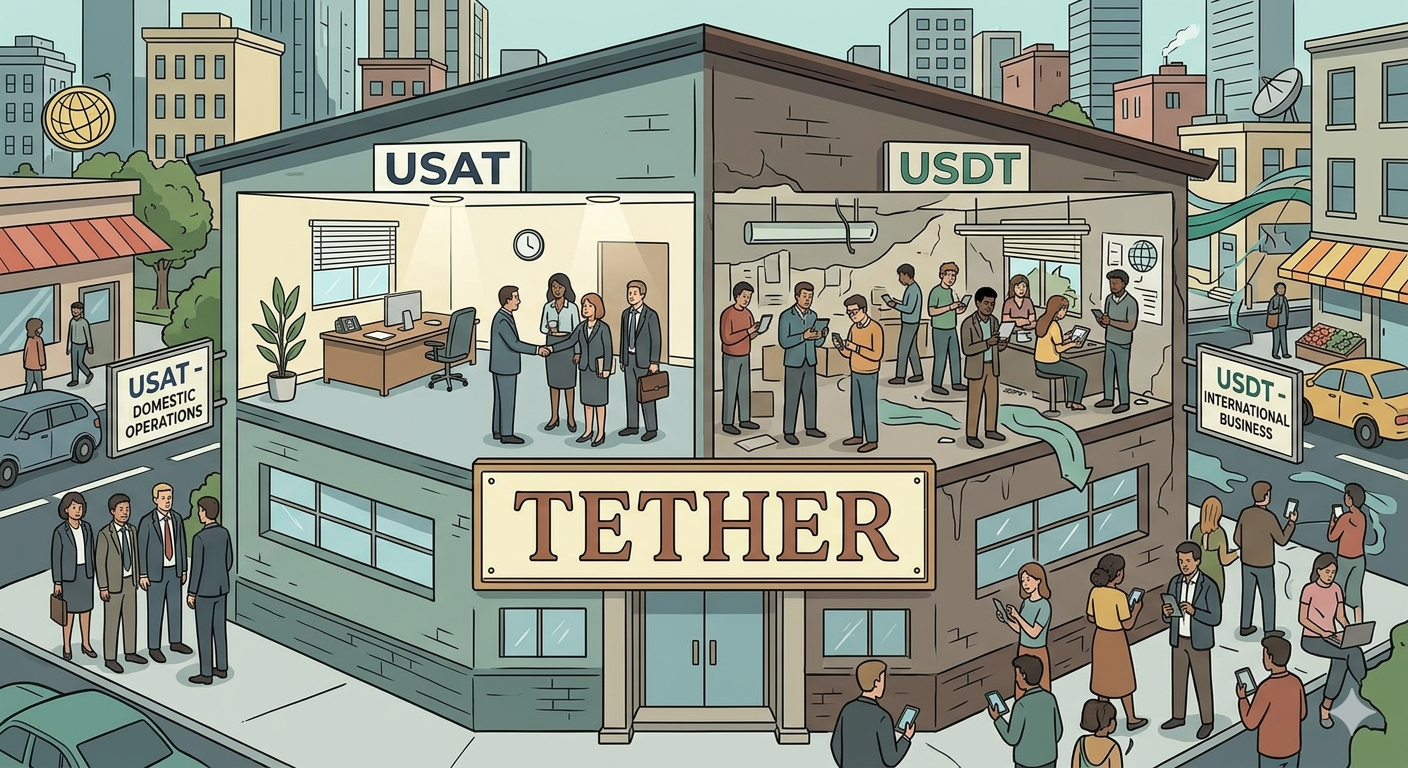
Smart business leaders rarely fight a changing system. They adapt by creating new pathways instead. Tether is currently demonstrating this approach with its two-token structure, USAT and USDT. This move offers a clear lesson in corporate design. It shows how an organization can build an outer frame to satisfy the law while keeping its core engine free to serve the global market.
One Brand and Two Operational Models
A modern enterprise can run two distinct setups under the same name. Tether built its new USAT token to align with every domestic regulation. This version connects with chartered banking partners and it reports directly to official supervisors. Meanwhile the original USDT token continues to operate across international borders. It manages a massive pool of global capital and it retains alternative assets like gold. This design allows the organization to address two completely different audiences at once. It satisfies the regulator without changing the primary business.
The Economics of a New Perimeter
Entering a strict legal framework always requires a major trade-off. New guidelines require payment tokens to hold only cash and short-term state debt. Tether generates historic financial returns from its current international asset mix. Rebuilding that entire reserve structure would mean dropping those high yields. The leadership chose a more pragmatic path instead of taking that loss. They created a compliant subsidiary to absorb the political pressure. This choice keeps the main profit engine working exactly as intended.
Serving the Invisible Global Market
The true value of the international token is proven in emerging economies. Millions of individuals live in regions where local currencies face severe inflation. They use this asset as a basic savings tool and a stable network for daily trade. It provides functional financial access where traditional banking systems are slow or unavailable. This private network now supports human welfare on a massive scale. It delivers practical relief to ordinary communities while operating entirely outside the control of traditional central banks.
Managing the Reality of Deadlines
Regulatory frameworks often rely on strict transition timelines to force compliance. Local venues will face pressure to remove non-compliant tokens within the next two years. This shift will not dismantle the international system. The domestic token is fully prepared to take over the regulated onshore flow. The original asset will simply continue expanding its network through foreign channels. This structure proves that external rules can manage local points of access. They cannot easily stop a decentralized network built on mutual utility.
The Silent Balance of Sovereign Debt
A deep financial connection now exists between the issuer and global regulators. The international reserve has accumulated enough government debt to place it among the top global holders. The very institutions creating the rules are effectively using capital supplied by this private network. Every new token utilized abroad helps fund the balance sheets of major nations. This reality creates a delicate economic balance where both sides depend on each other. The offshore system remains free partly because it helps keep the broader market stable.
The Core Foundation of True Stability
Long-term security depends on the internal alignment of an organization. Creating an outer shield of compliance to protect a separate internal reality is a standard corporate practice. It provides immediate safety and it helps manage operational risk. Yet any structure built on a permanent internal division faces unique vulnerabilities over time. Real resilience belongs to systems that achieve complete unity across all operations. Material wealth can shift quickly, but a foundation built on transparent truth remains steady through every market cycle.
Hamid
hmdlabee@gmai.com


Leave a Reply