

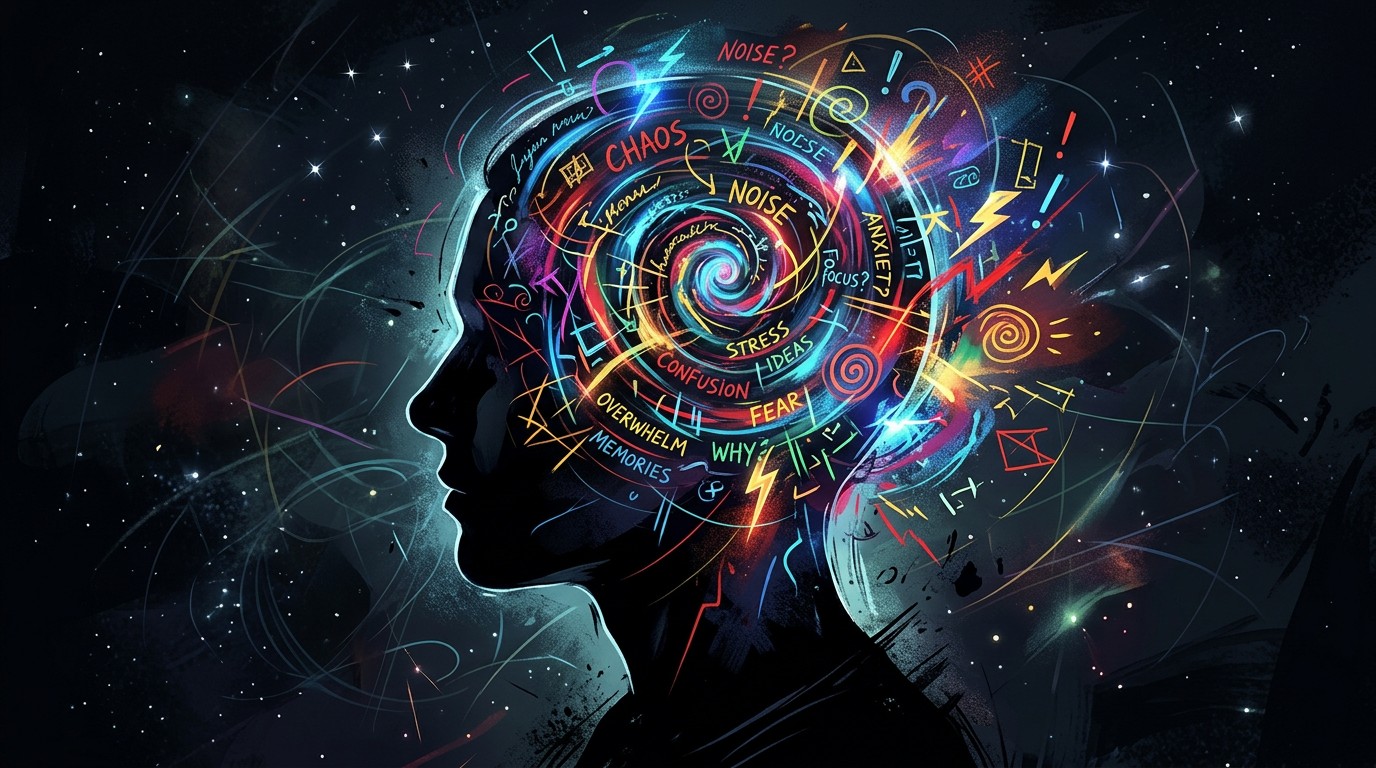
Practical strategies to help your brain manage increasing anxiety
Curator’s Note: The article discusses the complexities of anxiety, highlighting that it differs from mere stress and often stems from an overactive brain alarm system. Anxiety can manifest alongside fear, leading to avoidance behaviors that ultimately worsen the condition. Research indicates that anxiety involves brain chemistry, genetics, and life experiences, with specific neurotransmitters playing critical roles. Practical strategies for managing anxiety include facing avoidance, utilizing cognitive reframing, seeking evidence-based treatments, and maintaining healthy habits for brain health. The author emphasizes understanding the interconnected nature of anxiety, fear, and personal growth opportunities to enhance overall well-being and resilience. This essay was written by Dr Khalid Rahman, a scholarly health and wellness writer.
If you think anxiety is simply a bit more stress, that’s not true.
Anxiety starts when your brain’s alarm system is not working properly. Even if you feel calm, your brain can still trigger a warning, and you might suddenly feel a panic attack coming.
When your mind is always busy with worries and negative thoughts, your brain’s alarm keeps going off from time to time, making you feel overwhelmed.
If you want to learn more about these ideas, you can listen to my podcast episode here:
In this article, I’ll explain how fear, anxiety, and avoidance can work together to hold you back and make it hard to change your thinking.
You will also learn about recent advances in brain science and genetics, and how daily choices and treatments can support a calmer mind.
You’ll also see how brain science connects to your daily life and shapes your routine.
Consider how fear and anxiety manifest in your own life and reflect on how you experience them in different situations.
Remember, anxiety, fear, and the urge to avoid things are all connected.
Fear is your body’s “fight-or-flight” response to a real or sudden danger, like when a dog lunges at you or a car swerves in your direction.
Sometimes, anxiety feels like being stuck in an uncomfortable waiting room in your mind. Even when there’s no clear danger, ongoing worries can leave you feeling frustrated and uneasy. That’s anxiety at work.
Fear in stressful situations doesn’t just affect your confidence. It often comes with physical symptoms like nausea, shaking, sweating, or a racing heart.
Unlike fear, anxiety shows up as constant worry, overthinking, and muscle tension. When anxiety takes over, you may feel like you’re always on edge.
Fear and anxiety often go hand in hand. They feed off each other, even though they come from different instincts.
When you feel overwhelmed by fear and anxiety, you often start to avoid things as a way to cope.
Avoidance can show up at work, for example, when a boss or coworker makes you feel like you can’t handle a task. You might start to doubt yourself and avoid the challenge, especially if someone tells you it’s not right for you.
As a result, you may avoid tasks or challenges that could help you grow and develop new skills, missing opportunities to step outside your comfort zone.
Saying no or skipping the task might feel good for a moment, but you may find yourself making excuses for avoiding it.
Avoiding challenges can actually make your anxiety worse. It lowers your confidence and keeps you from growing stronger.
By not addressing anxiety and fear, you risk undermining your confidence, mindset, and overall well-being.
Temporary relief from avoidance is a defensive response that can increase anxiety over time. In the long term, this limits opportunities for personal growth and fulfillment.
By learning to manage your fears, you cultivate the mindset necessary for a fulfilling and resilient life.
The five main anxiety disorders include the following:
- Specific phobia
- Social anxiety disorder
- Panic disorder
- Agoraphobia
- Generalized anxiety disorder
When panic disorder and social anxiety disorder co-occur, individuals often experience heightened sensitivity.
For those with generalized anxiety disorder, the primary challenge is its chronic nature, resulting in persistent worry and recurring episodes of intense fear.
Early avoidance of fears, especially in childhood or adolescence, can significantly disrupt brain function and contribute to hidden anxiety.
As a result, individuals may lose confidence and feel isolated.
This is what scientists found when exploring the brain.
Recent research has shifted from viewing anxiety solely as a chemical imbalance to examining the roles of brain circuits and nutrients in mental health.
Two key brain regions are central to understanding anxiety, according to recent research.
The first is the amygdala, the human brain’s threat detector, which is very much engaged in managing responses to fear.
The next one is the prefrontal cortex, which primarily drives human thinking and facilitates planning, decision-making, and emotional management.
In fear-dominant conditions, the amygdala becomes overactive, and the prefrontal cortex loses control over fear responses, resulting in intense episodes of fear.
However, in mixed conditions, there is a major conflict between the dorsolateral prefrontal cortex, emotional regulation, and threat-related memories associated with the hippocampus and amygdala.
When I talk about generalized anxiety disorder, let me tell you that this problem engages the stress system (or Hypothalamic-Pituitary-Adrenal [HPA] axis) in the human body, which leads to the release of stress hormones and an increase in anxiety in the long term.
The chemicals or neurotransmitters identified in the human brain include norepinephrine, gamma-aminobutyric acid (GABA), serotonin, and dopamine.
Do you know that your body’s fight or flight system is managed by norepinephrine, which is often elevated in generalized anxiety disorder?
While GABA is a neurotransmitter that helps calm your brain, when it becomes dysfunctional, your brain has difficulty relaxing after a stressful situation.
Serotonin is often impacted by anxiety management drugs such as selective serotonin reuptake inhibitors (SSRIs) that eventually disrupt several brain functions, leading to a decline in sleep and fluctuation in mood.
Research has also revealed that the motivation and reward manager, dopamine, also has a role in shaping anxiety in a variety of brain circuits.
These findings show that anxiety is a significant condition closely linked to brain chemistry and neural pathways.
The hidden brain nutrient dilemma
A meta-analysis of 25 studies explored the chemistry of the human brain using non-invasive proton magnetic resonance spectroscopy.
The findings suggested that individuals with anxiety disorders had lower levels of choline-containing compounds in the prefrontal cortex of the brain.
However, the analysis of the high-quality datasets showed that the choline signal was nearly 8% lower in those without anxiety conditions.
Scientific studies have recognized choline as an essential nutrient that plays a significant role in the construction of cell membranes and in improving mood, memory, and muscle control in humans.
Most brain choline comes from dietary sources, and some individuals may not meet the recommended intake.
Do you know that choline enters the human brain with the help of unique transport systems, including the blood-brain barrier?
Prolonged fight-or-flight responses increase the brain’s demand for choline. Without adequate uptake, choline availability may become insufficient.
As a result, suboptimal choline levels can compromise metabolic processes, which may explain reduced choline metabolites in various anxiety disorders.
Even with these findings, we are not completely sure if low choline in the diet causes anxiety. There is also not enough proof that taking choline supplements can solve anxiety for good.
More research is needed to see if changing choline intake can affect brain chemistry and anxiety symptoms.
The main takeaway is that nutrition, including choline, may play a role in anxiety, but it is not a substitute for full mental health care.
Risk of anxiety explained through genetics and epigenetics.
Before initiating a comprehensive research of the scientific literature, I was a bit apprehensive about the role of deoxyribonucleic acid (DNA) and its structure and configuration in anxiety.
Studies involving twins and families say that to some extent, 30-60% of anxiety disorders could be heritable, and the extent of this inheritance depends on the type of anxiety condition.
A fair increase in heritability is often associated with social anxiety disorder and phobias.
Do you know that generalized anxiety disorder and panic disorder also show meaningful genetic contributions and often run in families?
And over and above genes, epigenome-wide association studies have observed variations in DNA methylation (or the chemical tags on the DNA with the ability to turn the genes on or off) in individuals with social anxiety disorder, panic disorder, and generalized anxiety disorder.
Some studies have elaborated on the possible role of early-life stress in triggering these methylation patterns.
This means that difficult experiences can leave a mark on your biology and have a lasting effect on anxiety.
These findings show that anxiety often comes from both genetics and life experiences, all working together in the brain.
That’s why it is not fair or accurate to call someone “weak” for having anxiety.
This is how anxiety troubles people in daily life.
The cognitive, physical, behavioral, and emotional problems in pathological anxiety can be associated with one or more of the following experiences.
- Fear of losing control
- Fear of dying
- Fear of getting mad
- Fear of being judged
- Scary mental images
- A sense of detachment or being unreal
- Hypervigilance
- Racing heart
- Chest tightness
- Shortness of breath
- Dizziness
- Sweating
- Chills
- Stomach upset
- Diarrhea
- Shaking
- Tingling
- Muscle tension
- Dry mouth
- Feeling faint
- Avoiding situations
- Escaping quickly
- Constantly seeking reassurance
- Pacing/freezing
- Trouble speaking
- Nervousness
- Getting tensed
- A sense of injury
- Getting frightened
- Getting impatient
- Getting frustrated
When someone has an anxiety disorder, these symptoms can happen together and lead to a big drop in quality of life.
For example, in social anxiety disorder, an individual is dominated by a very high fear of getting judged, and they prefer not to participate in social events.
Individuals with panic disorder often experience sudden episodes of intense fear and physical symptoms, along with persistent worry about future attacks.
Individuals with agoraphobia may tend to avoid crowds, public transport, or open spaces.
People with generalized anxiety disorder experience prolonged worry that disrupts sleep and increases muscle tension, irritability, and fatigue.
Workable solutions to fight the hidden anxiety
There is no magic cure for anxiety. But these practical, evidence-based steps can help you manage anxiety symptoms.
1. Say no to avoidance
Do not let avoidance undermine your life. Identify one small thing you are avoiding due to anxiety, whether it is speaking up in a meeting or taking on a new challenge.
Think about a small step you can take to face the situation you are avoiding, even if it feels hard.
Try to stay in the situation until your anxiety reaches its highest point, then notice how it slowly goes down. This is called exposure therapy, and it works best for fears. It is often used in cognitive-behavioral therapy (CBT) to help people face their fears.
2. Practice those powerful thinking tools
The main idea is to change your thoughts so you can manage your feelings and actions, and build simple habits to handle anxiety.
When you feel anxious, start by writing down what you think will happen. Write your prediction about the situation on paper.
Next, ask yourself if this is a real danger right now, or just a worst-case scenario you are worried about.
Then, challenge your thought. Ask yourself what else could happen, and how often this has really happened before.
Take a brief pause, then think of a small action guided by your balanced thoughts rather than your reactive ones.
These thinking strategies are not a replacement for therapy, but they can help you handle tough situations by changing your behavior and emotions.
3. Avoid taking random treatments.
Do not rely on ads and ad campaigns while you look for effective treatments against hidden anxiety. Never opt for self-treatments as well.
Seek evidence-based psychological treatments under the guidance of qualified professionals.
If a physician prescribes SSRIs or SNRIs without a thorough evaluation, do not hesitate to seek a second opinion. Dependence on these medications can complicate anxiety management and withdrawal.
If you are a young person experiencing anxiety, seek support from a trusted adult and obtain a professional mental health assessment. Avoid self-diagnosis.
If prescribed SSRIs or SNRIs, understand that these medications require time to take effect and must be regularly monitored.
Never start or stop these medications on your own. Always seek medical advice and work with a qualified doctor.
Discuss CBT or related therapies with your physician, and consider joining reputable anxiety support groups or communities.
Be aware that initial treatments for anxiety may not be fully effective and could require adjustments tailored to individual needs.
4. Never ignore your body and your brain support system.
Develop healthy habits that support your brain and body to help build resilience against anxiety.
You can do that by recognizing that chronic arousal. This is the moment that drifts you into that fight-or-flight state. It stresses or overactivates brain processes such as choline, norepinephrine, and GABA.
Eat nutritious foods that contain choline, but remember that it’s still unclear whether a choline-rich diet helps with anxiety.
Do not rely on heavily advertised supplements, such as omega-3 fatty acids, without medical supervision.
Finally, make sure you get enough sleep and stay active. These are important for your brain health.
Key takeaways
In summary, scientific research shows that anxiety is a real condition that affects both the brain and body. It is shaped by fear circuits, stress chemicals, genetics, and life experiences.
Try not to dismiss your feelings or lose hope. Instead, recognize the condition, understand your situation, work to break the cycle of avoidance, use helpful ways of thinking, seek support, and take steps to support your brain health.
References
Anderson TL, Valiauga R, Tallo C, Hong CB, Manoranjithan S, Domingo C, Paudel M, Untaroiu A, Barr S, Goldhaber K. Contributing Factors to the Rise in Adolescent Anxiety and Associated Mental Health Disorders: A Narrative Review of Current Literature. J Child Adolesc Psychiatr Nurs. 2025 Feb;38(1):e70009. doi: 10.1111/jcap. 70009. PMID: 39739929; PMCID: PMC11683866.
Griffin JB JR. Anxiety. In: Walker HK, Hall WD, Hurst JW, editors. Clinical Methods: The History, Physical, and Laboratory Examinations. 3rd edition. Boston: Butterworths; 1990. Chapter 202. Available from: https://www.ncbi.nlm.nih.gov/books/NBK315/
Maddock, R.J., Smucny, J. Transdiagnostic reduction in cortical choline-containing compounds in anxiety disorders: a 1H-magnetic resonance spectroscopy meta-analysis. Mol Psychiatry 30, 6020–6032 (2025). https://doi.org/10.1038/s41380-025-03206-7
Mishra AK, Varma AR. A Comprehensive Review of Generalized Anxiety Disorder. Cureus. 2023 Sep 28;15(9):e46115. doi: 10.7759/cureus. 46115. PMID: 37900518; PMCID: PMC10612137.
Ohi, K., Fujikane, D., Takai, K. et al. Clinical features and genetic mechanisms of anxiety, fear, and avoidance: A comprehensive review of five anxiety disorders. Mol Psychiatry 30, 4928–4936 (2025). https://doi.org/10.1038/s41380-025-03155-1
Penninx BWJH, Pine DS, Holmes EA, Reif A. Anxiety disorders. Lancet. 2021;397(10277):914-927. doi:10.1016/S0140-6736(21)00359-7
Richard J. Maddock, Jason Smucny. Transdiagnostic reduction in cortical choline-containing compounds in anxiety disorders: a 1H-magnetic resonance spectroscopy meta-analysis. Molecular Psychiatry, 2025; 30 (12): 6020 DOI: 10.1038/s41380-025-03206-7
To stay active and empowered with research-backed, evidence-based health and wellness content daily and learn its practical application in routine, don’t forget to follow my BioTuberOnline, Substack, Medium, LinkedIn, Patreon, and Blogger platforms.
As a health scientist, I would love to learn about your health and wellness experiences and insights into your encounters with ongoing or prior treatments/health support measures.
As we collaborate on this fascinating yet adventurous health and wellness journey, please share the next health topics/clinical research breakthroughs you would like me to bring to your desk.
Subscribe to my educational channel BioTuberOnline for more health and wellness updates, all backed by rigorous scientific evidence.
Stay tuned & have a wonderful day!
Truly yours,
Dr. Khalid Rahman
Health Scientist | Scholarly Communicator | Licensed Integrative Medicine Practitioner | PhD (Clinical Research) | MSc (Bioinformatics) | MSc (Clinical Research & Regulatory Affairs) | Post Graduate Diploma in Computer Application | Bachelor of Unani Medicine & Surgery


Leave a Reply