

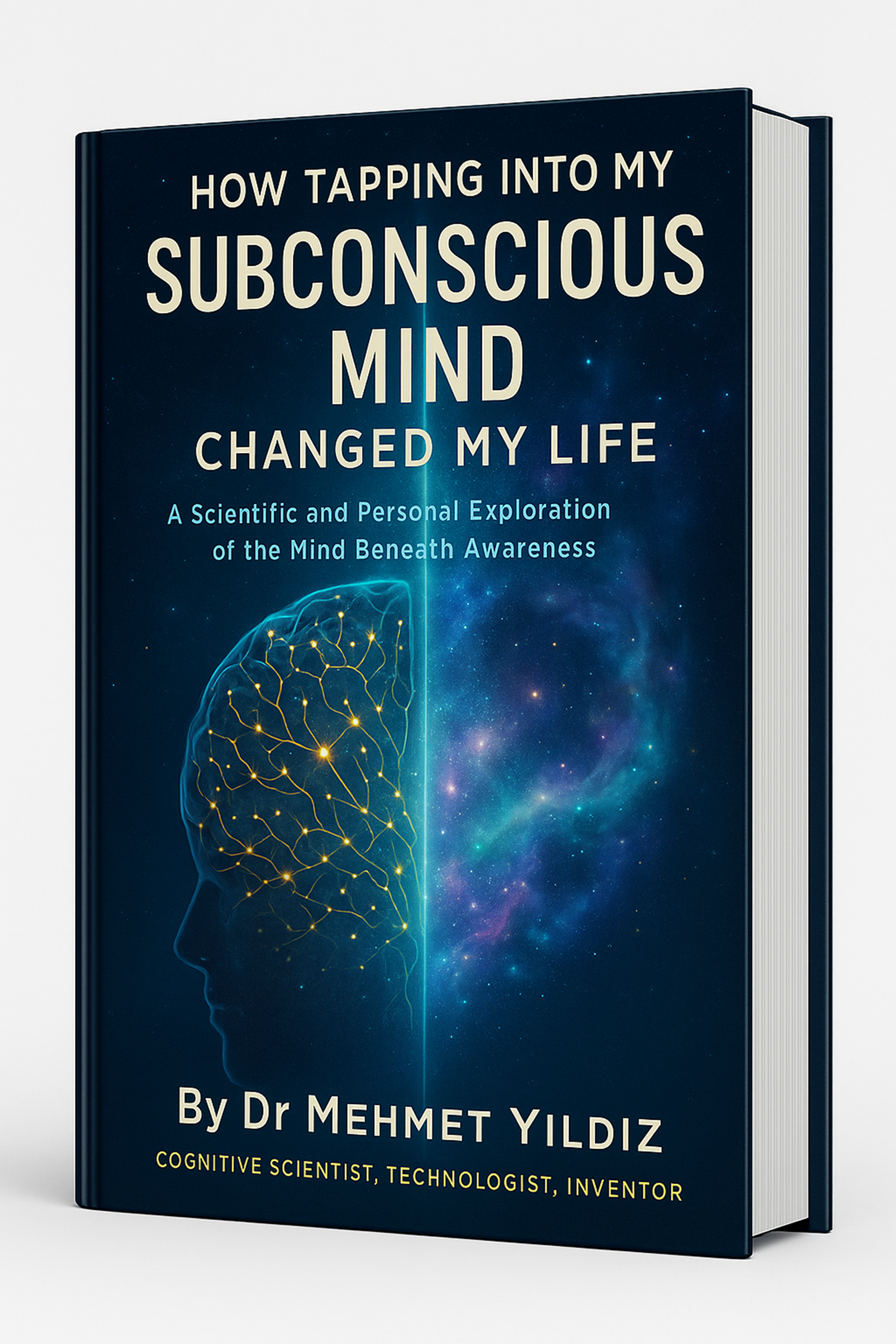
An Editorial Review of “How Tapping Into My Subconscious Mind Changed My Life” by One of Its Editors
Curator’s Note: The editorial review of “How Tapping Into My Subconscious Mind Changed My Life” by Dr. Mehmet Yildiz highlights the book’s unique integration of scientific research and personal experience regarding the subconscious mind. Dr. Yildiz presents the subconscious as a dynamic entity influencing emotions, cognition, and behavior, contrasting with the common abstract interpretations. The review emphasizes the importance of understanding cognitive patterns, emotional regulation, and the process of learning. By advocating for gradual adjustment and self-compassion, the book offers readers a practical approach to personal growth and resilience. Overall, it serves as an enriching resource combining science with meaningful life applications. This editorial review was written by Dr Albert Jones, a retired psychiatrist and mental health professional specializing in relationships and forensic psychiatry.
Nuanced Perspectives of a Retired Psychiatrist and Seasoned Mental Health Consultant on the Role of the Subconscious Mind in Our Lives Backed Up By Science and Personal Experiences
After over five decades in medical practice, forensic psychiatry, and mental health consulting, I have read countless books that attempt to explain how the consious and subscionsious mind works and how we can improve our lives for better health and well-being.
Many of these works offer helpful ideas, yet few succeed in bridging scientific rigor with lived human experience in a way that feels accurate, relatable, applicable, and impactful.
In this short story, I will share my review of a book which I got the priviledge, honor and pleasure of editing as one of the developmental and consulting editors. This exceptional book was written by Dr Mehmet Yildiz, a distinguished cognitive scientist, who also serve me as a mentor for many years.
What distinguishes “How Tapping Into My Subconscious Mind Changed My Life” is its ability to present the subconscious mind not as an abstract concept, but as a living system that influences perception, emotion, cognitition, behavior, and meaning in every moment.
Dr. Mehmet Yildiz approaches this subject with the rare combination of scientific depth and reflective clarity. Drawing from cognitive science, neurobiology, clinical pscyhology, and decades of personal and professional observations, he presents the subconscious as a dynamic partner in human functioning rather than a passive repository of memory.
This perspective aligns closely with what many of us have observed in clinical practice, where patterns formed beneath awareness often guide behavior more strongly than conscious intention. The author explains these mechanisms with precision while maintaining a tone that remains accessible and grounded in real experience.
One of the most compelling aspects of this work is its emphasis on cognitive and mental patterns. The book gently leads the reader to recognize that we do not begin with isolated thoughts, but with patterns impacted through repetition, emotion, and experience.
This insight, which is consistent with modern neuroscience, is presented in a way that invites reflection rather than resistance. It allows readers to understand why certain behaviors persist and how meaningful change can emerge through gradual refinement rather than forceful effort.
The integration of emotion, memory, and physiology is particularly well articulated. In clinical settings, we have long recognized that emotional experiences and bodily states profoundly influence cognition, yet this connection is sometimes overlooked in popular literature.
Dr. Yildiz explains how emotional signals guide attention, how memory evolves through reinterpretation, and how the body continuously informs mental processes. These explanations provide a coherent framework that helps readers make sense of their own experiences in a practical, reassuring way.
Another strength of the book is in its treatment of learning and creativity. The author describes how the subconscious absorbs information continuously and reorganizes it during periods of rest and reflection. This aligns with well-established research on memory consolidation and insight formation.
What is particularly valuable for readers is how these concepts are translated into everyday understanding, allowing readers to see learning as a natural process that can be supported rather than forced.
From a mental health perspective, the sections on emotional regulation, cognitive resilience, and well-being are especially noteworthy. The book presents healing as a process of integration rather than suppression, emphasizing the importance of awareness, gradual exposure, and biological regulation.
These principles reflect contemporary therapeutic approaches and are conveyed in a way that encourages self-compassion and patience. The author guides the readers to see emotional challenges not as failures, but as signals that can be understood and addressed with clarity.
The discussion of meaning adds an important dimension to the work. In psychiatry, we observe that individuals who find meaning in their experiences demonstrate greater resilience and stability.
Dr. Yildiz connects this observation with scientific, psychological, and philosophical perspectives, showing how purpose and alignment support sustained motivation and emotional coherence. This integration of meaning with neuroscience creates a balanced and thoughtful view of human development.
What makes this book particularly impactful is its consistent message that change emerges through alignment. The author does not advocate for excessive control or unrealistic transformation. Instead, he emphasizes understanding, repetition, and gradual adjustment.
This naunced and pratical approach reflects a mature understanding of how the mind adapts over time and offers readers a practical pathway for growth that feels sustainable.
I also appreciate the author’s willingness to share personal insights. His reflections on stress, productivity, creativity, and relationships provide a human context that complements the scientific explanations. These examples illustrate how theoretical understanding can translate into meaningful changes in daily life, reinforcing the credibility of the work.
In my informed conclusions, “How Tapping Into My Subconscious Mind Changed My Life” offers a thoughtful and well-structured exploration of the mind beneath awareness. It succeeds in bringing together science, experience, and reflection in a way that is both intellectually satisfying and practically useful.
For readers interested in understanding how patterns influence their lives and how to refine them, this book offers a clear, reliable guide.
From my perspective as a retired psychiatrist and mental health consultant, this work stands as a valuable contribution to the field. It encourages readers to approach their inner life with curiosity and respect, and it offers a framework that supports clarity, resilience, and meaningful change.
The book was published in digital, paperback ( 9798258148292), hard copy (9798258149633), and audio formats on Amazon. What I liked was that the author has added the book to the KDP select allowing subscribers to read it without purchasing the book.

I will share the links to some samples chapters the authors shared on this platform:
What Science Reveals About the Subconscious Mind and Why It Matters
Embedding Intentions into the Subconscious for Manifesting What We Truly Want
Using the Subconscious Smartly to Nurture What We Truly Need Based on Maslow’s Hierarchy
Carl Jung’s Lasting Legacy and the Living Language of the Subconscious Mind
The Noological Dimension: Using Logotherapy to Enrich the Subconscious Mind for Wellbeing
Neuroception: The Subconscious Mind With Embodied Intelligence
If you enjoyed my review you may also check an outstanding review by a distinguished psychologist and psychoanalyst Dr Bronce Rice titled Book Review: How Tapping Into My Subconscious Mind Changed My Life by Dr. Mehmet Yildiz.
And also an exceptional review by my long-term collaborator, Dr Michael Broadly, DHSc, a retired health scientist, healthcare practioner, and public health consultant, titled Subconscious Mind: Similarities and Differences Between Dr. Joseph Murphy and Dr. Mehmet Yildiz
Thanks for reading my review and reviews by Dr Rice and Dr Broadly. I wish you the best!
Cheers,
Albert
Dr. Albert Jones is a retired forensic psychiatrist and mental health consultant with over 50 years of experience in the field, living in Australia. He also serves as an editor of ILLUMINATION Integrated Publications on Medium and Substack.


Leave a Reply