

Curator’s Note: This piece zeroes in on a massive shift in payment security that almost everyone is missing. We spent years making physical cards completely bulletproof, but that success just forced scammers to hunt for a new blind spot.
They found it in the exact split second you link your card to a phone wallet. By looking at how human psychology clashes with high speed tech, this breakdown shows why real protection isn’t about heavy walls. It is about steady cooperation, instant awareness, and protecting human trust.
The Reality of Absolute Security
The digital payments world has spent the last few years completely obsessed with making credit cards impossible to hack. They rolled out smart chips, fingerprint scans, and facial recognition at checkout, and honestly, it worked incredibly well. Regular card fraud dropped big time.
But there is a fundamental truth about human nature that we can never ignore: the second you close one big door, people with bad intentions immediately start hunting for an open window.
Security is never a finished project that you just build once and forget about. It is a living, constant process of adjusting to change.
The moment you make one side of a system completely safe, the trouble simply changes shape and pops up somewhere completely unexpected.
The Vulnerability of First Connections
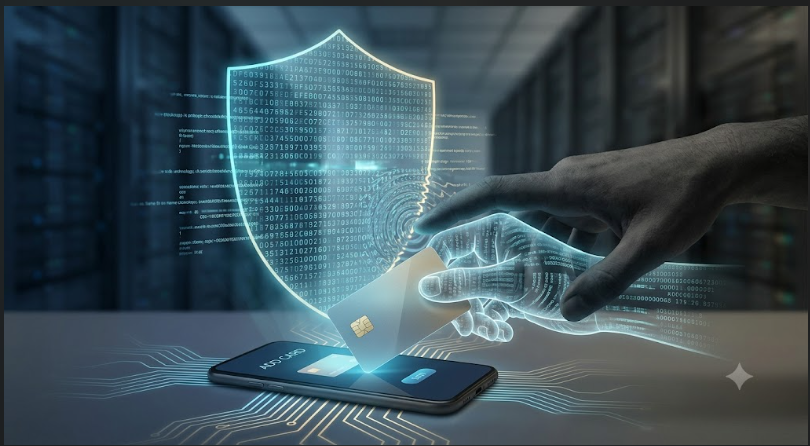
Right now, scammers are completely obsessed with a new weak point in the chain. It is that exact split-second you try to add your physical card to a digital wallet like Apple Pay or Google Pay. In the tech industry, they call this setup process card provisioning.
The whole thing was deliberately designed by engineers to be incredibly fast and smooth for the customer, with almost zero friction or delay. But that initial point of connection is exactly where things are weakest right now.
It just goes to show that the very start of any relationship, contract, or agreement is always the most critical part. If you do not protect the foundation with real awareness on day one, everything you build on top of it later can easily crumble.
The Blind Spot of Past Reputations
A recent security white paper actually broke down how this trick plays out in the real world. Criminals buy stolen card details from regular website data breaches, and then they try to load those cards onto their own personal smartphones.
Because the entire system values speed and convenience above everything else, the automated engines sometimes let these setup requests slide straight through without asking for a single security verification prompt.
This happens a lot if the stolen card happens to have a totally clean history on paper.
It is a massive reminder that a good past record should never make us blind in the present. True wisdom is about staying completely mindful during every single interaction, rather than just trusting a clean surface appearance.
The Human Factor in Digital Exploitation
What is crazy is that these modern scammers are not even hacking complex computer code or breaking firewalls. Instead, they are just playing basic mind games with human psychology.
They use phishing tricks to scare regular people into sharing their one-time passcodes over the phone, or they smoothly manipulate customer support agents into manually approving a setup that should have raised major red flags.
The technology itself works exactly how it is supposed to, but the breakdown happens during the human moment inside it.
This proves that cold software alone can never save us. Real safety always needs a shared sense of responsibility, basic digital literacy, and knowing how easily our natural human desire to trust can be turned against us.
The Ripple Effect of Compromised Roots
Once a stolen card actually gets successfully linked into a digital wallet, it becomes a massive, expensive nightmare for the entire financial ecosystem. To every other computer system down the line, that digital card token now looks completely legitimate and honest.
Because phone payments are highly trusted by merchants, banks usually cannot even dispute the charges through standard channels.
The bank just has to absorb the heavy financial loss with absolutely zero way to get their money back. It creates a terrible domino effect across the network.
When a lie is allowed to take root at the very origin of a process, it spreads a layer of falsehood across the whole chain, ruining everything that follows.
The Fragility of Customer Confidence
The damage from this specific type of fraud goes way beyond just losing money on a balance sheet. The real disaster is how it completely destroys relationship capital between human beings.
When a regular customer finds out their personal account was quietly compromised without their knowledge, the sacred bond of trust between them and their bank breaks instantly.
More often than not, frustrated users will simply pack up their savings and move their money to an entirely different institution.
Trust is like a delicate thread. It takes years of honest, steady effort and clear dedication to build, but it can be completely ruined in a single unverified moment of systemic negligence.
The Danger of Structural Isolation
A big reason this fraud is so tough to catch is how the payment network is split up into separate, isolated silos.
When you link a card, the data travels through completely different pockets: your phone provider, the global card network, the processor, and finally to your bank. Historically, the actual bank—the one entity that knows your daily habits and account context best—was the last to know, finding out only after the card was already approved.
This fragmentation creates massive blind spots where vital clues get trapped in isolated corners. Working alone is never enough to handle intelligent, fast-moving challenges.
True resilience only happens when separate entities choose to communicate and work together in total unity.
The Integration of Live Context
To close this dangerous communication gap, a company called Lithic teamed up with Mastercard to build a solution. They created a system that puts the actual bank back in control during that crucial setup moment.
Now, the bank can bring its own deep customer knowledge into the decision in real time, checking things like device history and subtle behavioral patterns that nobody else in the stack can see.
This approach shows the immense value of context-aware intelligence. Instead of relying on distant, rigid formulas, true protection comes from applying precise, local understanding exactly when and where a live decision is being made.
Balancing Safety with Seamless Experience
Of course, running a massive global system requires a beautiful, delicate balance. Catching a scammer before they link a card stops a long chain of crimes before they ever start.
But if your security rules are too aggressive or fearful, you will accidentally block innocent customers, creating massive frustration and driving people away.
Precision matters just as much as stopping the bad guys. True wisdom in design means protecting the collective space from harm while keeping the journey incredibly gentle and smooth for honest individuals.
Safety should never feel like a heavy, restrictive burden; it should work quietly in the background.
The Strength of Shared Responsibility
Ultimately, digital wallets are becoming the main way the entire world pays for things, and scams will keep evolving right alongside our defenses.
The answer is always to cooperate and invest in the next layer of collective protection before a problem gets completely out of hand.
No single platform can secure a massive, interconnected network entirely on its own. Long-term peace and stability require continuous partnership, shared insights, and mutual care.
By working hand in hand and protecting our foundations, we can build a reliable world where trust can flourish safely for everyone.


Leave a Reply