

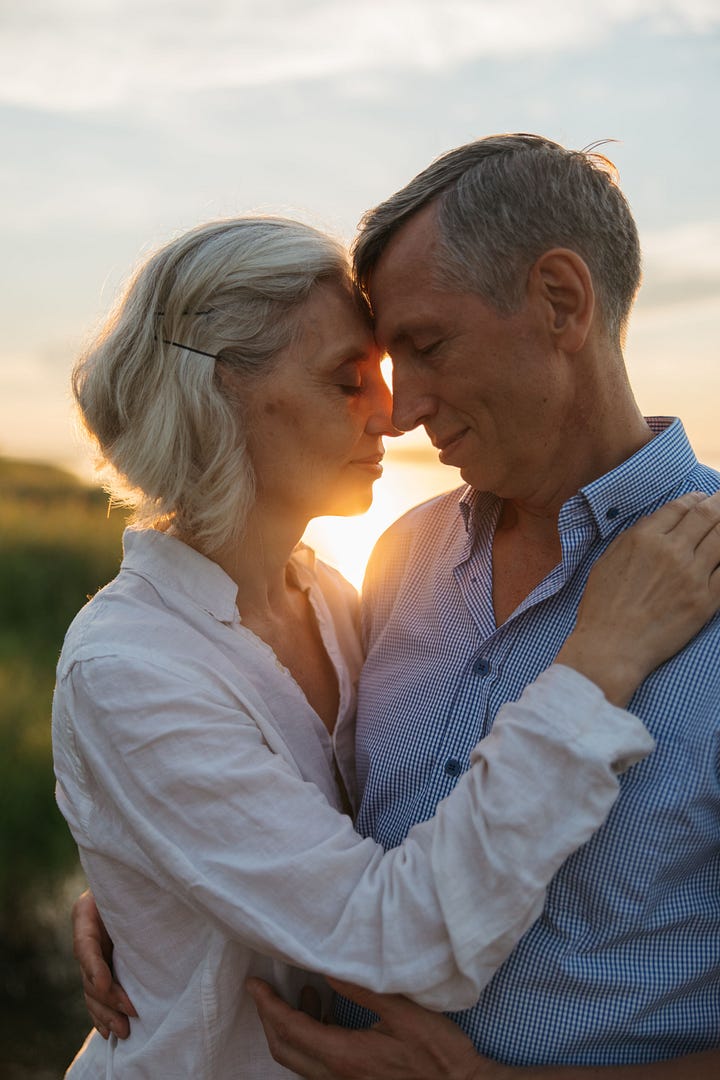
A Scholarly Sexual Health Series: The Loneliness–Libido Connection for Men and Women – What the Brain and the Mind May Be Trying to Tell Us When Human Connection Is Missing
Curator’s Note: The article, written by Dr Michael Broadly, explores the complex relationship between loneliness and libido, emphasizing that loneliness is often misunderstood. The author shares personal experiences from a midlife crisis during which feelings of loneliness coincided with a decline in libido, leading to broader emotional issues. Research highlights that loneliness can be present even in social environments, affecting physical and mental health. The article argues that sexual desire can also stem from a need for emotional connection rather than purely sexual reasons. Ultimately, it suggests that human beings are wired for meaningful relationships, and addressing loneliness may be key to understanding libido.
G’day folks.
Happy weekend! Before discussing neuroscience, psychology, mental health, or public healthcare for libido, I would like to make a personal confession. There was a period during my late forties when life felt considerably darker than it does today. My family, colleagues, friends, and medical support team called it a midlife crisis later.
At the time, however, I did not have a convenient label for it. I simply knew that something important seemed to be missing. I felt lonely despite being surrounded by people. My mood was low. Small frustrations felt larger than they should have. I became more irritable, less optimistic, and less enthusiastic about activities that had previously given me pleasure.
My libido declined significantly, which only added another layer of confusion to an already difficult period. Most importantly, I felt disconnected from the world around me, not only from other people but also from myself.
As both a scientist and a public health professional, I now find that period fascinating because it taught me something that textbooks never could. When loneliness and diminished desire for sex arrive together, they bring other unwelcome companions, including sadness, emotional exhaustion, reduced motivation, self-doubt, and a loss of meaning or purpose.
Of course, not everyone experiences loneliness in the same way, and reduced libido can arise from many causes, including hormonal changes, medications, physical illness, relationship difficulties, and mental health conditions, as I covered in a previous story.
Yet my experience prompted a question that has stayed with me for decades. Could loneliness and libido be more closely connected than most people realize?
Now, in my late seventies, I find myself in a very different place. I do not feel lonely. My relationships are richer. My sense of purpose is stronger. Interestingly, my libido is healthier than it was during that difficult period in midlife.
That contrast taught me an important lesson. The story of libido may not always be a story about sex. Sometimes it is a story about connection. Sometimes it is a story about belonging. And sometimes it is a story about whether the brain feels socially nourished or socially deprived.
That possibility led me to explore what neuroscience, psychology, and public health research have discovered about the relationship between loneliness and sexual desire.
One of the more surprising discoveries I encountered during my years working in public health was that some of the loneliest people I met were not living alone.
Some were married. Some had children and grandchildren. Some belonged to sporting clubs, community organizations, churches, and volunteer groups. A few appeared socially successful by almost every conventional measure.
Yet beneath those outward appearances, many described a persistent sense of emotional disconnection that was difficult to explain and even more difficult to discuss.
One gentleman joked that he received more birthday cards than he knew what to do with, but could not think of a single person he would call at seven o’clock in the morning, or at nine o’clock at night if life suddenly fell apart. Beneath the humor sat an important truth. Human beings can be surrounded by people while still feeling profoundly alone.
The Loneliest People Are Not Always Alone
This observation highlights one of the most common misconceptions surrounding loneliness. Many people assume loneliness means being alone. Contemporary neuroscience, psychology, and public health research suggest something considerably more nuanced.
Loneliness appears to happen when the quality of our social and emotional connections falls short of what our brain and nervous system perceive as sufficient.
Consequently, loneliness can occur in crowded cities, busy workplaces, loving families, large social media groups, and long-term relationships just as easily as in physical isolation.
The distinction matters as loneliness influences more than mood and emotions. Researchers associate chronic loneliness with changes in stress physiology, immune function, sleep quality, cardiovascular health, cognitive performance, emotional well-being, and overall quality of life.
Some public health experts have gone so far as to suggest that loneliness deserves recognition as one of the major health challenges of modern society because its effects ripple across multiple domains of human functioning.
One area where loneliness exerts a surprisingly powerful influence involves sexual desire. Throughout my career, I encountered individuals who blamed themselves for changes in libido. Some assumed hormones were responsible. Others blamed aging, medications, physical illness, or personal inadequacies. While each of these factors can certainly play important roles, I suspected another contributor operating beneath the surface: Loneliness.
One widowed gentleman in a community health seminar told me something I have never forgotten. “Dr Broadly, I don’t think I miss sex nearly as much as I miss having someone to hold my hand.”
At first glance, that statement may appear unrelated to libido. Anthropological, neuroscientific, and psychological studies suggest otherwise, which I will briefly explain in the subsequent sections.
Evolution Never Expected Us to Be Lonely in a Crowd
One reason the relationship between loneliness and libido is misunderstood is that modern society tends to separate sexual desire from human connection. From an evolutionary perspective, however, such separation may be somewhat artificial.
Human beings evolved within social groups where attachment, pair bonding, caregiving, cooperation, reproduction, and emotional connection were deeply intertwined. The neurobiological systems supporting intimacy did not develop solely to facilitate reproduction.
They also helped maintain relationships, strengthen social bonds, encourage parental investment, and promote cooperation. Consequently, the systems involved in belonging and the systems involved in desire overlap far more than many people realize.
One of the more intriguing developments in loneliness research is the growing recognition that loneliness may function less as a psychological defect and more as an adaptive biological signal.
Public discussions portray loneliness as a weakness, social failure, or character flaw. Evolutionary biology suggests a very different interpretation.
Hunger motivates us to seek food. Thirst motivates us to seek water. Fatigue encourages recovery. Pain protects injured tissues. Loneliness may motivate us to seek meaningful social connection.
The discomfort itself may serve a purpose. Rather than indicating that something is wrong with us, loneliness may, from an evolutionary perspective, signal that something important is missing from our lives.
The Brain Might Confuse a Need for Connection with a Need for Sex
This perspective may help explain why loneliness influences libido in dramatically different ways. Some people assume loneliness inevitably reduces sexual desire. In reality, the relationship appears considerably more complex.
For some individuals, prolonged loneliness contributes to emotional withdrawal, depressive symptoms, anxiety, disrupted sleep, elevated stress hormones, and reduced reward sensitivity. These changes may suppress aspects of sexual motivation. The brain becomes focused on adaptation and coping rather than the pursuit of intimacy. Yet loneliness does not always reduce desire.
For others, loneliness appears to intensify longing for intimacy. The desire for sexual connection may become intertwined with the desire for affection, companionship, emotional safety, reassurance, physical touch, and belonging. What appears to be heightened libido may occasionally reflect a broader search for human connection. The brain is not always seeking sexual gratification. Sometimes it is seeking meaningful connection or sustainable attachment.
One lesson I learned after decades of observing human behavior is that people ask whether they have a libido problem when a more useful question is what their libido is trying to communicate.
Sometimes the answer is sexual. Sometimes it is emotional. Sometimes it is relational. And sometimes it is loneliness wearing a different disguise. We need to learn to distinguish them and address each need for a satisfying life at any age.
Hormones, Neurotransmitters, and the Hidden Biology of Belonging
Modern neuroscience provides several clues as to why loneliness and libido decline occur. Dopamine contributes to motivation, anticipation, reward-seeking behavior, and curiosity. Oxytocin supports attachment, bonding, trust, and social connection. Serotonin influences mood regulation and emotional stability.
Endorphins contribute to comfort and emotional soothing. Many other biochemicals, including cortisol, insulin, glucagon, and leptin, can worsen physical, mental, and emotional conditions.
These systems do not operate independently. They function as an interconnected network that continuously evaluates social experiences and adjusts behavior accordingly.
Meaningful social interaction, affectionate touch, emotional intimacy, and supportive relationships influence many of these pathways simultaneously. When connection is absent for prolonged periods, some individuals report reduced motivation, diminished pleasure, lower energy levels, and reduced interest in intimacy.
Others become preoccupied with finding a connection. Both responses appear understandable when viewed through a neurobiological lens.
Some of the Loneliest People Have Thousands of Contacts
From my experience, one of the great paradoxes of modern life is that technological connectivity and emotional connectedness are not necessarily the same thing.
Never before in human history have people possessed the ability to communicate instantly across continents, maintain extensive digital networks, and access information continuously.
We never had conversations with sophisticated chatbots that seem to read our minds. Yet surveys conducted across multiple countries continue to report substantial levels of loneliness across virtually every age group.
This apparent contradiction may reveal an important distinction between communication and connection. The human brain evolved to interpret a rich collection of social signals, including eye contact, vocal tone, touch, smell, shared experiences, emotional reciprocity, trust, and physical presence.
Digital communication provides many advantages, but it may not consistently activate the full spectrum of processes associated with human bonding. Consequently, an individual may communicate frequently online or with intelligent bots while simultaneously experiencing emotional isolation.
The Public Health Problem Hiding in Plain Sight
From a public health perspective, loneliness deserves far more attention than it currently receives. Discussions about loneliness usually focus on emotional discomfort while overlooking broader implications for health and well-being.
Research associates chronic loneliness with elevated risks of depression, anxiety, sleep disturbance, cardiovascular disease, cognitive decline, and reduced quality of life.
Sexual well-being is affected as well. Some people lose interest in intimacy entirely. Others seek connection through relationships that fail to meet their deeper emotional needs. Still others experience confusion because they interpret a longing for attachment as purely sexual desire. Understanding these distinctions can be remarkably liberating.
Sometimes people do not need more sex. They need more connection. Sometimes they need both, as I do. I certainly fall into the second category.
As I sometimes joke with friends, I have never been particularly interested in choosing between emotional intimacy and physical intimacy because I value both. Meaningful connection enriches my life, and so does a healthy sexual relationship.
Fortunately, my wife and I have shared both for more than half a century. Looking back, I suspect that enduring companionship has contributed as much to my well-being as any dietary strategy, exercise program, or public health recommendation I have encountered throughout my career.
Of course, human relationships are wonderfully diverse. Some people flourish in long-term monogamous relationships, while others find fulfillment in other relationship structures. Some individuals have little interest in sexual activity yet deeply value emotional closeness. Others place greater importance on physical intimacy.
Several of my elderly friends remain surprisingly enthusiastic about romance and sexuality, albeit with approaches that differ considerably from my own. Human beings vary enormously in how they seek connection, companionship, affection, and intimacy.
What appears remarkably consistent, however, is the underlying need for meaningful human connection. The specific expression may differ from one individual to another, but the desire to feel valued, understood, accepted, and emotionally connected appears to be deeply embedded in human nature. From a neurobiological perspective, that consistency may be far more important than the particular relationship model a person chooses.
Biology Never Received the Memo That We Are Getting Older
As both a public health professional and an older adult, I have become increasingly convinced that society often misunderstands the emotional lives of older individuals.
Discussions about aging frequently focus on declining hormone levels, chronic illness, retirement, and physical limitations while paying comparatively little attention to attachment, affection, companionship, and belonging.
Yet the neuroscience of attachment provides little evidence that the need for connection disappears with age. One elderly woman once told me something that beautifully captured this reality. “People assume I miss intercourse most. What I miss most is having someone ask how my day was.”
That observation reflects a profound truth. While libido may change over time, the desire for emotional closeness does not fade in normal circumstances. Many older adults in my circles are not simply grieving the loss of sexual activity. They are grieving the loss of companionship, familiarity, affection, shared routines, emotional security, and meaningful connection.
The Brain May Be Telling Us Something We Have Misunderstood
Perhaps the most important lesson emerging from neuroscience and psychology literature is that loneliness is not a weakness, a character flaw, or evidence that something is wrong with us. It is a biological and psychological signal reminding us that human beings evolved for connection.
The same brain systems and mind processes that support pleasure also support belonging. The same nervous system supporting intimacy also responds to trust, affection, friendship, and emotional safety.
When viewed through this lens, libido becomes more than sexual desire alone. It becomes one expression of a broader human longing to connect, to matter, to feel understood, and to belong.
Perhaps Libido Is Not the Real Story After All
As I grow older, I find myself thinking less about juicy libido in my youth and more about emotional and sexual connection together for a satisfying life in my golden years.
That may sound like a strange conclusion for a sexual health article, yet neuroscience points in the same direction. Human beings are not just wired for pleasure. We are wired for belonging too.
When people tell me they are struggling with libido, I no longer assume the conversation is primarily about sex.
Sometimes it is about grief. Sometimes it is about loneliness. Sometimes it is about touch. Sometimes it is about emotional safety. Sometimes it is about wanting another human being to see them for who they genuinely are.
And perhaps that is one of the most important lessons neuroscience and psychology studies can teach us. Beneath many of our desires lies a far older and more fundamental need. The need to belong with purpose.
Final Reflections Before You Go to Enhance Your Libido and Connections Naturally
One of the most compassionate insights I have gained from studying neuroscience, psychology, anthropology, metaphysics, public health, and sexual health is that many struggles people attribute to libido are not really about libido at all.
Sometimes the deeper issue is loneliness. Sometimes what appears to be a lack of sexual desire is actually emotional exhaustion. Sometimes what appears to be overwhelming sexual desire is really a longing for affection, reassurance, touch, or companionship.
The brain does not separate these experiences as neatly as society does. Understanding this nuance allows us to approach ourselves and others with greater empathy and compassion.
Human beings were never designed to thrive in isolation. We were designed to connect. And perhaps that is one of the most important lessons both scientific studies and life experiences can teach us.
I’d like to share the previous version of this story from a different angle. Here is the link if you missed it.
Human Libido: What Most People Were Never Taught About Sexual Desire
The Neurobiology and Psychology of Libido Across the Lifespan: What Science Tells Us and What I’ve Learned in My Golden…medium.com
In addition, as I previously mentioned, menopause for women and andropause for men can significantly impact libido. If you are curious and would like to explore the effects of menopause for women and andropause for men further, my mentor, Dr Mehmet Yildiz, a seasoned scientific researcher and author of many books in the field, has written a comprehensive book chapter that examines these issues in considerable depth.
After Midlife: Menopause, Andropause, and Other Hormonal Shifts for Graceful Aging
Understanding hormonal changes as we age is important because hormonal shifts influence metabolism, mood, sleep, muscle…medium.com
If you missed the previous stories from my sexual health education series, here are the links for easy access. You can earmark them to enjoy later and boost your sexual health knowledge and wisdom:
Sexual Health Is a Natural Part of Healthy Aging
What Most People Were Never Taught About Female and Male Orgasm
The Neurobiology of Sexual Pleasure and Meaningful Human Connection.
Neurocognitive and Affective Differences Between Erotic and Pornographic Stimuli in the Brain [Warning: This one is scholarly!]
What Science Reveals About Anal Pleasure and Orgasm for Both Women and Men [Free access via my community blogs]
Cheers, Mike!
Invitation to Join Me in This Series on Sexual Health
This work in my series is intended as educational guidance and does not replace professional medical advice. I encourage readers to consider their local context and seek support from qualified professionals where appropriate.
The conversation begins here, and you are warmly welcome in it. If you are a writer, I invite you to contribute to Health and Science publication’s Sexual Health series, which will be coordinated by my editorial team and me. Here is a sample blog post that I shared recently.
I also plan to curate these stories on my Substack publication (Health & Science Research by Dr Michael Broadly) and guest blog on the Digitalmehmet community blogs. If my time allows, I might also compile a book with the content of my series to reach a broader audience.
You can find the submission guidelines for the ILLUMINATION Integrated Publications from the following links:
ILLUMINATION, Curated Newsletters, SYNERGY (Newsletter Booster), Technology Hits, Health and Science,ILLUMINATION Book Chapters, Readers Hope, ILLUMINATION Gaming,Videos/Podcasts, Magnetic Newsletter Pro, Substack Mastery Boost, ILLUMINATION Scholar (NEW), ILLUMINATION Local News and Documentaries (NEW), ILLUMINATION Retirement, Aging, and Legacy (NEW), ILLUMINATION Philosophy and Metaphysics (NEW), ILLUMINATION for India (NEW)
Thank you for reading my stories and joining our publications.
About Me
I’m a retired healthcare scientist in my late-70s. I have several grandkids who keep me going and inspire me to write on this platform. I am also the chief editor of the Health and Science publication on Medium.com. As a giveback activity, I volunteered as an editor and content curator for Illumination publications, supporting many new writers. I will be happy to read, publish, and promote your stories. You may connect with me on LinkedIn, Twitter, and Facebook, where I share stories I read. You may subscribe to my account to get my stories in your inbox when I post. You can also find my distilled content on Substack: Health Science Research by Dr Mike Broadly.
Here is my latest curated collection: Mike’s Favorite Stories on ILLUMINATION Publications — #277


Leave a Reply