

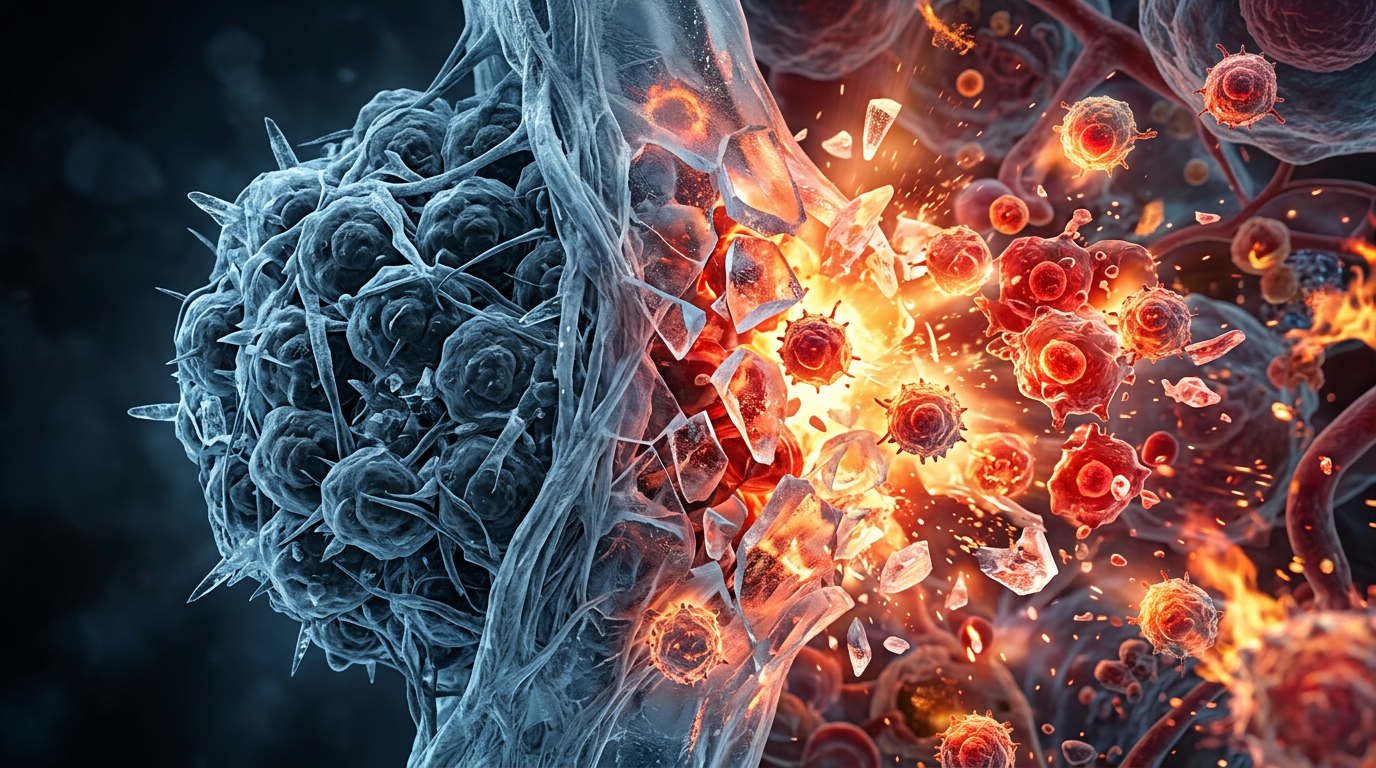
New research has revealed the way in which targeting IL1RAP, IL-4, NKT cells, and pHLIP-STINGa overcomes immunotherapy resistance in pancreatic, ovarian, and lung cancers.
Curator’s Note: Recent research highlights strategies to combat immunotherapy resistance in pancreatic, ovarian, and lung cancers by targeting specific proteins and immune cells. IL1RAP promotes inflammation while inhibiting immune responses, and its blockade can enhance chemotherapy effects. In ovarian cancer, disrupting IL-4 signaling makes tumors responsive to anti-PD-1 therapy. Investigating NKT cells revealed their role in creating an immunologically active tumor environment. Further, novel STING stimulators showed promise in turning “cold” tumors into “hot” ones. These findings emphasize understanding cancer’s molecular mechanisms to improve treatment outcomes, paving the way for enhanced immunotherapy strategies and ongoing clinical trials. This scholarly essay was written by Dr Khalid Rahman a health science researcher and holistic health practioner.
Immunotherapy was supposed to be a magic bullet, but in most instances it has only a small effect on people who have pancreatic, ovarian, or aggressive lung cancer. Why is that? The tumors are not just sitting there waiting to be attacked; rather, they have built up complete fortresses – dense, inflamed, scar-like tissue that actively stops immune cells from functioning. Scientists call them “cold” tumors. The key thing to note is that researchers are now beginning to pick the locks.
The protein IL1RAP is involved in pancreatic cancer and acts in a manner similar to a master switch since it increases inflammation while at the same time telling the body’s immune forces to stop acting. In the COMPASS trial, patients who did not respond to chemotherapy had a significantly higher level of activation of IL1RAP-related pathways. Single-cell RNA sequencing showed that the activity was not confined to just one type of cell; it was found in all kinds of cells, including immune cells, myeloid cells, fibroblasts, and the tumor cells themselves. The CANFOUR trial then found that in patients treated with an anti-IL1RAP antibody called nadunolimab together with chemotherapy, those who had high levels of IL1RAP in their stromal or immune cells had longer responses. In mice, blocking IL1RAP led to slower tumor growth, less fibrosis, and a complete reorganization of the immune environment. The number of myeloid suppressor cells decreased while the infiltration of T cells increased, and exhausted T cells were replaced by memory progenitor-exhausted T cells which could be reactivated. When the researchers combined the antibody with chemotherapy and anti-PD1, survival was greatly extended. A trial involving patients with operable pancreatic cancer, to be carried out as a neoadjuvant study, is about to start.
Ovarian cancer has certain tricks of its own. It produces IL-4, a cytokine which is normally produced by immune cells. The cancer cells themselves also produce IL-4, and this IL-4 then binds to receptors on myeloid cells, causing them to be reprogrammed into immunosuppressive macrophages. However, when the researchers removed IL-4 from the cancer cells, the tumors did not shrink on their own; instead, they became responsive to anti-PD-1 therapy. In fact, dupilumab, an antibody approved by the FDA for use in treating eczema that blocks the IL-4R, when used in combination with anti-PD-1, greatly delayed tumor growth in preclinical models, with time to the appearance of ascites being extended by two weeks.
There are also natural killer T cells; these are particular immune cells situated at the point where innate and adaptive immunity meet. In a study using a mouse model of pancreatic cancer, NKT cells were found to be essential for setting up an immunologically active tumor microenvironment since they express CD40L, which binds to CD40 on myeloid cells and thus induces the production of type I interferons. When the researchers administered folinic acid (a form of vitamin B9), there was an increase in the number of NKT cells. Together with anti-PD-1, tumor growth was markedly decreased in over half of the mice that were treated.
There’s also pHLIP-STING. Stimulators of STING are medications that cause cold tumors to become warmer, but they have poor pharmacokinetics and lead to systemic side effects. The researchers attached them to a peptide that inserts itself when the pH is low, since it detects acidity. Cancer cells, activated immune cells, and cancer-associated fibroblasts are all highly acidic. In mice with colorectal tumors, one injection led to the elimination of the tumors in 90% of cases. CAFs were reduced by 98%, the acidity of the tumor decreased by 72%, and 80% of the mice were free from tumor-rejected cancer cells that were reinjected. Immune memory was developed.
Take the example of IRAK4, a kinase that is constitutively activated in pancreatic cancer; it causes T cell exhaustion and leads to increased HAS2 expression, which in turn results in the production of hyaluronan. The hyaluronan produced raises the interstitial pressure and causes the tumor blood vessels to collapse, thus stopping drugs and T cells from entering. When IRAK4 is inhibited using CA-4948 in combination with checkpoint immunotherapy, survival is significantly extended in mice, and in some tumors tertiary lymphoid structures are found; this is an indication of productive antitumor immunity.
In pulmonary fibrosis, the release of histones causes platelets to release TGFβ1, which then inhibits the antifibrotic cytokine IL-27; fibrosis was reduced in mice when the histones were blocked with monoclonal antibodies.
All of these discoveries are based on the same line of reasoning – identify the molecular mechanism that cancer employs to remain undetected and then interfere with it. The podcast I recently posted explains all of this; it covers IL1RAP, IL-4, NKT cells, pHLIP-STING, and so on.
To stay active and empowered with research-backed, evidence-based health and wellness content daily and learn its practical application in routine, don’t forget to follow my BioTuberOnline, Substack, Medium, LinkedIn, Patreon, and Blogger platforms.
As a health scientist, I would love to learn about your health and wellness experiences and insights into your encounters with ongoing or prior treatments/health support measures.
As we collaborate on this fascinating yet adventurous health and wellness journey, please share the next health topics/clinical research breakthroughs you would like me to bring to your desk.
Subscribe to my educational channel BioTuberOnline for more health and wellness updates, all backed by rigorous scientific evidence.
Stay tuned & have a wonderful day!
Truly yours,
Dr. Khalid Rahman
Health Scientist | Scholarly Communicator | Licensed Integrative Medicine Practitioner | PhD (Clinical Research) | MSc (Bioinformatics) | MSc (Clinical Research & Regulatory Affairs) | Post Graduate Diploma in Computer Application | Bachelor of Unani Medicine & Surgery


Leave a Reply