

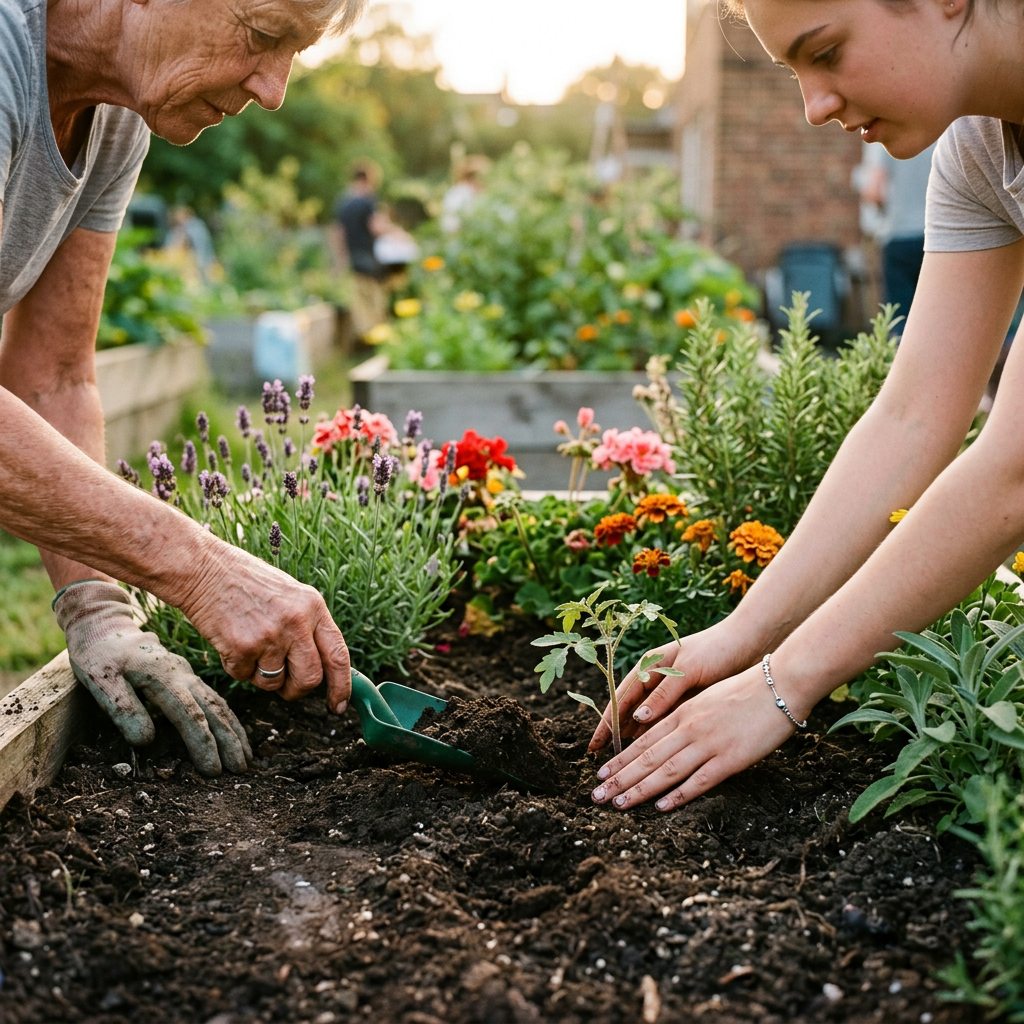
After 8 decades of life, I’ve learned that wisdom doesn’t travel in only one direction.
Curator’s Note: This essay by Dr. Kenneth Silvestri discusses the value of intergenerational relationships in building understanding and learning. The author organized gatherings between teenagers who had dropped out of school and elderly residents living nearby, allowing them to share experiences over meals. As they engaged in conversations, both groups moved beyond stereotypes, discovering commonalities and mutual respect. The piece emphasizes that aging shouldn’t focus solely on physical health; meaningful social connections are crucial for emotional wellbeing. It advocates creating spaces where different generations can learn from each other, highlighting the importance of community and shared experiences in aging.
Introduction
A few years ago, I organized an unusual gathering in an urban community. I was working with teenagers who had dropped out of school. Nearby was a senior housing community whose residents were predominantly white, while the teenagers came from minority backgrounds.
The two groups lived close to each other but had little meaningful contact. Some older residents held unfavorable assumptions about the teenagers, who had their own reasons to feel misunderstood.
I wondered what might happen if we brought them together, not for lectures or formal instruction, but simply to share lunch and talk.
Over several months, we arranged gatherings in the community room. The conversations began with ordinary things: childhood memories, school experiences, kitchens, backyards, friendships, and what it meant to be young or old.
Something remarkable happened.
People who initially saw one another through the labels of age, race, and social circumstances began discovering shared experiences. There was laughter, surprise, warmth, and growing respect.
The teenagers learned things they hadn’t expected. So did the seniors.
That experience taught me something important about aging, and I’ve carried the lesson ever since.
Growing older doesn’t mean we stop learning. And being younger doesn’t mean we have nothing to teach.
Are We Looking at Aging From the Wrong Direction?
We hear plenty about growing old these days. Governments discuss the rising cost of healthcare, researchers investigate longevity, and advertisers offer an impressive assortment of products promising to keep us young.
Some advice is excellent. Staying physically active, eating well, protecting our cognitive health, and receiving appropriate medical care all matter.
But I sometimes wonder if we’ve become so preoccupied with maintaining our bodies that we’ve overlooked the importance of our relationships.
Aging is often presented as an individual challenge. We’re encouraged to exercise, manage stress, avoid falls, and keep our minds active.
All sensible suggestions, although I’ve yet to meet anyone whose entire philosophy of aging could be improved by another advertisement for beetroot supplements.
What interests me is something broader.
How do we continue growing as human beings through our relationships with people of different ages, backgrounds, and experiences?
The numbers make this question particularly relevant.
According to US population estimates, people aged 65 and older now represent nearly one-fifth of Americans. Meanwhile, a 2025 Pew Research Center survey found that 76% of adults would like to live to at least 80, including 29% who would like to reach 100.
Clearly, many of us want more years. But what are we planning to do with them?
I would argue that meaningful participation in society deserves as much attention as the number of candles on our birthday cakes.
Our Brains May Have More to Offer Than We Think
One encouraging development comes from research into the aging brain.
A scientific perspective discussed in The Washington Post in September 2026 suggests that some age-related changes may reflect adaptation as well as decline.
Researchers have proposed that older adults may become more reliant on accumulated knowledge, perspective, and emotional understanding, even as certain memory abilities become less efficient.
This is an interesting hypothesis, although it doesn’t mean every older person automatically becomes wiser or that cognitive decline is imaginary.
Believe me, reaching eighty doesn’t suddenly turn you into Socrates.
Wisdom develops through experience, reflection, curiosity, and our willingness to reconsider what we think we know.
Younger people bring different strengths. They often introduce new technologies, cultural perspectives, questions, and ways of approaching familiar problems.
Older people can contribute historical understanding, professional experience, lessons from failure, and insights developed over decades.
Neither generation has a monopoly on good ideas.
That’s why I believe intergenerational learning deserves a more prominent place in conversations about healthy aging.
When we exchange knowledge across generations, we gain opportunities to challenge assumptions and discover possibilities that might otherwise remain hidden.
What the Teenagers and Seniors Taught Me
Returning to the community program, what struck me most was how ordinary the conversations became.
We didn’t need elaborate teaching materials or sophisticated psychological interventions.
We needed a welcoming space, a shared meal, and opportunities for people to listen.
The teenagers discovered that older residents had once faced their own struggles with school, friendships, family expectations, and uncertainty about the future.
The seniors began seeing the teenagers as individuals with experiences and aspirations rather than representatives of a troublesome generation.
Both groups brought something valuable to the table.
That experience reinforced my interest in systems thinking and the work of scholars such as Nora Bateson, whose Warm Data approach examines relationships and context rather than treating people as isolated parts of a larger system.
Human lives are interconnected. Our wellbeing depends partly on the relationships, communities, histories, and circumstances in which we live.
Intergenerational encounters can make those connections visible.
Research suggests that meaningful social participation may support emotional wellbeing and reduce isolation. We should be cautious about claiming that every intergenerational program produces measurable health improvements, but the potential benefits deserve serious attention.
And sometimes the most important outcomes are difficult to capture in a questionnaire.
How do we measure the moment when a teenager realizes an elderly neighbor understands something about their struggles?
Or when an older person discovers that a young student has something genuinely useful to teach?
Those moments may seem small, but they can change how people regard one another.
Conclusions: Aging Better Together
After more than eight decades, I’ve become less interested in prescriptions for perfect aging and more interested in how we continue learning, contributing, and caring for one another.
We certainly need good healthcare, sound nutrition, physical activity, and appropriate support as our bodies change.
But we also need opportunities to remain part of the wider human community.
I believe we should create more spaces where older and younger people can meet as equals, exchange experiences, question assumptions, and develop mutual respect.
Schools, libraries, community centers, retirement communities, and neighborhood organizations could all play a part.
We don’t need to wait for a major government initiative. Sometimes a shared meal and a thoughtful conversation are enough to begin.
My experience with those teenagers and seniors reminded me that people can surprise us when we stop making assumptions about them.
The young are not simply waiting to become wise. The old are not merely waiting to be cared for.
We all have something to learn, something to offer, and something to discover.
Perhaps one of the most useful lessons of aging is recognizing that our experience becomes more valuable when we share it, and our understanding becomes richer when we’re willing to listen.
After all, getting older is unavoidable. Becoming too old to learn is another matter entirely.
References and Further Reading
- Pew Research Center. (2025, November 6). How Americans Are Thinking About Aging.
- Penman, M. (2026, September 25). New study suggests the aging brain is adapting, not declining. The Washington Post.
- Bateson, N. Warm Data. International Bateson Institute.
Here is some information about my background and contact details:
https://digitalmehmet.com/connect-with-dr-kenneth-silvestri/
Visit my website for other articles of mine on relationships and emotional/ communication strategies as well as a description of my practice, workshops and presentations. http://www.drkennethsilvestri.com
Thanks Dr Mehmet Yildiz for publishing his interview with me on Digitalmehmet Content Ecosystem.


Leave a Reply