

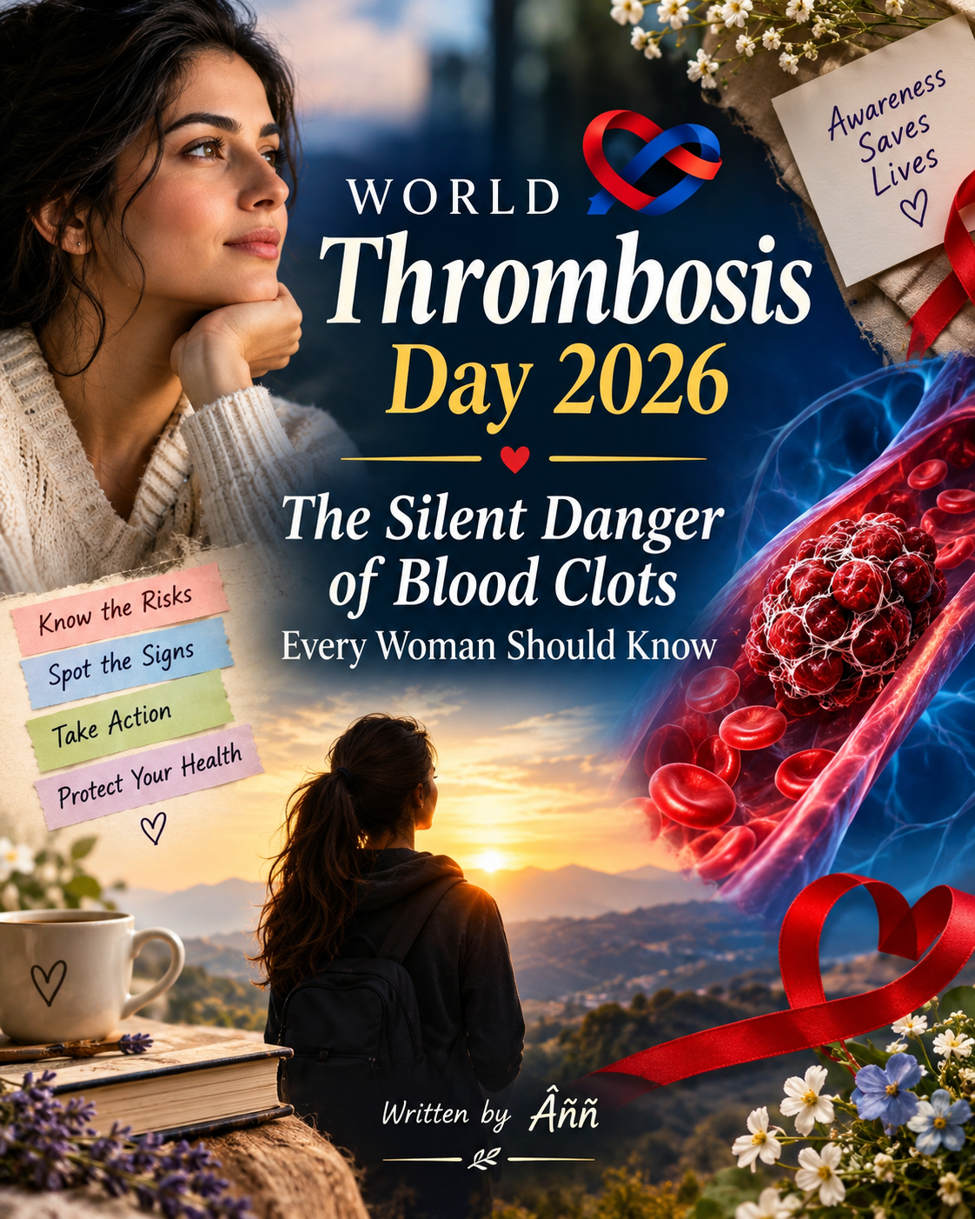
Learn about blood clot awareness for women, including changing risk factors, warning signs, and when to seek urgent medical attention.
Curator’s Note: This post raises awareness of blood clot risks that can affect women throughout their lives. Pregnancy, the postpartum period, hormonal treatments, and other factors can influence individual risk. By recognizing warning signs and understanding when to seek medical attention, women can make informed decisions about their health. The article encourages greater awareness, timely medical care, and open conversations with healthcare professionals.
The Danger You Cannot Always See
A blood clot can develop quietly, yet its consequences can become life-threatening. Blood clot awareness for women matters because risk can change across different stages of life, from reproductive health to pregnancy and menopause.
World Thrombosis Day, observed every October 13, encourages people to recognize thrombosis risks and take prevention seriously. The 2026 campaign places special emphasis on women’s health and the changing factors that can influence clotting risk.
Awareness Can Save Lives
Knowing the signs is an important first step. Ask questions about personal risk, follow medical advice, and seek emergency care if symptoms suggest a serious blood clot.
Your health deserves attention before a warning becomes a crisis.
Read the full article World Thrombosis Day 2026: The Silent Danger of Blood Clots Every Woman Should Know).
#Women’s Health, #Blood Clots, #Health Awareness, #World Thrombosis Day, #Preventive Health #global events


Leave a Reply