

A dreamlike journey through myths, desires, and the labyrinths of time
When we sleep, a silent portal opens. What seems impossible becomes permissible: traveling through times long gone and visiting extraordinary worlds. To touch myths as one might touch one’s own memory is to enter that realm between dream and desire—where everything is permitted and no boundary is permanent.
In deafening silence, she sleeps in the arms of Morpheus. Tomorrow reaches out to embrace her, yet she resists the reality of the coming day. She extinguishes the half-light where night and day merge and plunges incessantly into the past.
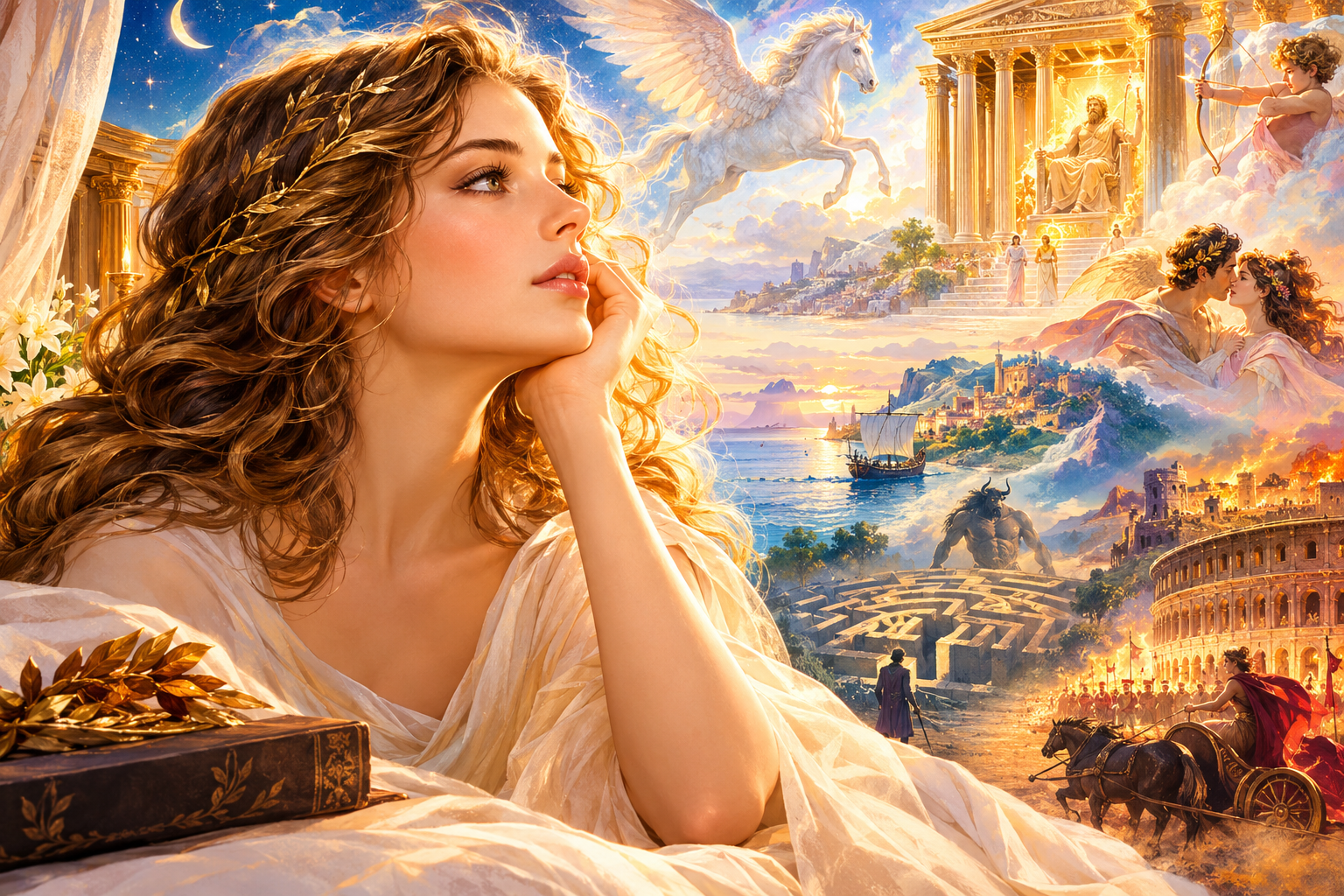
The doorbell rings. She answers the door. The visitor’s lightless eyes glimpse beyond the veil of Isis. Myth itself extends a hand to her, and she allows herself to be led away, her hand still clasped in his. They walk a few steps to the terrace. She catches sight of Pegasus and allows her freedom to take flight. The poet holds the golden reins firmly while Helen, her heart ablaze, guards his back. Together, they circle Gaia, pulsing in the heavens, and witness from above as Poseidon blesses the seas and oceans.
On solid ground, the Greek abandons her at the entrance to the magnificent temple. She climbs the steps, feeling the hardness of stone beneath her bare feet. She crosses the portico and enters majestically. She parades her elegance among the twenty-four towering columns that shelter the throne of Zeus. This wonder of the ancient world has a body sculpted from ivory and ebony. The visitor’s commanding presence draws a cold, semiprecious gaze from the god, who invites her to join the festivities taking place in the hall.
Apollo, one of the host’s sons, recites a poem, and she is captivated by the perfection of his physique. She speaks, and her voice enchants the guests, who realize that his physical beauty pales beside her wisdom. The poet tries to capture her attention and offers her a drink. His brother Dionysus is the one who serves it. Fascinated by her, he reveals in a kiss that his tongue tastes of wine. In an intimate moment, he asks her to call him Bacchus, for they now share the same cup.
Disguised as fragility, she moves with effortless grace. She seeks to draw every eye wherever she goes. Looking up, she gazes at the immense yellow dome crowning the abode of the gods, lending the building a celestial sense of movement. She closes her eyes and is engulfed by a flood of brilliant light pouring from within the vault, supported by eight pillars. In a sudden revelation, she discovers Eros leaning against one of them. She notices that Cupid is trying to avoid her gaze, so she moves close enough for him to sense the fragrance of desire emanating from her skin. He cannot resist the seductive fragrance, which deliberately slips away. Naively, he follows her into the garden.
Beside a pond of water lilies, a young man stands motionless. The crystal-clear water reflects his figure. Eros possesses Helen, plunges into her fountain of pleasure, and penetrates the petals of her desire. Narcissus remains unaware of the magic of love unfolding between the two beings, remaining alone, consumed by his passion for his own image reflected in the mirror of the water.
She leaves the Pantheon, sheltered by the colorful hues of its chambers, while the gods of Olympus parade their mysteries and beauty.
On the pavement, she catches sight of Thanatos. Startled by his metallic features and iron heart, she senses the scent of death hanging in the air. She flees in haste, with a premonition that he is trying to guide her soul toward other worlds.
The celestial banquet dissolves into fragments, and before Helen realizes what has happened, her footsteps echo through stone corridors. The galleries bend into secret circles, waiting to be deciphered. She sees the trail and fears the echo of a desolate roar. A monstrous being with the body of a man and the head of a bull inhabits the labyrinth of her mind. She unwinds the thread of her thoughts and sets the brave Theseus upon it, the hero who slays the beast within her.
On a street in the Bronze Age, she hears gunshots and takes cover behind the city walls. Someone passes by and sweeps her into an embrace. The wooden belly shelters soldiers. The Spartan woman’s heart skips inside this invented body. She wanders through the streets of Troy as Paris carries her off. Now she is torn between her abductor’s kisses and her longing for Menelaus, the rough yet tender man.
The king comes to meet her, and in this epic fantasy, her blood runs the color of the Aegean. Together, they depart beneath the red heat of the flames engulfing the city, flames that begin to warm her bedroom.
Her spirit senses that the mythological journey is nearing its end. Then, pushing the limits of her audacity, she outwits Chronos and travels back in time. She enters the Colosseum, driving a chariot that catches the attention of the feline in the arena. The gladiators’ cries terrify the Christian city. The emperor approaches her and presses a warm kiss to her lips. She catches the scent of the fresh morning air and wraps her arms around Nero, a sleepy smile forming on her face.
Her husband looks at Helen and draws the curtains on the day, making sure the sheet protects her sleep. Gently, he removes the book from his wife’s hands and lays it on the bedside table. She kisses in her dream, and her lips touch the pages of history, where myths and legends slumber, poised between the sacred and the profane.
He leaves in silence, while Helen lives within the Iliad and continues her own Odyssey.
https://digitalmehmet.com/author/rschumaher
Connect wih me via my website, Medium and LinkedIn
Discover more about my journey as a writer in my interview with Dr. Mehmet Yildiz.


Leave a Reply