

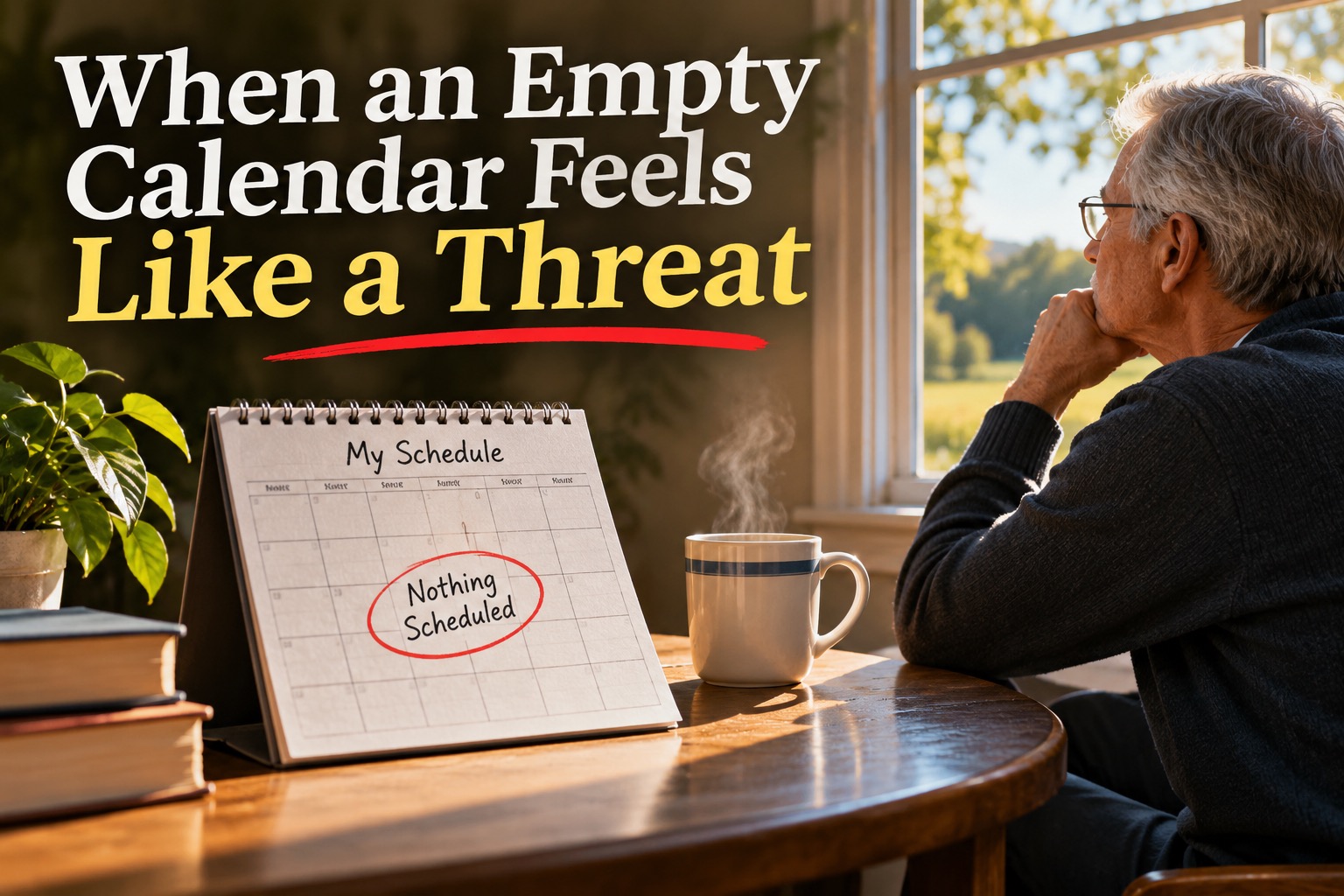
Why the freedom we spend decades pursuing can become surprisingly difficult to enjoy
Curator’s Note: The article, by Gary L. Fretwell, explores why people often struggle to enjoy free time after years of work and achievement. The author describes retiring after decades of demanding professional life, only to feel restless and compelled to create new tasks. This discomfort stems from conditioning that links productivity with personal worth, causing people to carry workplace urgency into weekends, vacations, and retirement. Even leisure can become something to optimize, preventing genuine enjoyment. The author argues that unstructured time is a skill that requires practice. By spending moments without objectives or measurable outcomes, people can rediscover presence, contentment, and spontaneity. True freedom means enjoying time without needing to justify how it was used.
We spend decades working toward the freedom to do nothing, only to discover how uncomfortable doing nothing can feel. Perhaps learning to enjoy our freedom is life’s most overlooked skill.
I spent decades wishing I had more free time. When I finally got it, I discovered that I had almost no idea what to do with it.
When I retired in 2020, after more than four decades of professional life and countless 70-hour workweeks, I anticipated a wonderful sense of liberation. Instead, I found myself inventing projects, searching for new challenges, and manufacturing a sense of urgency where none existed.
What surprised me was how uncomfortable an afternoon without a purpose could feel. There were no deadlines to meet, no professional crises to resolve, and no expectations to fulfill. Yet some part of me remained convinced that I should be doing something.
I had spent years wanting life to slow down. Now that it had, I was the one unwilling to slow down with it.
Perhaps you recognize something of yourself in that experience.
The Conditioning Nobody Talks About
From childhood, we are rewarded for accomplishment. Good grades earn recognition. Professional achievements bring promotions. Completing difficult tasks generates satisfaction. Gradually, we develop a psychological association between what we accomplish and what we are worth.
There is nothing inherently wrong with achievement. The difficulty arises when productivity becomes inseparable from our identity.
After decades of reinforcing this relationship, an afternoon without obligations can generate discomfort rather than pleasure. We reach for our phones, reorganize a closet that doesn’t need organizing, or check our email for the third time in an hour.
What’s particularly revealing is that nobody is demanding these things of us. We have become the enforcers of our own expectations, perpetuating a system of achievement even when the original incentives have disappeared.
We mistake the absence of activity for the absence of purpose.
When Hurry Becomes a Habit
One of my most surprising discoveries about retirement was that urgency didn’t disappear when my professional responsibilities did.
The external demands were gone, but the internal demands remained. I had carried the psychological architecture of my working life into an entirely different season of living.
Our brains become accustomed to repeated patterns of behavior. When anticipation, problem-solving, and accomplishment dominate our waking hours, stillness can feel unfamiliar.
This experience isn’t exclusive to retirement. It can happen on weekends, during vacations, or whenever life unexpectedly offers us an opportunity to rest.
Consider how often we return from a vacation feeling that we need another vacation. Even our leisure becomes something to optimize. We construct itineraries, establish expectations, and measure the success of our experiences by how much we managed to squeeze into them.
We have turned relaxation into another assignment.
Changing our circumstances doesn’t automatically change our conditioning.
The Hidden Cost of Constant Productivity
Whenever we insist that every moment must serve a purpose beyond itself, we risk losing our capacity to appreciate ordinary experiences.
A morning walk becomes an exercise target. Reading becomes a learning objective. A hobby becomes a potential business opportunity. Even meditation can become another accomplishment to track.
The problem isn’t that these activities have benefits. It’s that we can become so preoccupied with their benefits that we stop enjoying the activities themselves.
Not everything that enriches our lives needs to advance them.
Learning to Live Without an Agenda
I’ve gradually discovered that enjoying unstructured time is something we can practice.
Sometimes, that means sitting outside without bringing a book. It means walking without tracking the distance, enjoying a conversation without checking the time, or drinking a cup of coffee without simultaneously planning the day.
These experiences seem remarkably ordinary. Yet they challenge the deeply ingrained assumption that every moment must produce something of measurable value.
The next time you find yourself with an unexpected stretch of free time, try spending fifteen minutes without an objective. Notice the impulse to reach for your phone or find something useful to accomplish. Observe that discomfort without immediately responding to it.
You don’t need to turn relaxation into another performance metric. Simply give yourself permission to experience the moment.
Freedom Is More Than Having Time
At 73, I’m increasingly aware that the most precious moments of my life are rarely the ones I could quantify on a productivity report.
They are the lingering conversations, the spontaneous laughter, the quiet mornings, and the unexpected encounters that no carefully constructed schedule could have anticipated.
I’m not abandoning ambition. I’m learning that ambition and contentment can coexist without competing for every waking moment.
There is a profound difference between making the most of our time and making something out of every moment.
Perhaps the ultimate expression of freedom is being able to enjoy an afternoon without feeling the need to explain what we accomplished.
Life doesn’t always need to be productive to be meaningful. Sometimes, it simply needs to be lived.
I explore this psychological paradox more deeply in my latest Medium article:
Why Can’t You Relax Even When You Finally Have Time?
The surprising reason a free afternoon can leave you feeling restless instead of peaceful.
About the Author
Gary L. Fretwell spent 43 years in higher education consulting, working with nearly a thousand institutions, before retiring to Prescott, Arizona. A #1 international best-selling author, he blends neuroscience with Stoic philosophy to help people build lives of lasting significance. His eight books include The Magic of a Moment, The Identity Ghost, Intentional Retirement and his newest, The Liking Gap. He founded and edits Illumination: Retirement, Aging & Legacy and 9 other publications on Medium.
📖 garyfretwell.com · 📬 The Wise Effort on Substack · ✍️ Follow on Medium · 📺 Follow on YouTube


Leave a Reply