

What Is Proteostasis and Why Does It Matter for Our Health and Longevity
The Forgotten Half of Tissue Health: The Natural Principle of Removing the Old to Build the New
Curator’s Note: This special book chapter written by Dr Mehmet Yildiz discusses the importance of proteostasis, particularly the role of proteolytic enzymes beyond digestion. The author shares personal experiences with digestive issues and emphasizes how understanding these enzymes’ functions contributes significantly to overall health and aging. Proteolytic enzymes facilitate protein recycling, cellular maintenance, immune response regulation, and blood clot management, thus supporting tissue repair and resilience as one ages. By highlighting the systemic benefits of these enzymes, the piece advocates for not just dietary supplementation but a holistic approach to health, focusing on lifestyle factors that support the body’s natural protein renewal and maintenance processes for improved longevity and healthspan.
I Used to Believe Digestive Enzymes Were Only About Digestion
In my younger years, I struggled with severe digestive problems, including leaky gut. Like many people, I searched for quick solutions that promised temporary relief without understanding what was actually happening inside my body.
On those days in desperation, based on GP prescriptions, I mistakenly believed that reducing stomach acid was helping my digestion, only to discover later that healthy digestion depends on adequate stomach acid and a coordinated series of digestive enzymes. I have written many stories about these enzymes like this one in 2022.
Meeting an experienced functional medicine physician and later a knowledgeable dietitian changed my perspective. They helped me understand that digestive enzymes were not simply supplements sold in health food stores. They were essential biological tools that my body depended upon every single day.
During my recovery from digestive dysfunction and leaky gut syndrome, carefully selected digestive enzymes became part of a broader strategy that gradually restored my digestive health. As my metabolism adapted and my gut recovered, I eventually needed them less and less.
At the time, I believed the benefits ended there. Years later, after studying nutritional biochemistry, physiology, and the neurobiology of graceful aging in greater depth, I realized I had only understood a small part of their story.
Proteolytic enzymes do much more than digest the protein in our meals. They participate in one of the body’s most remarkable maintenance systems. They recycle damaged proteins, support tissue repair, regulate immune responses, contribute to healthy blood clotting, and help maintain the delicate balance that allows our bodies to renew themselves throughout life.
In many ways, they are part of our internal housekeeping team. Every day, they identify damaged, worn-out, or no longer useful proteins, break them down into reusable amino acids, and allow those valuable building blocks to be incorporated into new muscles, healthier skin, stronger connective tissues, enzymes, hormones, antibodies, and countless other proteins required for life.
This continuous process of renewal becomes critically important as we age. Healthspan goes beyond making new cells or producing more collagen. It also depends upon efficiently removing what is old, damaged, dysfunctional, or no longer needed. Proteolytic enzymes help make that possible.
Understanding these remarkable enzymes, therefore, changes how we think about aging itself. Rather than viewing them only as digestive aids, we can begin to appreciate them as essential contributors to healthspan, resilience, and graceful aging.
Purpose of the Chapter and Why I Share It Here
The purpose of this chapter in my new The Cognitive Health & Longevity Collection is to introduce the concept of proteostasis and explain how proteolytic enzymes support one of the body’s most important maintenance systems by breaking down, recycling, and renewing proteins throughout life.
While these remarkable enzymes are best known for digesting dietary protein, they also support cellular health, regulate immune responses, aid tissue repair, and help maintain healthy blood flow.
Understanding these functions reveals why efficient protein remodeling is essential not only for good digestion but also for metabolic health, physical resilience, cognitive function, healthspan, and graceful aging.

Introduction to Proteostasis: The Hidden Workforce That Keeps Your Body Young
Every second of every day, your body is dismantling old proteins while building new ones. This remarkable process occurs whether you are sleeping, exercising, recovering from an illness, or just reading this chapter.
Most people think of proteins as the building blocks of muscles, but not many of us appreciate that proteins also have a lifespan. Like every structure in nature, they eventually become damaged, worn out, or no longer fit for purpose.
Fortunately, our bodies possess an elegant recycling system that continuously removes these aging proteins and converts them into valuable raw materials for the formation of new tissues. At the heart of this biological renewal system are proteolytic enzymes, also known as proteases or peptidases.
These specialized enzymes function as precise molecular scissors that break peptide bonds, allowing proteins to be dismantled into smaller peptides and amino acids that can be reused throughout the body.
This continuous cycle of protein breakdown and renewal is essential for maintaining health throughout life. As we grow older, however, the efficiency of this system gradually declines. Damaged proteins begin to accumulate, tissue repair slows, inflammation may persist longer than necessary, and many organs lose some of their youthful resilience.
For this reason, scientists now regard healthy protein turnover, called proteostasis, as one of the foundations of healthspan and healthy aging.
Proteostasis mean protein homeostasis. In simple terms, it is the body’s way of ensuring that proteins are built correctly, perform their intended jobs, and are efficiently removed and recycled once they become damaged or worn out for the balance of our bodies. Proteolytic enzymes are among the key players in this remarkable renewal process, helping our cells maintain health, resilience, and function throughout life.
Proteolytic enzymes contribute to every aspect of this maintenance system known as proteostasis. While they are usually associated with digestion, their responsibilities extend far beyond the digestive tract.
They support nutrient absorption, cellular housekeeping, immune defense, tissue repair, blood clot regulation, and countless other biological processes that determine how well we age.
Understanding these enzymes, therefore, provides valuable insight into why our bodies remain adaptable during youth and why maintaining efficient protein recycling becomes increasingly important as we grow older.
Function 1. Nutrient Absorption: Turning Dietary Protein into the Building Blocks of Life
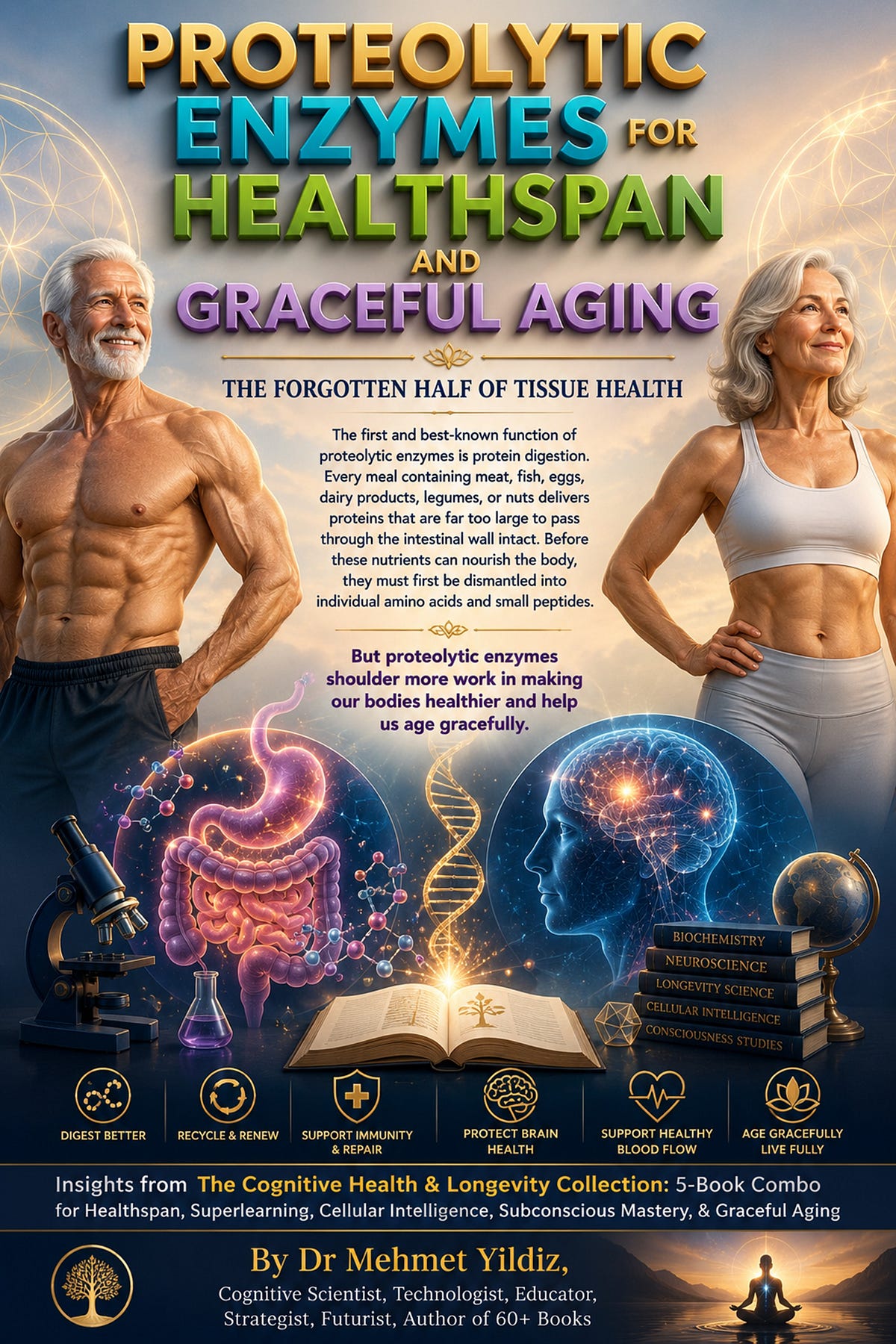
The first and best-known function of proteolytic enzymes is protein digestion. Every meal containing meat, fish, eggs, dairy products, legumes, or nuts delivers proteins that are far too large to pass through the intestinal wall intact. Before these nutrients can nourish the body, they must first be dismantled into individual amino acids and small peptides.
This process begins in the stomach, where hydrochloric acid unfolds dietary proteins and activates pepsin, the first major digestive protease. As partially digested proteins enter the small intestine, pancreatic enzymes, including trypsin and chymotrypsin, continue the process, breaking large protein molecules into absorbable fragments. Specialized enzymes lining the intestinal wall then complete the final stages of digestion before amino acids enter the bloodstream.
These amino acids serve as the raw materials for the synthesis of virtually every important protein in the body. They support muscle remodeling after exercise, repair damaged skin, produce collagen, synthesize hormones and neurotransmitters, manufacture antibodies, and build thousands of enzymes that sustain normal metabolism.
As digestive efficiency declines with age in some individuals, protein digestion may become less effective. This partly explains why older adults often require greater attention to dietary protein quality and adequate digestive function to preserve muscle mass, immune resilience, and tissue repair.
Function 2. Cellular Maintenance: The Body’s Protein Recycling and Renewal System
Digestion represents only the beginning of the story. Perhaps even more important is what proteolytic enzymes accomplish inside our cells every day.
Cells continually inspect their proteins for signs of damage. Proteins may become altered by oxidation, glycation, inflammation, environmental toxins, infections, or simply the wear and tear of normal metabolism. Rather than allowing these damaged proteins to accumulate, cells selectively dismantle them using sophisticated proteolytic systems.
This ongoing housekeeping process maintains proteostasis, the delicate balance between protein synthesis and protein degradation. Working alongside the ubiquitin-proteasome system, lysosomes, and autophagy, proteolytic enzymes remove damaged, misfolded, or no longer needed proteins while preserving healthy proteins that continue to perform useful functions.
The amino acids released from this recycling process rarely go to waste. Instead, they become valuable building materials for manufacturing new proteins better suited to current physiological demands. In this sense, our bodies operate one of the world’s most efficient biological recycling systems.
Scientists increasingly believe that declining proteostasis contributes to many features of aging, including muscle loss, slower tissue repair, impaired cellular communication, and the accumulation of abnormal proteins associated with several neurodegenerative diseases. Maintaining efficient protein turnover, therefore, represents one of the body’s most important longevity strategies.
Function 3. Immune Function and Tissue Repair: Cleaning Up Before Rebuilding
Whenever tissues are injured or invaded by pathogens, proteolytic enzymes become active participants in the healing process.
During inflammation, damaged cells, protein fragments, invading microorganisms, and cellular debris accumulate within affected tissues. Before complete healing can occur, much of this material must be carefully removed. Proteolytic enzymes facilitate this cleanup, allowing healthy tissue regeneration to proceed more efficiently.
These enzymes also influence communication between immune cells by regulating cytokines, growth factors, receptors, and signaling proteins that coordinate inflammatory responses. Rather than simply increasing or decreasing inflammation, proteolytic enzymes help ensure that inflammation begins when needed, remains appropriately controlled, and resolves once healing is complete.
Their importance extends to wound healing, muscle recovery after resistance exercise, remodeling of connective tissues, maintenance of skin elasticity, and repair of microscopic tissue damage that occurs throughout daily life. Every successful healing process depends upon a carefully coordinated balance between protein degradation and protein synthesis.
As we age, delayed tissue repair often reflects reduced efficiency in these remodeling systems rather than an inability to produce new tissue alone. Healthy aging depends not only on building new proteins but also on efficiently removing old or damaged ones.
Function 4. Blood Clot Regulation: Maintaining the Balance Between Bleeding and Clotting
One of the lesser-known yet critically important functions of proteolytic enzymes involves maintaining healthy blood flow.
Blood clotting protects us from excessive bleeding after injury, but clot formation must remain tightly regulated. Excessive clotting increases the risk of heart attacks, strokes, and deep vein thrombosis, whereas insufficient clotting can result in dangerous bleeding.
Proteolytic enzymes participate in both sides of this finely balanced system. Some activate clotting proteins when bleeding occurs, while others help break down fibrin after healing has occurred. This coordinated regulation allows blood vessels to remain open while preserving the body’s ability to respond rapidly to injury.
Researchers continue exploring how disturbances in these proteolytic pathways contribute to cardiovascular disease, chronic inflammation, and age-related vascular disorders. Some naturally occurring enzymes, including nattokinase, have attracted scientific interest for their potential effects on fibrin metabolism, although their clinical roles remain under investigation.
Like many biological systems, successful blood clot regulation depends upon balance rather than excess. Proteolytic enzymes illustrate this principle perfectly by supporting both protection and restoration as circumstances require.
Conclusions and Key Takeaways
I wrote this educational and nuanced chapter because when most people hear the word protease, they naturally think about digestion. That is certainly one of their essential roles, but it represents only the beginning of a much larger biological story.
Throughout every stage of life, proteolytic enzymes help maintain the quality of the proteins that make us who we are. They dismantle damaged proteins, recycle valuable amino acids, assist tissue remodeling, support immune surveillance, and help preserve the delicate balance required for healthy blood flow.
In many respects, these enzymes form part of the body’s internal renewal system, working behind the scenes to maintain order while we focus on our daily lives. Appreciating this broader perspective changes how we think about health. Healthy aging depends not only on building new tissues but also on efficiently removing what has become worn, dysfunctional, or no longer useful.
One practical lesson from this chapter is that we should aim to support our body’s own proteolytic systems before assuming we need supplements. Eating sufficient high-quality protein, maintaining healthy stomach acid, preserving pancreatic function, exercising regularly, sleeping well, and allowing periods of metabolic rest through appropriate meal timing all help optimize protein turnover.
During illness, digestive disorders, pancreatic insufficiency, aging, or other specific medical conditions, some people may benefit from carefully selected enzyme supplementation under the guidance of qualified healthcare professionals such as dieticians and registered nutritionists. Supplements can be valuable tools when indicated, but they work best as part of a comprehensive strategy rather than as a substitute for healthy living.
From my perspective, the most important insight is that our bodies are not static structures but dynamic biological ecosystems that undergo continuous renewal. Every day, billions of proteins are broken down, recycled, and rebuilt, allowing us to adapt, recover, and thrive.
The efficiency of this remarkable remodeling process influences far more than digestion. It contributes to muscle strength, skin integrity, immune resilience, metabolic health, cardiovascular function, and even healthy brain aging.
By understanding and supporting these natural renewal systems, we move beyond the goal of simply living longer. We give ourselves a better chance of remaining stronger, healthier, more independent, and mentally sharp throughout the later decades of our lives. That, in my view, is one of the defining principles of healthspan and graceful aging.
In terms of supplements including digestive enzymes I wrote many articles sharing my research and personal experiences and compiled them in a link which you can find the relevant ones easily:
List: Valuable Nutrients and Supplements | Curated by Dr Mehmet Yildiz | Medium
Valuable Nutrients and Supplements · 36 stories on Mediumdr-mehmet-yildiz.medium.com
I also turned my manuscript about peptides to a book titled Neuropeptides for Cognition, Healthspan, and Graceful Aging which will be published on 31 August 2026.
Thank you for reading my perspectives. I wish you a healthy and happy life.
[End of the Chapter]
Here are some recent sample chapters from this collection, which might give you new perspectives on healthspan and graceful aging.
Why Survival Mode Shrinks the Brain’s Network and Thriving Mode Expands It
What Wounds and Destroys Mitochondria and What Heals, Renews, and Strengthens Them
The Biology and Psychology of Dealing With Loose Skin After Rapid Weight Loss with Practical Tips
Updates on My Creative Work with Relevant Links
I am pleased that my new health and wellness books, What the Brain Needs, Why We Fail, and How We Can Fix It, Ketosis + BDNF: The Healing Molecules That Saved My Life, Cellular Intelligence, Feel Better, Live Smarter, Thrive Anywhere, How I Accelerated My Learning Effortlessly for a Happier Life, Healthspan Mastery, The Science & Wisdom of Graceful Aging, and the Subconsious book, were published and are now available in many bookstores, as part of my Health, Wellness, and Cognitive Performance Series.
You can check out my FEATURED series of 60+ books on Amazon markets:
Some of my books are published at Apple Stores, Smashwords, Vivlio, Kobo, Barnes & Noble, BooksaMillion, Fable, Bookshop.org, or my discount bookstore.
If you are a writer, you are welcome to join my publications by sending a request via this link. I support 42K writers who contribute to my publications on this platform. Check out the recent update for the writers of my publications.
You can contact me via my website. If you are a new writer, check out my writing list to find some helpful stories for your education. You can also join my author platform as a guest blogger.
I interviewed several new professionals and thought leaders. You can find them linked to the end of the latest one.
I invite you to subscribe to my publications on Substack, where I offer experience-based and original content on health, content strategy, book authoring, and technology topics you can’t find online to inform and inspire my readers.
Healthspan Mastery (NEW)
Get an email whenever Dr. Mehmet Yildiz publishes. He is a top writer and editor on Medium.
dr-mehmet-yildiz.medium.com
Check out Free Blog Posts by Digitalmehmet Contributors. Here is the link to my FREE personal blogs. Now you can read our blog posts via a Flipboard Magazine for convenience.
I invite you to explore some of my books on my discount bookstore including: Train Your Brain for a Healthier and Happier Life, Cortisol Clarity, Substack Mastery Version 2, The Zen of Book Authoring, Monetize Your Passion with WooCommerce, Agile Business Architecture for Digital Transformation V2, Agile Business Architecture for Digital Transformation (Audiobook), A Powerful Toolkit for Substack Newsletter Mastery, Smart and Ethical SEO, Modern Affiliate Marketing for Writers, 4 Pillars of Enterprise Architecture, and Smart Email Marketing Content Integration, The Mysterious Leadership Mind of Robert F. Kennedy Jr.,
Review of the Chapter By Dr Shiv Goel on Medium.com
Thank you, Dr. Yildiz, for this thoughtful chapter on proteostasis and proteolytic enzymes; it offers a clear, accessible frame for understanding why protein remodeling is central to healthspan and graceful aging. For readers who are curious to go one layer deeper, it can be helpful to know that proteostasis rests on several interconnected systems beyond proteases alone, including molecular chaperones, ER stress responses, and autophagy–lysosome pathways, all working together to ensure that proteins are correctly folded, functional, and efficiently recycled when damaged.
Proteostasis also shows up very concretely in clinical practice through conditions such as neurodegenerative diseases, sarcopenia and muscle aging, cardiometabolic disorders, and protein‑aggregation cardiomyopathies, where impaired protein quality control becomes visible as loss of strength, slower tissue repair, cognitive changes, or organ dysfunction.
From a practical standpoint, readers often ask how to translate these concepts into action; beyond high‑quality nutrition and lifestyle, this includes understanding when digestive or systemic enzyme support is truly indicated, how dosing and timing (with or between meals) affect whether enzymes act primarily in the gut or more systemically, and why any supplement decisions should factor in individual variables like medications, coagulation status, and age‑related vulnerability.
Even though we don’t yet have simple, routine blood tests that directly “measure proteostasis,” there are useful indirect markers and functional assessments—such as muscle mass and strength, recovery from illness or exercise, inflammatory and nutritional indices, and attention to circadian rhythm and sleep quality—that give practical clues about how well the body’s protein turnover machinery is functioning over time.
Finally, an integrative lens that includes the gut microbiome, intestinal barrier integrity, the quality and processing of dietary protein (including advanced glycation end products), and peptide signaling in regenerative medicine and cognitive health can help readers connect your biochemical explanation to everyday decisions about food, movement, sleep, and targeted therapies.
Taken together with your chapter, this additional context can help motivated readers see proteostasis not only as a fascinating concept, but as a living, dynamic process that can be supported and observed across nutrition, lifestyle, clinical care, and the emerging frontier of longevity medicine.
Dr. Shiv K. Goel
Dr. Shiv Kumar Goel, MD, is a board-certified physician, writer, and founder of Prime Vitality Care in San Antonio, where he works at the intersection of Internal Medicine, Functional Medicine, longevity, and aesthetic medicine. He writes about the deeper roots of illness, burnout, healing, and whole-person health through his clinical work, essays, and digital platforms. Read more from Dr. Goel at drshivgoel.com, explore his wellness writing on Prime Vitality’s blog, subscribe to Healing the Split on Substack, and follow his professional reflections on Medium if you want this article series tied to a broader body of work


Leave a Reply