

The SCN, Light, and the Architecture of Biological Time
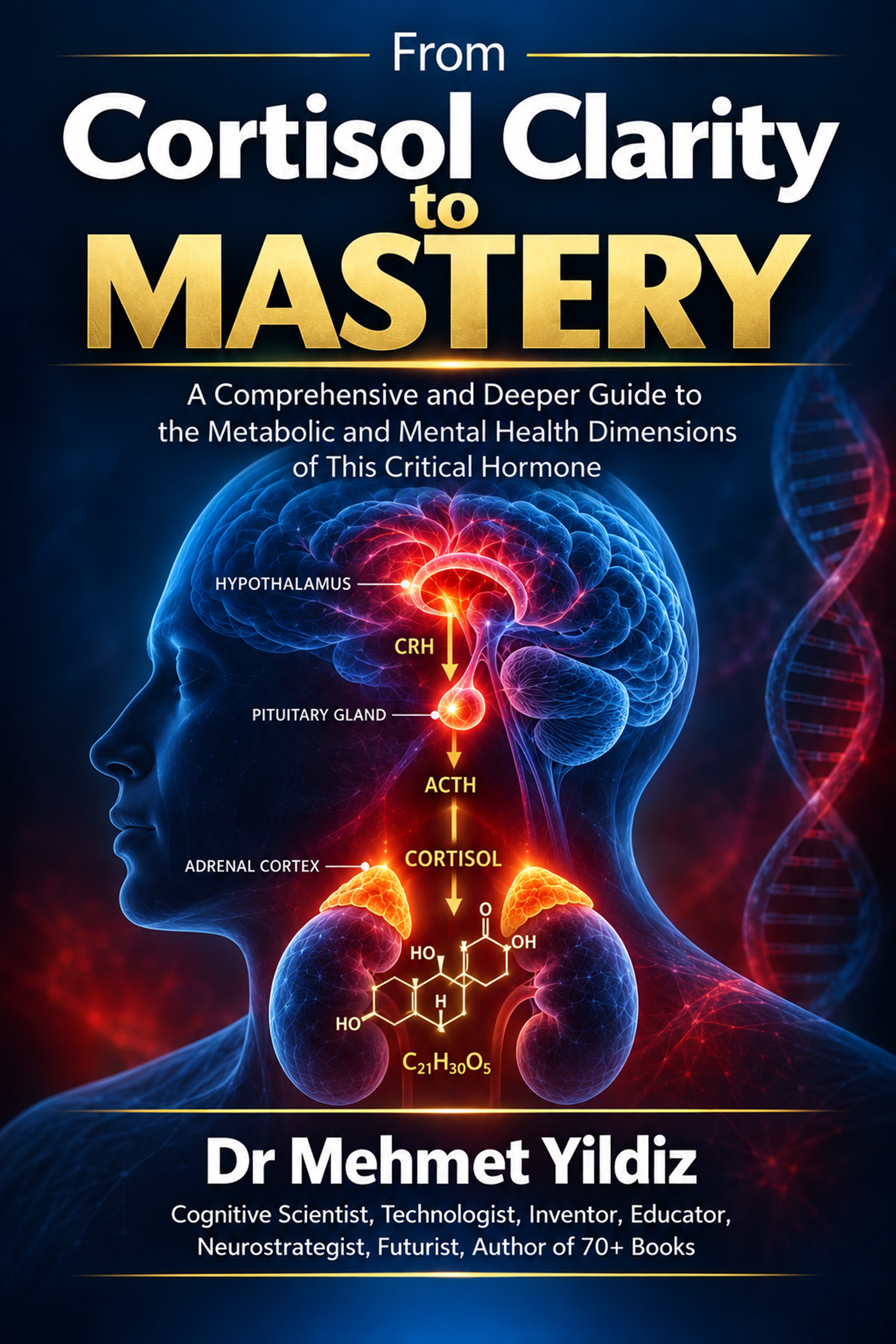
Curator’s Note: The blog post discusses key insights from the author’s book, “From Cortisol Clarity to Mastery,” particularly focusing on the suprachiasmatic nucleus (SCN) and its role as the primary circadian pacemaker in mammals. It highlights how light influences circadian rhythms, sleep-wake cycles, and hormonal responses, underlining the complexities of light exposure rather than viewing it as strictly beneficial or harmful. The author emphasizes the intricate relationship between various biological clocks throughout the body and the necessity for their coordination, cautioning against the consequences of temporal misalignment, such as that experienced through shift work or irregular schedules, which can disrupt overall health. This article was written by Dr. Mehmet, author of the book.
Relationship between light and physiology
In this short post, I will share one of the sections of a comprehensive chapter from my latest book From Cortisol Clarity to Mastery. You can read the full chapter on Medium titled: Cortisol Has a Clock, but the Clock Is Not on the Wall: Understanding the Nuances of the Circadian Rhythm of Cortisol.
Behind daily patterns sits a broader circadian system. The suprachiasmatic nucleus, or SCN, located in the anterior hypothalamus, functions as the principal central circadian pacemaker in mammals. Specialized retinal pathways provide the SCN with information about environmental light, allowing internal rhythms to stay synchronized with Earth’s approximately 24-hour rotation.
I introduced details and nuances of the SCN based on my research in a previous story: Sleep Regulation: Neurobiology of the Suprachiasmatic Nucleus.
I also covered relevant details in another research-based article in 2024: The Striking Adverse Effects of Night Light Exposure on Mental Health
This relationship between light and physiology is one of the most elegant examples of environmental information becoming biological organization. Light entering the eye does more than permit vision. Through intrinsically photosensitive retinal ganglion cells containing melanopsin, information about environmental illumination reaches circadian circuitry and influences sleep-wake timing, melatonin secretion, autonomic function, endocrine rhythms, and numerous downstream processes.
Yet saying that “morning light raises cortisol” or “night light raises cortisol” is too simplistic. Light can influence circadian phase, alertness, melatonin, sleep timing, and aspects of neuroendocrine physiology. Still, its effects depend on timing, intensity, duration, spectral composition, previous light exposure, and individual circadian phase. The same light exposure can have different circadian consequences depending on when biological systems receive it.
The notion of a “phase-response curve” captures this phenomenon. Light encountered during certain portions of the biological evening or night can shift the circadian system later. In contrast, appropriately timed light during the later biological night or morning can shift it earlier. Around other circadian phases, the timing effect may be smaller. The important lesson is that light is not simply beneficial in the morning and harmful at night; its biological effect depends strongly on when the circadian system encounters it.
The SCN does not regulate cortisol by operating a single switch. It coordinates timing through neural and endocrine pathways that influence hypothalamic activity and adrenal responsiveness. Peripheral tissues also contain molecular clocks, creating a distributed temporal system throughout the body. The liver, pancreas, adipose tissue, skeletal muscle, gastrointestinal tract, immune cells, and adrenal glands all express circadian machinery that helps organize local physiology.
This distributed architecture changes how we think about circadian health. We do not possess one clock. We possess a hierarchy of interacting clocks that require sufficient coordination to organize physiology coherently. The SCN plays a central coordinating role, but feeding, physical activity, temperature, sleep-wake behavior, and other recurring signals can influence peripheral timing.
This point is where circadian disruption becomes more interesting than simply “going to bed late.” A person can experience misalignment between the environmental day, behavioral schedule, central circadian timing, sleep period, and peripheral metabolic rhythms. Shift work and rapid travel across time zones provide obvious examples. However, subtler forms of temporal inconsistency can also occur when sleep, meals, light exposure, and activity vary substantially from day to day. The issue is therefore not merely routine. It is temporal coordination across biological systems.
Bibliographical access info of the book: From Cortisol Clarity to Mastery: A Comprehensive and Deeper Guide to the Metabolic and Mental Health Dimensions of This Critical Hormone. ISBNs: 9798173968920, 9798173979278, 9780466536954 (Audio), EAN: 2940184786582, ASINs: B0FS7WCQZG, B0HJNSFCMB, B0HJQ7R2QC, GKEYs: AQAAAEAG82mzfM, tp0MEgAAQBAJ — Official Page
If you missed the previous chapters, here are the links:
Visceral Fat and Cortisol: Which Is the Cause and Which Is the Consequence?
The Integrated Architecture of the HPA Axis: The Science of Regulating Chronic Stress
Individual Variability and Biological Sensitivity in Cortisol Biochemistry
Thank you for reading my perspectives. I wish you a healthy and happy life.
You can check out my FEATURED series of 70+ books on Amazon marketplaces:
I also added my catalog of digital and audiobooks from Google to a collection that can be accessed easily:
Digital and Audiobooks by Dr Mehmet Yildiz on Google Play — The Digitalmehmet Content Ecosystem
50+ Digital and Audiobooks links by Dr Mehmet Yildiz on Google Play and Google Books for easy access. Other platform…digitalmehmet.com
If you are a writer, you are welcome to join my publications by sending a request via this link. I support 43K writers who contribute to my publications on this platform. Check out the recent update for the writers of my publications.
You can contact me via my website. If you are a new writer, check out my writing list to find some helpful stories for your education. You can also join my author platform as a guest blogger.
I interviewed several new professionals and thought leaders. You can find them linked at the end of the latest one.
I invite you to subscribe to my publications on Substack, where I offer experience-based and original content on health, content strategy, book authoring, and technology topics you can’t find online to inform and inspire my readers.
Healthspan Mastery (NEW)


Leave a Reply