

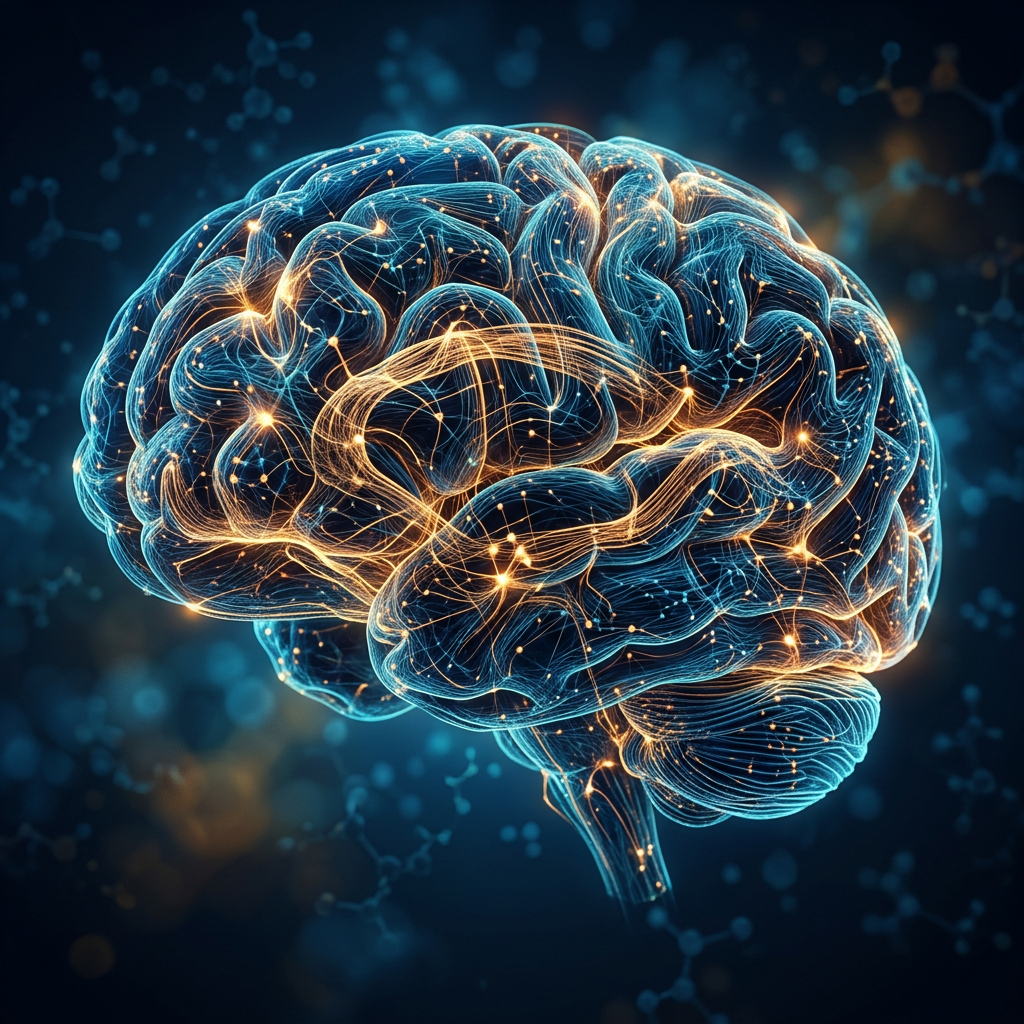
Why modern neuroscience is changing how we understand emotions, intelligence, stress, and mental health.
Curator’s Note: This post, written by Dr. Mehmet Yildiz, a cognitive scientist, explores the evolving understanding of the brain from the outdated Triune Brain theory to the Adaptive Brain framework, highlighting how modern neuroscience reshapes our comprehension of emotions, intelligence, and mental health. The Triune Brain theory, which categorized the brain into three distinct layers—reptilian, emotional, and rational—has been challenged by new evidence emphasizing interconnected networks that predict and adapt rather than operate independently. This perspective recognizes the synergy between emotion and cognition, suggesting that effective emotional regulation can enhance mental health. These insights encourage practical changes to support brain health and adaptability, underscoring the importance of scientific curiosity and questioning old assumptions.
Author’s Note: In this post, I summarize my original 2024 research-based discussion of the transition from the Triune Brain theory to the Adaptive Brain framework. For a detailed scientific analysis and references, check out my original Medium article. This content is educational and does not constitute individualized medical or mental health advice.
Introduction
For decades, many of us learned that the human brain has three evolutionary layers: a primitive reptilian brain responsible for survival, an emotional brain that governs feelings, and a rational brain responsible for thinking and decision-making.
This explanation was appealing because it made an extraordinarily complex organ seem understandable. However, neuroscience has revealed a more fascinating reality. Our brains do not operate as three separate systems competing for control. Instead, they function through interconnected networks that continuously predict, respond, learn, and adapt.
This shift in understanding has important implications for mental health, emotional intelligence, cognitive performance, and everyday well-being.
Why I Initially Embraced the Triune Brain Theory
When I began systematically studying human and machine cognition in the mid-1980s, I became fascinated by neuroscientist Paul MacLean’s influential Triune Brain theory, developed during the 1960s.
MacLean proposed that the brain evolved through three major formations: the reptilian complex, the limbic system, and the neocortex. These were associated with instinctive behavior, emotional processing, and higher reasoning.
The theory helped me organize complicated information and develop an early understanding of brain functions. However, as my research progressed, I encountered evidence challenging its fundamental assumptions.
Rather than dismissing the theory entirely, I appreciated its historical contribution while examining its limitations. This experience reinforced an important scientific principle I learned from my mentors: Good scientists should not merely seek evidence supporting their favorite theories. They must also actively search for evidence that could disprove them.
What Modern Neuroscience Reveals
In 2022, three researchers published a comprehensive review in Frontiers in Psychiatry, titled The Brain Is Adaptive Not Triune: How the Brain Responds to Threat, Challenge, and Change.
Their analysis challenged the idea that human brains evolved by simply adding newer structures on top of older ones.
Brain evolution is considerably more complex. Many fundamental neural structures are shared across vertebrate species, although their proportions, organization, connectivity, and functional specialization differ.
Equally important, emotions and reasoning are not confined to separate brain compartments.
The amygdala participates in processing emotionally significant information, but it does not work independently. The hippocampus contributes to memory and contextual learning, while cortical and subcortical networks interact in perception, emotional regulation, planning, and decision-making.
Emotion influences cognition, and cognition influences emotion. Neither can be fully understood in isolation.
This understanding leads us toward a more integrated perspective: the adaptive brain.
Your Brain Is Constantly Predicting and Adapting
One of the most fascinating insights from modern neuroscience is that the brain does more than react to events after they occur.
It continuously uses previous experiences, bodily signals, and environmental information to anticipate what might happen next.
Consider walking alone through an unfamiliar neighborhood at night. Your brain evaluates sounds, visual information, memories, and bodily sensations to estimate whether something requires attention.
Your heart rate might increase, your attention might sharpen, and your behavior might change before you consciously identify a threat.
These coordinated responses involve multiple interacting neural systems rather than a primitive brain overpowering a rational one.
Researchers describe an important aspect of this regulation as allostasis, meaning the maintenance of stability through physiological and behavioral adjustments.
For example, your brain helps anticipate energy requirements, regulate stress responses, and coordinate bodily resources as circumstances change.
Prediction is not always accurate, however. Previous experiences, prolonged stress, and uncertain environments can influence how we interpret situations.
Understanding these processes helps explain why people sometimes react differently to similar circumstances.
What This Means for Emotional Intelligence and Mental Health
For me, one of the most valuable implications concerns our relationship with emotions. We usually hear advice to suppress emotions and let rational thinking take control. However, emotions are not simply obstacles to intelligence.
They help us evaluate significance, recognize potential threats, establish priorities, and navigate social relationships.
Effective emotional regulation therefore involves understanding and responding constructively to emotions rather than attempting to eliminate them.
The adaptive perspective also encourages researchers to examine mental health conditions through interacting biological, psychological, and environmental processes.
For example, anxiety and depression can involve changes in stress regulation, attention, emotional processing, and broader neural network functioning.
This does not mean that the adaptive brain framework has already produced definitive treatments. Rather, it offers a useful research perspective for investigating complex conditions without reducing them to dysfunction in a single brain region.
Five Practical Lessons for Everyday Life
Although neuroscience cannot provide a universal formula for optimal brain function, its findings offer useful principles.
- Respect the relationship between emotions and reasoning. Notice your emotional state before making important decisions, particularly under stress.
- Manage chronic stress. Persistent stress can affect sleep, attention, emotional regulation, and cognitive performance. Recovery and appropriate support matter.
- Support your brain’s adaptability. Regular physical activity, adequate sleep, intellectually stimulating experiences, and lifelong learning support different aspects of brain health.
- Value meaningful relationships. Social connection contributes to psychological well-being and can provide valuable resources when navigating difficult circumstances.
- Question outdated assumptions. Scientific understanding evolves. Intellectual curiosity and willingness to revise beliefs are essential for personal and professional growth.
These practices support general well-being, but they should not be mistaken for guaranteed ways to prevent or treat neurological or psychiatric disorders.
Final Thoughts: An Adaptive Brain for an Ever-Changing World
After decades of studying cognition, I find the adaptive perspective more scientifically persuasive than the traditional three-brain explanation.
The remarkable human brain is not merely a collection of competing evolutionary layers. It is a dynamic biological system that integrates information, anticipates challenges, coordinates responses, and learns from experience.
The most empowering lesson is that our emotions, thoughts, bodily states, and social experiences are deeply interconnected.
Understanding these relationships can help us approach stress, learning, relationships, and decision-making with greater awareness and flexibility.
The science remains unfinished, and that is precisely what makes neuroscience so fascinating. Each discovery invites us to question what we thought we knew and explore better explanations.
I hope these insights inspire you to appreciate your extraordinary brain and care for it throughout your life.
I wrote many stories related to the brain and cognitive function, and I linked the key ones as a reference:
Here’s How to Make the Nervous System More Flexible and Functional
Here’s How I Train My Brain Daily for Mental Clarity and Intellectual Productivity.
Thank you for reading my perspectives. I wish you a healthy and happy life.
[End of the Summary]
If you are a new reader, you may check out some of my thematic story collections:
Collection 1: Brain Health and Cognitive Function
Collection 2: Weight Loss / Muscle Gain
Collection 3: Nutrition and Customized Diets
Collection 4: Valuable Nutrients and Supplements
Collection 5: Fasting, Ketosis, Autophagy, Mitophagy
Collection 6: Ketosis and Ketogenic Lifestyle
Collection 7: Major Health Conditions
Collection 8: Clinical Trials I Reviewed
Collection 9: Importance of Sleep for Health
Collection 10: Aging and Longevity
Collection 11: Writing, Content Development & Marketing Strategy Guides
Collection 12: My Most Loved Stories By Avid Readers
You can check out my FEATURED series of 70+ books on Amazon marketplaces:
I also added my catalog of digital and audiobooks from Google to a collection that can be accessed easily:
Digital and Audiobooks by Dr Mehmet Yildiz on Google Play — The Digitalmehmet Content Ecosystem
50+ Digital and Audiobooks links by Dr Mehmet Yildiz on Google Play and Google Books for easy access. Other platform…digitalmehmet.com
If you are a writer, you are welcome to join my publications by sending a request via this link. I support 43K writers who contribute to my publications on this platform. Check out the recent update for the writers of my publications.
You can contact me via my website. If you are a new writer, check out my writing list to find some helpful stories for your education. You can also join my author platform as a guest blogger.
I interviewed several new professionals and thought leaders. You can find them linked at the end of the latest one.
I invite you to subscribe to my publications on Substack, where I offer experience-based and original content on health, content strategy, book authoring, and technology topics you can’t find online to inform and inspire my readers.
Healthspan Mastery (NEW)
Get an email whenever Dr. Mehmet Yildiz publishes. He is a top writer and editor on Medium.
dr-mehmet-yildiz.medium.com
Check out Free Blog Posts by Digitalmehmet Contributors. Here is the link to my FREE personal blogs. Now you can read our blog posts via a Flipboard Magazine for convenience.
I invite you to explore some of my books on my discount bookstore including:Train Your Brain for a Healthier and Happier Life, Cortisol Clarity, Ketosis + BDNF: The Healing Molecules That Saved My Life, The Science & Wisdom of Graceful Aging, The LIFE Matrix Keeps the Score, How I Accelerated My Learning Effortlessly for a Happier Life, Neurocomputing and Neural Architectures, Substack Mastery Version 2, The Zen of Book Authoring, Monetize Your Passion with WooCommerce, Agile Business Architecture for Digital Transformation V2, Agile Business Architecture for Digital Transformation (Audiobook), A Powerful Toolkit for Substack Newsletter Mastery, Smart and Ethical SEO, Modern Affiliate Marketing for Writers, 4 Pillars of Enterprise Architecture, and Smart Email Marketing Content Integration, The Mysterious Leadership Mind of Robert F.Kennedy Jr., Cognitive Computing Reimagined.
Share links to your newsletters here and share links to your stories here
Connect: LinkedIn | X (Twitter) | Facebook | Instagram | Quora


Leave a Reply