

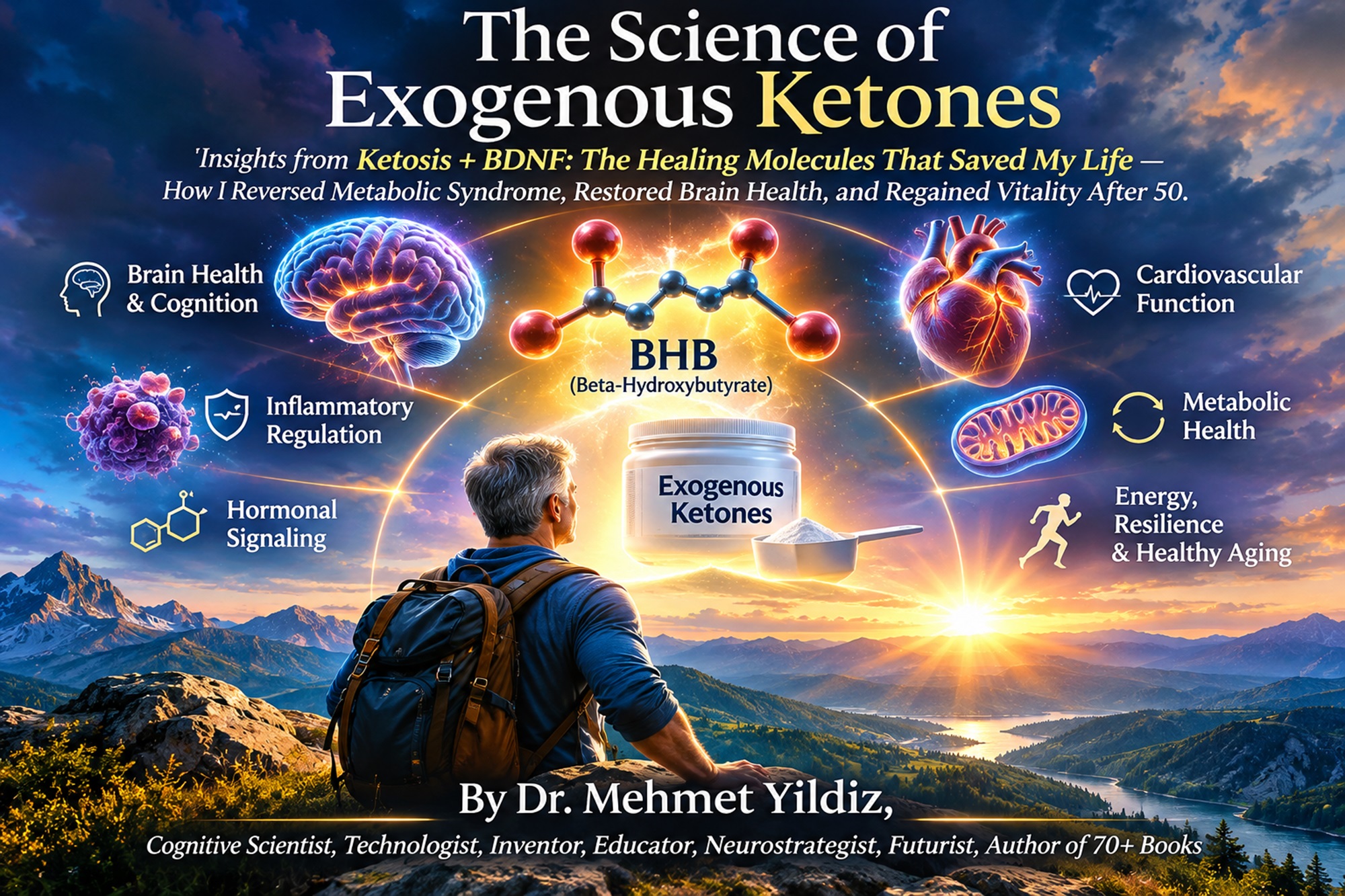
What Clinical Trials Reveal About Brain Health, Inflammation, Hormones, and the Heart
Curator’s Note: Clinical research suggests exogenous ketones, particularly ketone salts, can raise blood BHB levels, but this does not necessarily reproduce the metabolic benefits of nutritional ketosis. Although BHB may influence inflammation, brain energy, hormones, appetite, glucose, and cardiovascular function, human evidence remains limited, mixed, and often based on ketone esters or intravenous BHB rather than commercial salts. No convincing evidence currently supports routine ketone salts for cognitive enhancement, chronic inflammation, hormonal optimization, weight loss, or heart protection. Potential risks include excess mineral intake, gastrointestinal symptoms, and uncertain long-term safety. Consumers should examine formulations, clinical evidence, and personal medical risks, consulting clinicians when appropriate. This post is a summary of a comprehensive chapter of author’s book, which was published on another platform. You can read the complete research chapter on Medium.
Ketone supplements are attracting growing attention, but can they deliver the health benefits their manufacturers promise? Here is what the science tells us, what remains uncertain, and what consumers should consider.
As a cognitive scientist who has studied metabolic health, neurobiology, and healthy aging for decades, I find ketones fascinating. These small molecules do more than provide an alternative energy source. They also participate in biological signaling processes that may influence inflammation, brain metabolism, and cardiovascular function.
However, a fascinating biological mechanism does not automatically translate into a useful supplement.
This distinction motivated me to investigate the clinical evidence on exogenous ketones, particularly ketone salts, for the upcoming edition of my book Ketosis + BDNF: The Healing Molecules That Saved My Life.
The investigation developed into a comprehensive, approximately 12,000-word chapter. For readers who prefer a shorter introduction, I have distilled its most important findings into this article.
1. What Exactly Are Exogenous Ketones?
Our bodies naturally produce ketones, mainly in the liver, when carbohydrate availability decreases and fat metabolism increases. This commonly occurs during fasting, prolonged exercise, or carbohydrate-restricted diets.
Beta-hydroxybutyrate (BHB) is one of the principal circulating ketone bodies. It can serve as an energy substrate for organs including the brain and heart, and it also participates in cellular signaling.
Exogenous ketones are different. They are consumed through supplements rather than produced by the body.
The main commercial categories include ketone salts, ketone esters, and certain ketone precursors.
Ketone salts combine BHB with minerals such as sodium, potassium, calcium, or magnesium. Ketone esters use a different chemical formulation and can produce different circulating ketone responses.
The first important lesson is that increasing blood ketones through supplementation is not equivalent to achieving nutritional ketosis through fasting or dietary changes.
The surrounding hormonal and metabolic conditions differ considerably.
2. Can Ketone Supplements Reduce Inflammation?
One of the most intriguing discoveries in ketone research involves BHB and the NLRP3 inflammasome, a molecular system involved in inflammatory responses.
Experimental investigations have demonstrated that BHB can inhibit NLRP3 activation under certain conditions.
This finding is scientifically important because excessive or poorly regulated inflammation contributes to numerous chronic diseases.
However, laboratory findings are not clinical proof.
The concentrations, experimental conditions, and biological responses observed in cells or animals may not translate directly into meaningful improvements in human health.
At present, we do not have convincing clinical evidence that routine ketone salt supplementation consistently reduces chronic inflammation or prevents inflammatory diseases.
The mechanism deserves further research, but commercial claims should not run ahead of the evidence.
3. Can Exogenous Ketones Improve Memory and Cognition?
The brain is metabolically demanding. Although glucose is its primary fuel under normal dietary conditions, it can also use ketones when available.
This metabolic flexibility has encouraged researchers to investigate whether exogenous ketones might support cognitive function, particularly in people experiencing impaired cerebral energy metabolism.
Some clinical investigations have reported encouraging results in selected cognitive measures or patient populations. However, the overall findings remain mixed.
A crucial distinction is that studies frequently involve different interventions, including ketone esters, ketone salts, and compounds that increase endogenous ketone availability. These approaches are not interchangeable.
Furthermore, improvement on a laboratory cognitive test does not necessarily mean someone will experience better memory, concentration, or decision-making in everyday life.
For healthy adults, evidence supporting reliable cognitive enhancement from commercial ketone salts remains insufficient.
I believe the most promising research direction may involve carefully selected clinical populations rather than assuming that everyone benefits from higher circulating ketones.
4. What About Hormones, Appetite, and Blood Glucose?
Exogenous ketones can influence several aspects of metabolic physiology. For example, some short-term studies have observed reductions in circulating glucose after ketone administration.
Other investigations, particularly involving ketone esters, have reported temporary reductions in hunger or changes in ghrelin, a hormone involved in appetite regulation.
These findings are interesting, but they require careful interpretation. A temporary reduction in blood glucose does not establish improved insulin sensitivity. Similarly, feeling less hungry for a few hours does not demonstrate sustained weight loss.
The same caution applies to leptin, cortisol, testosterone, estrogen, and thyroid hormones. Although metabolic state influences endocrine regulation, clinical evidence is insufficient to show that ketone salts reliably normalize these hormonal systems.
Changing a metabolic signal is not the same as correcting an endocrine disorder.
5. Can Ketones Support Cardiovascular Health?
The heart can use several energy substrates, including fatty acids, glucose, lactate, and ketones.
Researchers have investigated whether increasing ketone availability might improve cardiac metabolism or function in selected clinical circumstances.
Some studies have reported favorable short-term changes in cardiovascular measurements, including cardiac output.
However, many of these investigations involved ketone esters or intravenous BHB rather than ordinary commercial ketone salts.
This distinction matters enormously.
An acute improvement in a cardiovascular measurement does not demonstrate prevention of atherosclerosis, heart attacks, or cardiovascular mortality.
Similarly, current evidence does not establish that ketone salts consistently lower blood pressure or provide long-term cardiovascular protection.
For people concerned about heart health, established preventive measures remain far better supported by clinical evidence.
6. The Overlooked Issue: Minerals and Safety
Ketone salts contain more than BHB. Depending on the formulation, they may deliver substantial quantities of sodium, potassium, calcium, or magnesium. These minerals are essential for human physiology, but extra intake isn’t always beneficial.
For example, sodium exposure matters for people who need to restrict sodium, while potassium-containing products require caution for individuals with impaired kidney function or those taking medications that affect potassium regulation.
Gastrointestinal discomfort, nausea, and diarrhea are also reported with some exogenous ketone formulations.
Another important limitation is the lack of extensive long-term safety data.
Many studies involve small groups and short observation periods. Their findings cannot establish that repeated supplementation is safe for everyone over months or years.
People with diabetes, kidney disease, significant cardiovascular conditions, or complex medication regimens should obtain individualized clinical advice before considering these products.
7. What Should Consumers Look For?
Before purchasing an exogenous ketone supplement, I suggest asking a few practical questions.
What type of ketone does the product contain? How much D-BHB does each serving provide? What minerals and additional ingredients accompany it?
Has the exact formulation been tested in randomized controlled trials? Were the participants comparable to the intended consumer? Did the researchers demonstrate meaningful health improvements, or merely temporary changes in blood ketone concentrations?
Finally, are the potential benefits worth the expense, uncertainty, and possible adverse effects?
These questions help distinguish scientifically informed decisions from marketing-driven experimentation.
My Perspective: Promising Science Requires Scientific Restraint
I remain enthusiastic about the scientific potential of ketone signaling.
The possibility that exogenous ketones may eventually benefit selected populations with metabolic, neurological, or cardiovascular disorders deserves serious investigation.
However, therapeutic potential in a specific clinical population should not be confused with general health enhancement.
For now, I would not recommend routine ketone salt supplementation specifically for cognitive enhancement, inflammation reduction, hormonal optimization, or cardiovascular protection because convincing clinical evidence remains insufficient.
This does not mean that exogenous ketones are ineffective in every circumstance. It means we still need better evidence to determine who may benefit, from which formulations, at what doses, and for how long.
My central message is simple: Do not confuse a measurable biochemical change with a meaningful health improvement.
In science, discovering that a molecule influences human physiology is an important beginning. Demonstrating that the change improves people’s lives is the achievement that ultimately matters.
For Scientists, Clinicians, and Readers Seeking the Full Evidence
This article summarizes my approximately 12,000-word research chapter, “Exogenous Ketones: What We Know So Far Based on Clinical Trials,” published as a sample from the forthcoming edition of Ketosis + BDNF: The Healing Molecules That Saved My Life.
The full chapter examines the mechanisms, human trials, formulation differences, methodological limitations, safety considerations, and scientific references in substantially greater detail.
Read the complete research chapter on Medium.
For more information about the book, visit Ketosis + BDNF: The Healing Molecules That Saved My Life.
Dr. Mehmet Yildiz is a cognitive scientist, technologist, inventor, educator, neurostrategist, futurist, and author of more than 70 books.
Disclaimer: This article is intended for education and scientific discussion, not individualized medical advice.
Scientific References
Foundational Research: Ketone Metabolism and Inflammatory Signaling
- Youm, Y. H., Nguyen, K. Y., Grant, R. W., Goldberg, E. L., Bodogai, M., Kim, D., D’Agostino, D., Planavsky, N., Lupfer, C., Kanneganti, T. D., Kang, S., Horvath, T. L., Fahmy, T. M., Crawford, P. A., Biragyn, A., Alnemri, E., & Dixit, V. D. (2015). The ketone metabolite β-hydroxybutyrate blocks NLRP3 inflammasome-mediated inflammatory disease. Nature Medicine, 21(3), 263–269. DOI: 10.1038/nm.3804.
- Stubbs, B. J., Cox, P. J., Evans, R. D., Santer, P., Miller, J. J., Faull, O. K., Magor-Elliott, S., Hiyama, S., Stirling, M., & Clarke, K. (2017). On the metabolism of exogenous ketones in humans. Frontiers in Physiology, 8, 848. DOI: 10.3389/fphys.2017.00848.
Clinical Trials: Cognition, Mood, and Metabolic Responses
- Kackley, M. L., Brownlow, M. L., Buga, A., Crabtree, C. D., Sapper, T. N., O’Connor, A., & Volek, J. S. (2022). The effects of a 6-week controlled, hypocaloric ketogenic diet, with and without exogenous ketone salts, on cognitive performance and mood states in overweight and obese adults. Frontiers in Neuroscience, 16, 971144. DOI: 10.3389/fnins.2022.971144.
- McClure, T. S., Buxton, J. D., Egan, B., Plank, E., Isles, M., Ault, D. L., Prins, P. J., & Koutnik, A. P. (2025). Multisystem impact of altering acid load of ingested exogenous ketone supplements at rest in young healthy adults. American Journal of Physiology—Regulatory, Integrative and Comparative Physiology, 328(3), R386–R395. DOI: 10.1152/ajpregu.00057.2024.
Systematic Reviews and Meta-Analyses: Cardiovascular and Clinical Outcomes
- Marcotte-Chénard, A., Tremblay, R., Falkenhain, K., Little, J. P., & Riesco, E. (2024). Effect of acute and chronic ingestion of exogenous ketone supplements on blood pressure: A systematic review and meta-analysis. Journal of Dietary Supplements, 21(3), 408–426. DOI: 10.1080/19390211.2023.2289961.
- Mohib, O., Bomans, S., Jimenez Garcia, B., Leemans, L., Ligneel, C., De Waele, E., Beckwée, D., & Janssens, P. (2025). Clinical benefits of exogenous ketosis in adults with disease: A systematic review. Nutrients, 17(19), 3125. DOI: 10.3390/nu17193125.
- Bonnechère, B., Stephens, E. B., Boileau, A. C., Ducker, M., & Stubbs, B. J. (2026). The effect of exogenous ketone bodies on cognition across health and disease: A systematic review and meta-analysis. Frontiers in Nutrition, 13, 1802531. DOI: 10.3389/fnut.2026.1802531.


Leave a Reply